Knowledge and Inspiration
Discover articles that will help you become a better guitarist. From technique to practice psychology.
Every guide here answers a question guitarists actually ask once they get past the first chords: how long a daily session should be, what belongs in a beginner routine, how to practise scales so they end up in your playing instead of your warm-up, which songs are genuinely playable at your level, and how to tell whether six months of practice moved anything. The answers lean on how thousands of logged practice sessions on Riff Quest actually look, rather than on the usual advice to just practise more.
15 Easiest Metal Songs to Play on Guitar (Ranked by Real Difficulty Ratings)
Fade to Black (4.4/10), Paranoid, Enter Sandman and 12 more metal songs scored by guitarists who learned them, with the hardest part of each and where to start.

Free Rocksmith Alternatives: 5 Tools for Practising on a Real Guitar
Riff Quest, StringTheory, fee[dB]ack, Soundlane and TuxGuitar compared: note detection, tabs, limitations and a screenshot of every tool.
Free Yousician Alternatives for Guitar: Lessons, Feedback and Streaks Without a Subscription
Where Yousician's free tier stops, and a free stand-in for each job: JustinGuitar for lessons, Songsterr for songs, Riff Quest for feedback and tracking.

Guitar Chords for Beginners: 8 Shapes and a 10-Minute Practice Plan
Learn eight beginner guitar chords with clear diagrams, finger positions and a 10-minute practice plan. Organize your sessions with Riff Quest.
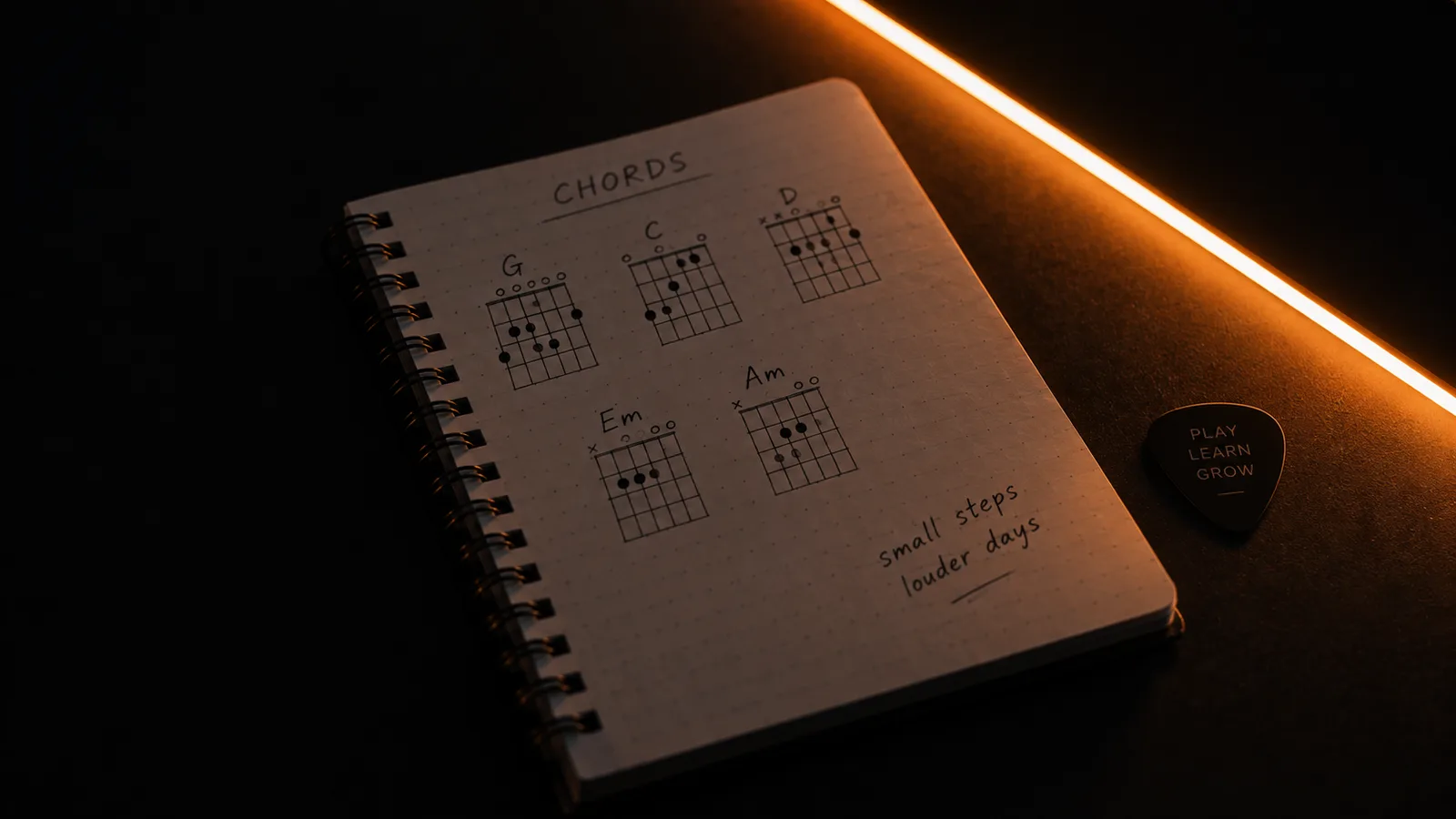
15 Easy Songs to Play on Guitar for Beginners (Ranked by Real Difficulty Ratings)
One-finger riffs, two-chord strummers and four-chord classics scored 2.3–3.8 out of 10 by players who learned them, plus the chords, tempo and trap in each.

How to Practice Guitar Every Day: A Simple Hour-by-Hour Routine
A one-hour guitar practice routine in four blocks - warm-up, technique challenge, ear training, repertoire - built around real Riff Quest exercise and usage data.

Best Guitar Practice Apps for Routines, Songs and Progress Tracking
Which guitar practice app you need depends on your problem: learning what to play, practising a song, or organising sessions. Compared by need, with free tiers.
What Song Should I Learn on Guitar? Find Songs by Difficulty (with Riff.quest)
Guitar song difficulty ratings from real players. Find songs that match your level, browse by tier (D–S), and pick your next song with confidence.
Guitar Practice Routine for Beginners: A 2026 Guide
Four blocks, 15 minutes, and a 60-second chord drill that turns invisible progress into a number you track. Why silent changes beat strumming first.

How to Practice Guitar Scales Effectively: A 2026 Guide
Learn how to practice guitar scales effectively with proven routines, metronome drills, speed exercises, and genre tips. Build real progress fast. Start.
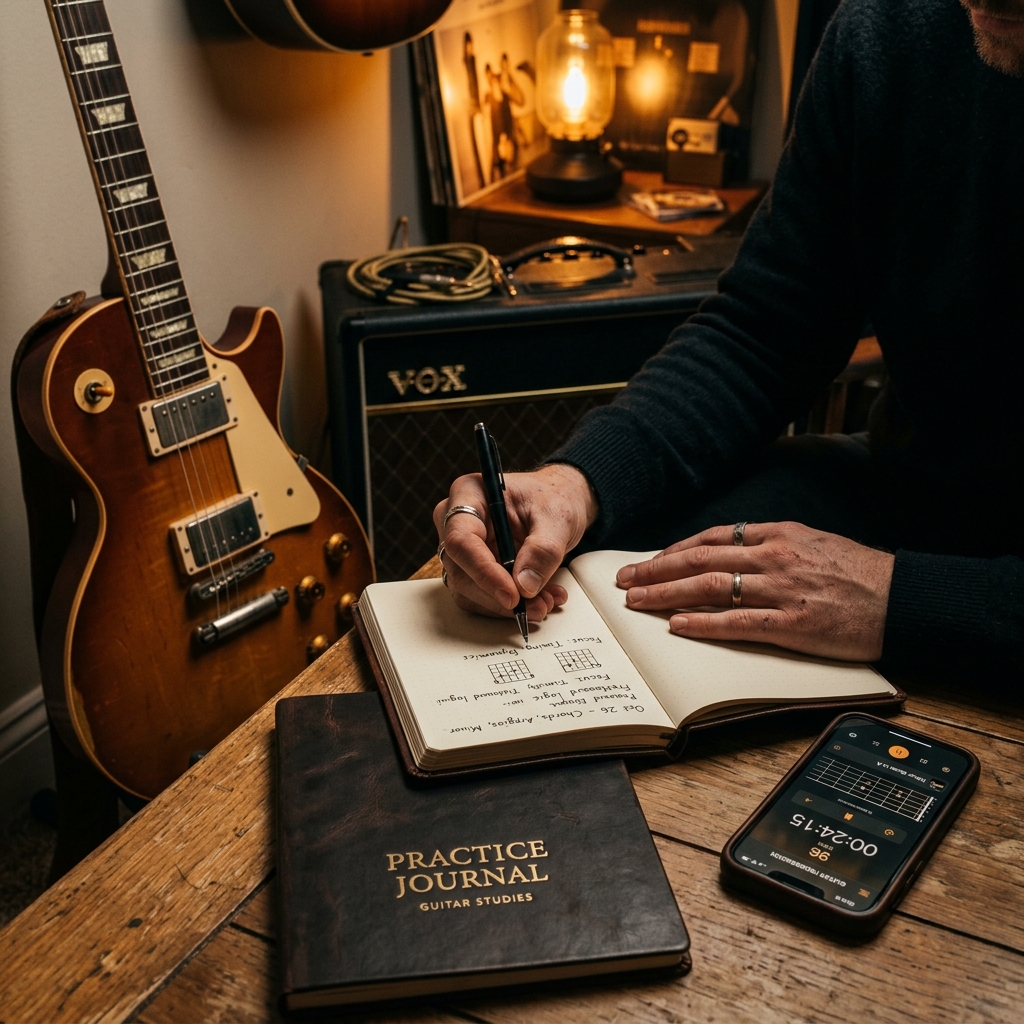
How to Track Guitar Practice Progress Effectively
What to log each session (BPM, activities, wins), how weekly reviews and self-recording turn data into real progress, and six mistakes to avoid.
Beginner Guitar Practice Routine & Checklist
From chromatic warm-ups and open chords to strumming patterns and pentatonic scales — a 15–20 minute daily practice routine and checklist for beginners.

How Long Should You Practice Guitar Daily
How long should you practice guitar daily, and how often? Starting examples for 15, 30 and 60 minutes, how to pick a schedule you can repeat, and what to log.
What these guides cover
Roughly half of the articles are about structure: what a practice routine should contain, how to split an hour between technique, theory, ear training and playing music, and what a realistic daily minimum looks like when the week gets busy. The rest are about material and measurement, from picking songs that match your current level to keeping an honest record of what you played.
They are written to be used at the guitar rather than read once. Where a guide gives a routine, it gives the timings too, and where it makes a claim about how quickly something improves, it says what that is based on.
Where to go next
Advice only becomes practice once something keeps score. Riff Quest turns a logged session into points, a streak and a growing picture of which of your skills are being neglected, and it is free to use.
If you would rather read about the app than sign up for it, the knowledge base explains every screen in plain language, the FAQ answers the short questions about scoring and setup, and the tools list covers the tabs, metronomes and backing-track apps worth using alongside it.
Getting something out of a practice guide
The failure mode with practice advice is collecting it. Reading five routines in an evening feels productive and changes nothing, because the thing that improves your playing is the same twenty minutes repeated on days when you do not feel like it. One guide, applied for a fortnight, beats a reading list every time.
So take one change from whichever article matches your current problem, and give it two weeks before judging it. If your sessions drift into whatever feels comfortable, fix the structure first. If you practise consistently but nothing seems to move, start writing sessions down, because progress on the guitar is slow enough to be invisible without a record of it. And if you are simply bored, learning a song you actually want to play is a legitimate practice plan.