Song guide · Iron Maiden
How to Play The Trooper on Guitar: Can You Hold the Gallop?
One rhythm figure decides this song: an eighth note plus two 16ths, palm muted, held at roughly 160 BPM for four minutes. Learnable in an afternoon, exhausting for months.
The Trooper is the song that teaches most guitarists what a gallop is, and it is the reason so many of them can now hear one instantly. Steve Harris wrote it around a single rhythmic cell (an eighth note followed by two 16ths) repeated relentlessly under a harmonised twin-guitar melody, with lyrics drawn from the Charge of the Light Brigade by way of Tennyson's poem.
That rhythm is the entire difficulty curve of this song. You can understand it in a minute and play it slowly within an hour. Holding it cleanly at tempo for four minutes, with the palm mute intact and the picking hand still relaxed at the end, is a project that takes most players months and builds a technique they will use in every metal song they ever learn afterwards.
The two solos add a second, separate challenge, and the harmonised intro line is worth learning even if you never play the rest. Below: what breaks first, what to practise, and how long each part realistically takes.
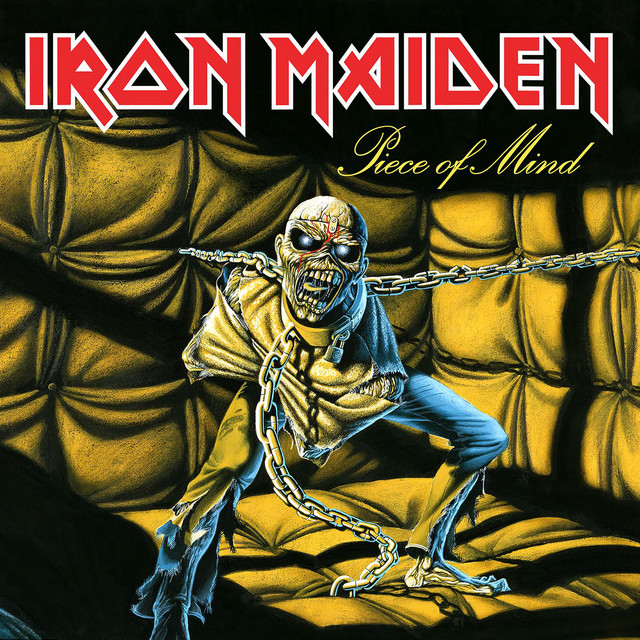
The Trooper
Iron Maiden
- Artist
- Iron Maiden (Piece of Mind, 1983)
- Tuning
- E standard
- Key
- E minor
- Tempo
- ≈160 BPM (tempo tools often report 176 or half-time 88)
- Length
- 4:11
- Written by
- Steve Harris
- Tier
- B-Tier
7.0 / 10
4
12
1–2 weeks for the riff; 2–4 months to hold it for the whole song
Live data from the Riff Quest community — difficulty is the average of real player ratings.
Where it sits on the ladder
D
C
B
The Trooper
A
S
The Trooper sits in upper-intermediate territory on the Riff Quest ladder (the badge above shows exactly where today's community rating lands it), and it is a natural gateway song: harder than the riff-based rock most players start with, considerably easier than the thrash stamina tests above it. Clear this one and the songs that used to look impossible start looking like more of the same, faster.
The verdict: one rhythm, four minutes, no hiding place
The Trooper sits in upper-intermediate territory on the Riff Quest ladder (the badge above shows exactly where today's community rating sits), and it is one of the most accurately rated songs in the library, because almost nobody is surprised by where the difficulty is. It is the gallop. Everything else in the song is either supporting that rhythm or resting on top of it.
The pattern itself is simple to describe: a longer note, then two quick ones, palm muted on the low string while the melody moves above it. Played twice it is easy. Played for four minutes at 160 BPM it exposes every inefficiency in your picking hand at once: too much motion, too much grip on the pick, a mute that drifts as your wrist tires. The classic failure is not losing the notes, it is the gallop flattening out into straight eighths as fatigue creeps in, which is instantly audible to anyone who knows the song.
The two solos are a genuinely different skill, and the harmonised guitar line at the front is the most quotable thing on the record. But if you can play the gallop for four minutes without your forearm turning to stone, you can play The Trooper, and you have also built the single most reusable rhythm technique in heavy metal.
Anatomy of the gallop
Four things have to be true at once for a gallop to sound like Iron Maiden rather than like fast strumming. Fix them in this order.
1. The rhythm: long, short, short
One eighth note followed by two 16ths, over and over. Count it aloud before you pick up the guitar. If the two short notes come out equal in length to the long one, you are playing triplets, a completely different and much flatter feel.
2. The picking pattern
Down for the long note, then down-up for the two short ones. That keeps the accent where the rhythm needs it and costs the least motion, which matters enormously when you are doing it for four straight minutes.
3. The mute
The picking-hand palm rests just in front of the bridge so the low notes are percussive rather than ringing. It has to stay in the same place as your wrist tires, and a mute that slides back mid-song is the usual reason a gallop turns muddy.
4. The tension check
Play for 60 seconds and notice your forearm. If it is pumping, the fix is a smaller picking motion and a looser grip on the pick, not more practice at that tempo. This is the single most transferable thing this song teaches.
Song map: where the difficulty actually lives
The riff sections are all variations on one demand. The solos are the only place the song asks for something different.
Harmonised intro
The twin-guitar melody that opens the song. Melodically the most memorable part and technically the most approachable, and a good first target if you are not ready for the full gallop.
Main gallop riff
The song's engine. Palm-muted gallop underneath, chord changes moving above it. Easy to play badly, demanding to play cleanly at tempo.
Verses
The gallop continues under the vocal with shifting shapes. No new technique, but this is where the minutes accumulate and your hand starts to report in.
Chorus
Broader and more open, and the closest thing to a rest in the song. Use it to release tension rather than to dig in harder.
Solos
Hardest partTwo solos in sequence, fast and melodic rather than exotic. The hardest notes in the song, though not the hardest four minutes; most players find the sustained gallop tougher overall than either solo.
Outro
Back to the gallop and the harmony line to finish. The honest test: if the rhythm is still tight here, you have actually learned the song.
Note for note, the solos are the hardest passages. In practice, the gallop is what defeats people, because it never stops, and because a tiring picking hand degrades it gradually rather than dropping notes outright. Judge your progress by the last minute of the song, not the first.
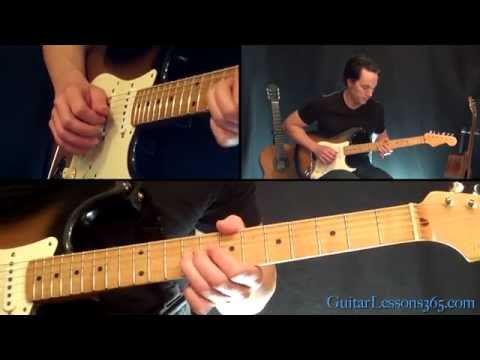
Video lessons


The skills under the hood
A short, focused list. The first two items are the song; the rest are what turns a passable version into a convincing one.
The gallop rhythm
An eighth note followed by two 16ths, repeated. Counting it out loud is the fastest way in, because the pattern has a distinctive lopsided feel that a metronome alone will not give you.
Palm muting at tempo
The mute is what makes the gallop percussive rather than blurry. It has to stay in the same place on the bridge for four minutes, which is harder than it sounds once the wrist starts to tire.
Picking-hand endurance
The real content of the song. Four minutes of continuous fast picking with no meaningful rest. This is conditioning, and it is trained with timed sets rather than by playing the song over and over.
Harmonised twin leads
Dave Murray and Adrian Smith's harmony lines are the song's melodic signature. Learning the upper line alone is satisfying on its own, and it is a good introduction to how harmony parts are built a third apart.
Lead phrasing & bends
Stretch goal — optional at first
The two solos are conventional in vocabulary compared with the rhythm work, but they move quickly and need clean bends and vibrato to sound like the record.
Staying relaxed under load
The skill that decides whether minute four sounds like minute one. Small picking motion, loose grip, and stopping the moment tension appears. This transfers to every fast song you will ever learn.
Should you attempt it yet?
You're ready if
- You can palm-mute a repeating figure on the low strings without the muted notes disappearing entirely or ringing out.
- You can hold steady alternate or downstroke picking for a minute or two without your grip tightening.
- You want a technique you will reuse constantly; the gallop shows up across metal, and this is the canonical place to learn it.
Maybe wait if
- You have never palm-muted before. Learn the mute on a slow, simple riff first; starting here means practising an unclear mute at speed.
- Your picking hand cramps after 30 seconds. That is exactly what this song will test, and pushing through builds tension rather than stamina.
- You are hoping for a quick, complete performance. The riff is fast to learn and slow to own, and the solos are a separate project entirely.
Realistic timelines
Learning the riff and owning the riff are separated by about two months for most players.
Beginner (under 1 year)
A strong first metal project. Start at 100–110 BPM and treat the harmonised intro line as a separate, achievable win along the way.
Intermediate (1–3 years)
The notes arrive fast. The stamina to hold the gallop through the outro is the real timeline, and the solos usually add a few weeks on top.
Advanced
At this level the song becomes a technique benchmark rather than a challenge, and a good way to check whether your picking hand is genuinely relaxed at speed.
The training plan
Train the rhythm before the notes, and train duration before speed. Nothing else about this song needs a plan.
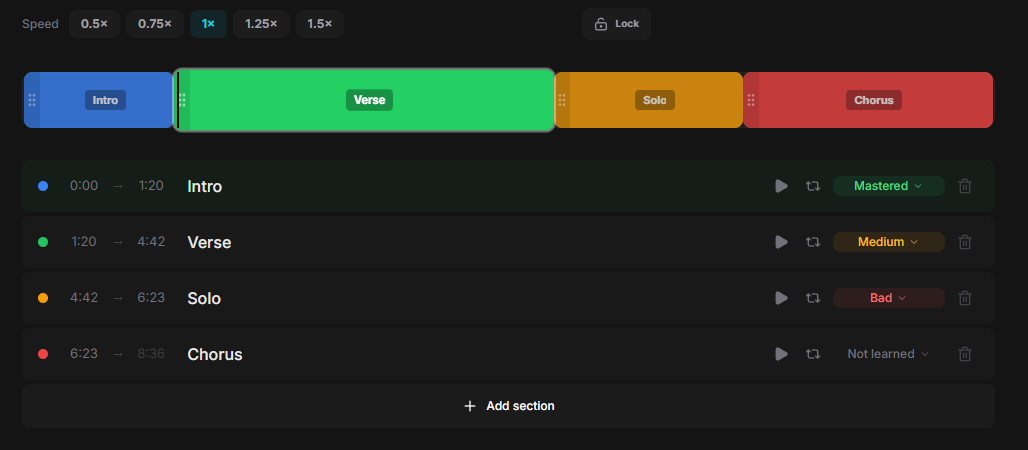
Track the minute, not the tempo
Log how far into the song your gallop stays clean each session in Riff Quest. Watching that point move from minute one to the outro is the most honest progress meter this song has.
- Loop any sectionIsolate the intro, solo, or chorus and loop just that part until it's clean.
- Track what's leftMark each section Mastered, Medium, Bad, or Not learned, so you always know what still needs work.
- Time spent per songEvery practice minute is logged against the song itself, not just a generic timer.
- Your own song libraryBuild a library of the songs you actually know, ready to revisit any time.
- Import your own tabsUpload a Guitar Pro file and turn on real-time note recognition through your mic — the same engine behind the built-in exercises.
The road to The Trooper, and past it
This is one of the best on-ramps in metal. Here is what leads in, and where the gallop takes you next.
Play these first — one step easier
Seven Nation Army
Full guideThe White Stripes
Teaches you to hold one repeating figure steady for a whole song, with none of the tempo or muting pressure.

Crazy Train
Full guideOzzy Osbourne
A gentler pedal-tone riff built on the same palm-muting foundation, at a tempo that leaves room to think.
Thunderstruck
Full guideAC/DC
The other great picking-hand endurance riff, and a useful check on whether you stay relaxed when a pattern never stops.
Where to go next — one step harder

Master of Puppets
Full guideMetallica
The stamina test one level up: eight minutes of downpicking at a tempo where the gallop's lessons about tension become non-negotiable.
Tornado Of Souls
Full guideMegadeth
Where sustained metal picking leads: the same endurance demand, faster, plus one of the hardest solos ever recorded.
Browse the full song library ranked by community difficulty to build your own path.
Sources
Frequently asked questions
Questions about Riff Quest itself — how practice is scored, what it costs, what you need to plug in — are answered on the frequently asked questions page
How hard is The Trooper on guitar?
The Trooper currently rates 7.0/10 on Riff Quest's community difficulty scale (B-Tier), putting it in upper-intermediate territory. The riff can be understood in minutes, but holding the galloping rhythm cleanly at around 160 BPM for the full four minutes is what earns the rating, and it is usually a two-to-four-month project rather than a weekend one.
What is the galloping rhythm in The Trooper?
A repeating rhythmic cell of one eighth note followed by two 16th notes, played palm-muted on the lower strings. It has a distinctive lopsided, horse-like feel, which is where the name comes from, and it is Iron Maiden's most recognisable rhythmic signature. Count it out loud before you play it, because the feel is much easier to hear than to read.
What BPM is The Trooper?
Around 160 BPM. Automated tempo tools disagree about this one, reporting anything from 88 (half-time) to 176, because the gallop can be counted in more than one way. For practice, start around 100–110 BPM and climb in small steps once the two short notes stay even.
Should I play the gallop with alternate picking or downstrokes?
Most players use a down for the long note, then a down-up pair for the two short notes, and it keeps the accent on the first note of each cell, which is what gives the gallop its character. All-downstrokes is possible and sounds heavier, but at 160 BPM for four minutes it costs far more stamina than it adds.
Is The Trooper good for a beginner?
It is a realistic goal for a late beginner, provided you already palm-mute comfortably and start well below tempo. Many players learn the harmonised intro melody first; it is the most recognisable part of the song and needs none of the endurance the gallop demands.
What is The Trooper about?
Steve Harris wrote the lyrics about the Charge of the Light Brigade during the Battle of Balaclava in the Crimean War, inspired by Tennyson's 1854 poem of the same name. The galloping guitar rhythm is a deliberate match for the subject, which is part of why the song's feel is so instantly identifiable.
About the Author

Michael Apfel
Guitarist & Creator of Riff Quest
Has been playing guitar for 14 years, including time performing live in two bands. Built Riff Quest to solve his own practice-tracking problems, and writes about practice and learning guitar drawing on hands-on experience with the instrument.
Try Riff QuestOne rhythm.
Four minutes of it.
Add The Trooper to your list, track the gallop as its own skill, and let community difficulty data show you what comes next.