Song guide · Ozzy Osbourne
How to Play Crazy Train on Guitar: From the Gallop Riff to Rhoads' Solo
The gallop riff is beginner-friendly — the real test is the tapping, legato, and pinch-harmonic solo Randy Rhoads built on top of it.
Crazy Train is one of the most common 'first real riff' songs in rock guitar, and for good reason: strip away the siren-like intro effect and what's left is a driving, palm-muted pattern anchored on one open string, well within reach of an early-intermediate player. That accessibility is exactly why the song shows up on so many beginner playlists.
It's also why so many of those same players hit a wall a minute later. Randy Rhoads was classically trained before he was a metal guitarist, and his solo on this track — tapped intro, fast legato runs, screaming pinch harmonics, blues-informed bends — is a genuine technical showcase that has almost nothing in common with the riff that got you in the door. This guide separates the two halves honestly instead of averaging them into one misleading number.
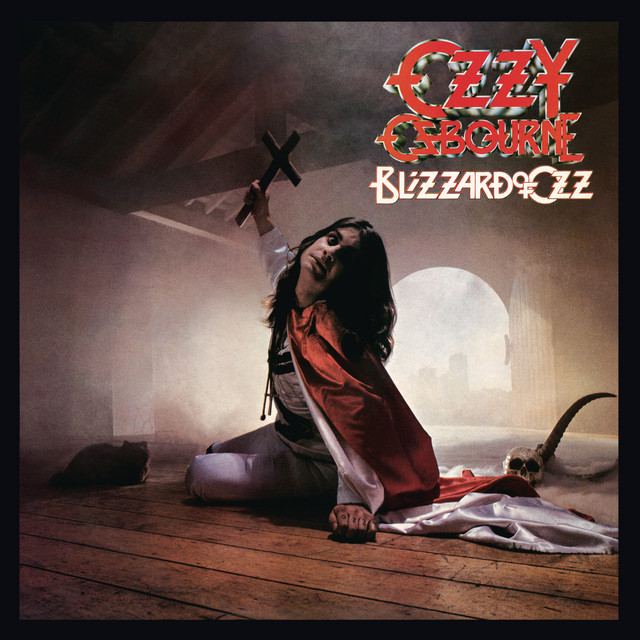
Crazy Train
Ozzy Osbourne
- Artist
- Ozzy Osbourne (Blizzard of Ozz, 1980)
- Tuning
- E standard
- Key
- A (riff), F# minor (solo)
- Tempo
- ≈136 BPM
- Length
- 4:52
- Tier
- A-Tier
Riff preview
A short tab from the song's main gallop riff.
7.7 / 10
3
15
2–4 weeks for the riff; 3–6 months for the full solo
Live data from the Riff Quest community — difficulty is the average of real player ratings.
Where it sits on the ladder
D
C
B
A
Crazy Train
S
Crazy Train sits mid-to-upper intermediate on the Riff Quest ladder (the badge above shows exactly where today's community rating lands it) — pulled up almost entirely by its solo. As a riff-only song it would rate far lower; as a complete performance including the tapping, legato, and pinch harmonics, it's a legitimate stepping stone toward full 80s-shred repertoire.
Video lessons
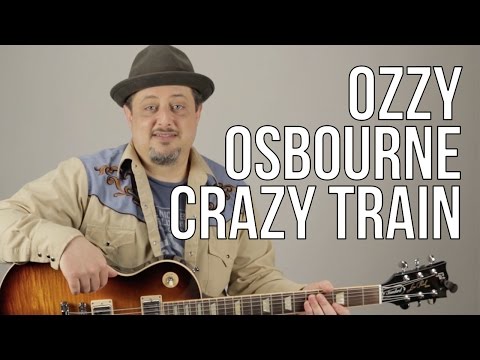


The verdict: an easy riff guarding a genuinely hard solo
On the Riff Quest ladder, Crazy Train lands mid-to-upper intermediate territory (the tier badge above shows exactly where today's community rating sits), and that single number hides a real split. The main riff — a palm-muted pattern pinned to an open low string, shifting shape as the chords change underneath — is genuinely approachable. Most players with a few months of rhythm guitar under their belt can get it sounding correct within a couple of weeks.
The solo is a different song entirely. Randy Rhoads studied classical guitar before joining Ozzy's band, and it shows: the solo opens with two-hand tapping in the Van Halen mold, moves into fast legato runs built from hammer-ons and pull-offs, throws in screaming pinch harmonics for punctuation, and closes out with blues-rooted bends and vibrato. None of it is beginner material, and none of it is optional if your goal is the full song rather than the part everyone already recognizes.
That gap between 'anyone can learn the riff' and 'the solo is an advanced-player benchmark' is the whole story of this song's difficulty rating, and it's why the timeline below treats them as two separate projects rather than one.
Song map: where the difficulty actually lives
Six sections, one enormous jump in the middle. Learn the riff-based sections as a group, then treat the solo as its own project.
Siren intro
A studio sound effect, not a guitar part — there's nothing to play until the alarm fades and the band comes in on the riff.
Main riff
The pedal-tone gallop pattern that defines the song. All palm-muted picking on an open string with fretted notes layered on top; comfortable once the muting locks in.
Verse riff
A close variation on the main riff under the vocal. Slightly sparser, and a good confidence-builder once the intro riff is solid.
Pre-chorus / bridge
Quick chord stabs and a shift in feel before the chorus. Still comfortably in riff territory, no new technique required.
Randy Rhoads guitar solo
Hardest partTapped intro, fast legato runs, pinch harmonics, and blues-rooted bends, all stitched into one continuous statement. This section alone is why the song rates as high as it does.
Outro riffing
The main riff returns for the finish. Nothing new technically, but a real test of whether the groove is still tight after the solo.
Every riff-based section in this song is learnable inside a few weeks by an early-intermediate player. The solo is a genuinely different skill level: tapping, fast legato, and pinch harmonics stacked into one 30-second passage, and it's the entire reason this song outranks most other 'first real riff' songs on difficulty.
Anatomy of the gallop riff
One pedal note, a handful of fretted notes on top, and a muting contrast that makes the whole thing groove. Break it into these pieces and it stops feeling like a wall of notes.
1. The pedal note
An open low string, palm-muted, repeated throughout the pattern as the rhythmic anchor. Get this feeling locked and steady before worrying about anything else.
2. The fretted notes on top
A short run of fretted notes played between repetitions of the pedal note — these carry the melody of the riff while the pedal note keeps the pulse.
3. The muting contrast
The pedal note stays tightly muted while the fretted notes ring out a little more openly. That contrast, not the notes themselves, is what makes the riff sound like the record instead of a flat picking exercise.
4. Shifting under the chord changes
The same shape moves to follow the underlying chords as the riff progresses into the verse and pre-chorus. Once the base pattern is automatic, the rest of the song's rhythm parts fall into place quickly.
Should you attempt it yet?
You're ready if
- You can palm-mute a repeating single-note pattern cleanly at a driving tempo without the muted notes bleeding into open ones.
- You already know basic hammer-ons and pull-offs and want a real song to push that into legato territory.
- You're specifically looking for a tapping-and-legato solo to grow into, not just another riff.
Maybe wait if
- You've never palm-muted a picking pattern before; build that on a slower riff first, or the gallop will sound mushy no matter how fast you play it.
- You expect the solo to click as fast as the riff does; it's a separate, months-long project layered on top of an easy first half.
- Pinch harmonics still feel like luck rather than a repeatable technique; that's worth isolating on its own before you chase it inside a fast solo.
The skills under the hood
The riff and the solo barely share a skill set. Both get trained here, split by how essential they are to owning the song.
Pedal-tone gallop riff
A repeating pattern anchored on one muted open string with fretted notes moving on top, shifted up the neck as the chords change. Approachable once the muting is solid.
Palm muting & rhythm precision
The riff's whole groove depends on a tight, consistent mute on the pedal note contrasted against clearer accents. Loose muting is the #1 reason a correct riff still sounds wrong.
Legato runs (hammer-ons & pull-offs)
The backbone of Rhoads' solo phrasing: fast, fluid runs played mostly with the fretting hand for a smoother, more liquid sound than picking every note.
Two-hand tapping (solo intro)
Stretch goal — optional at first
The solo opens with a burst of right-hand tapping combined with left-hand hammer-ons and pull-offs, the same vocabulary Eddie Van Halen popularized a few years earlier.
Pinch harmonics
Stretch goal — optional at first
Squealing accent notes produced by grazing the picking-hand thumb against the string right after picking. A specific hand-position skill worth isolating before chasing it at speed.
Blues-style bends & vibrato
The solo's closing phrases lean on expressive, vocal-like bends and vibrato — the most immediately learnable part of the solo for players coming from blues-rock.
Realistic timelines
The riff and the solo belong on two different clocks. Treat them that way and the song stops feeling like a moving target.
Beginner (under 1 year)
A great early 'real song' goal. Leave the solo for later; there's no shame in playing the riff-based sections and skipping straight to the next verse on record.
Intermediate (1–3 years)
The riff clicks fast. The solo is where the real practice time goes — tapping accuracy and legato speed build gradually, not overnight.
Advanced
Notes arrive quickly for an experienced player; the real project is matching Rhoads' phrasing and tone, not just hitting the right frets.
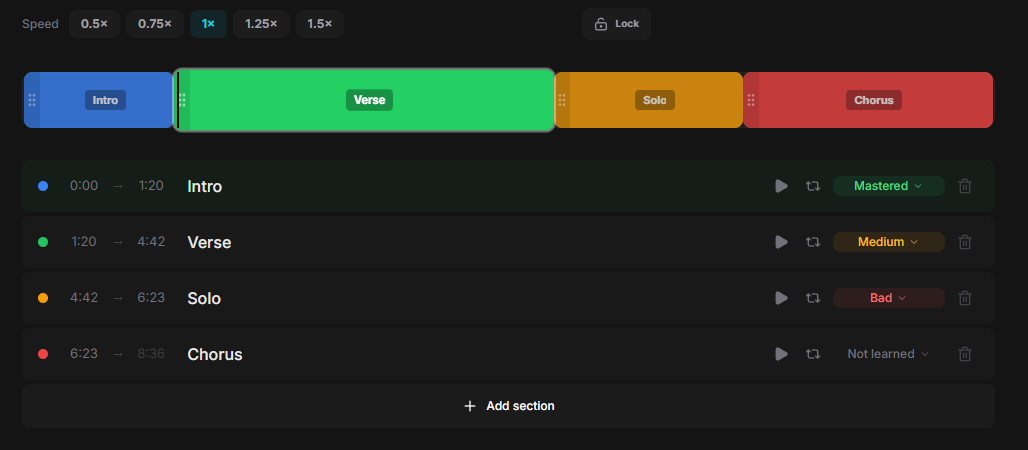
Split it into two real goals
Riff Quest lets you track the riff and the solo as separate quests: bank an early win on the gallop pattern this week, then chip away at the tapping and legato runs as their own multi-month project.
- Loop any sectionIsolate the intro, solo, or chorus and loop just that part until it's clean.
- Track what's leftMark each section Mastered, Medium, Bad, or Not learned, so you always know what still needs work.
- Time spent per songEvery practice minute is logged against the song itself, not just a generic timer.
- Your own song libraryBuild a library of the songs you actually know, ready to revisit any time.
- Import your own tabsUpload a Guitar Pro file and turn on real-time note recognition through your mic — the same engine behind the built-in exercises.
The training plan
Front-load the riff so you have a performable version fast, then treat the solo as a separate multi-week project.
The road to Crazy Train, and past it
The riff is an early win almost anyone can reach quickly. The solo is a longer climb — here's what leads in and what comes next.
Play these first — one step easier
Iron Man
Black Sabbath
Ozzy's other iconic riff, and a gentler introduction to the same driving, muted eighth-note feel.
Enter Sandman
Full guideMetallica
Builds the same tight palm-muting and steady picking-hand rhythm the Crazy Train riff depends on.
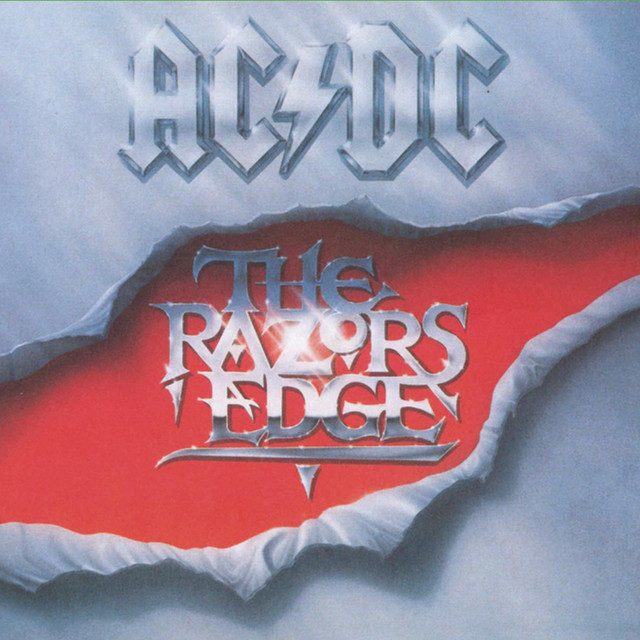
Thunderstruck
Full guideAC/DC
Trains raw picking-hand speed and precision on a single string — the same right-hand stamina Crazy Train's riff and solo both draw on.
Where to go next — one step harder
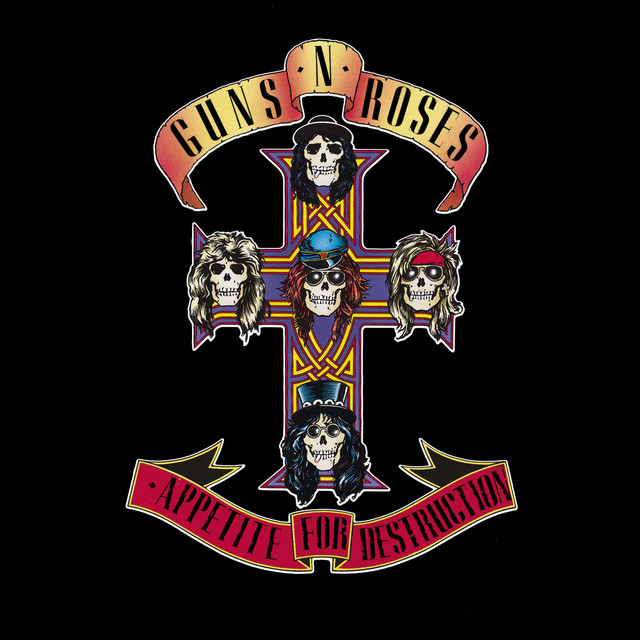
Sweet Child O' Mine
Full guideGuns N' Roses
Another song where an approachable riff hides a full-length guitar-hero solo — this time built on string-skipping precision instead of tapping.
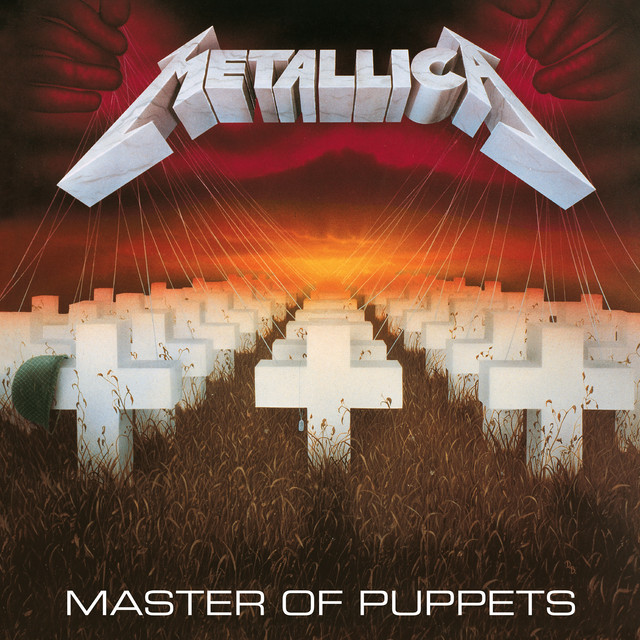
Master of Puppets
Full guideMetallica
A different axis of difficulty entirely: instead of one flashy solo, it's eight minutes of relentless downpicking stamina.
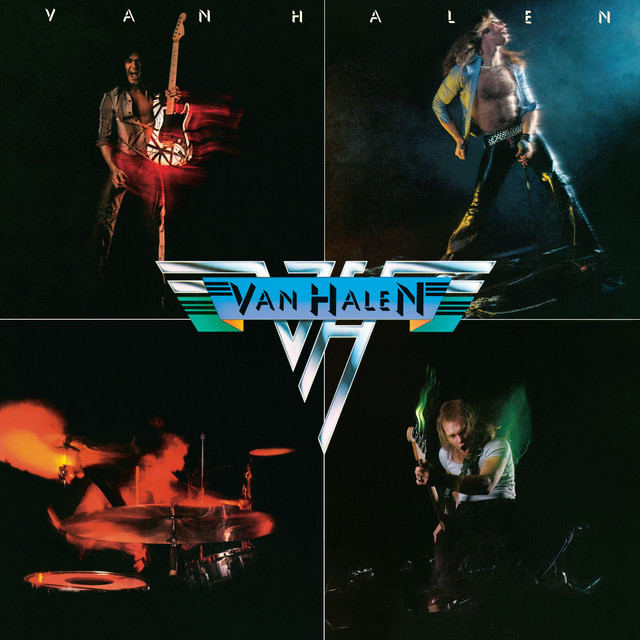
Eruption
Full guideVan Halen
The tapping and legato vocabulary Crazy Train's solo introduces, taken to its purest and most extreme form.
Browse the full song library ranked by community difficulty to build your own path.
Sources
Frequently asked questions
Questions about Riff Quest itself — how practice is scored, what it costs, what you need to plug in — are answered on the frequently asked questions page
How hard is Crazy Train on guitar?
Crazy Train currently rates 7.7/10 on Riff Quest's community difficulty scale (A-Tier). That number is pulled up almost entirely by the solo — the riff-based sections on their own would rate considerably lower, comfortably within reach of an early-intermediate player.
Is the Crazy Train solo tapped?
Partly. Randy Rhoads opens the solo with a burst of two-hand tapping in the same vocabulary Eddie Van Halen made famous, then moves into fast legato runs (hammer-ons and pull-offs without tapping), pinch harmonics, and blues-style bends. It's a mix of techniques, not one trick repeated throughout.
What key is Crazy Train in?
The main riff and verses sit in A, while the guitar solo is built around F# minor (its relative minor) using the Aeolian mode with a couple of chromatic exceptions. That shift is part of why the solo feels like a different piece of music from the riff around it.
What BPM is Crazy Train?
Around 136 BPM on the studio recording, though automated tempo tools sometimes read it a beat or two off in either direction. For practice, start the riff well under tempo (60–70% is plenty to start) and climb gradually with a metronome.
Can a beginner play Crazy Train?
The riff, yes — it's one of the more common early 'real song' goals for exactly that reason. The full solo is not a beginner project; most players spend months building the legato speed, tapping accuracy, and pinch-harmonic control it demands, and it's completely reasonable to play the song's riff sections and set the solo aside until later.
What's that siren sound at the start of the song?
It's a studio sound effect layered in before the band comes in, not a guitar part — there's nothing to learn there. The actual riff starts once the alarm-like effect fades and the palm-muted gallop pattern kicks in.
About the Author

Michael Apfel
Guitarist & Creator of Riff Quest
Has been playing guitar for 14 years, including time performing live in two bands. Built Riff Quest to solve his own practice-tracking problems, and writes about practice and learning guitar drawing on hands-on experience with the instrument.
Try Riff QuestAll aboard,
one section at a time.
Add Crazy Train to your list, track the riff and the solo as separate goals, and let community difficulty data show you exactly what's next.