Song guide · The White Stripes
How to Play Seven Nation Army on Guitar: One Riff, Four Sections
The four-note riff takes five minutes to learn — the real challenge is keeping it locked to a beat with no drummer, not the notes themselves.
Ask any guitarist to name a riff you can learn in five minutes, and Seven Nation Army comes up almost every time. Four notes, one string, no chords: it genuinely is one of the easiest famous riffs in rock to get under your fingers. What most beginners don't realize is that the bass-like tone on the record isn't a bass at all; it's Jack White's guitar pushed down an octave through a pitch-shift pedal, which is why the riff sounds heavier on the album than it does played clean.
That's also why this guide exists: the riff being easy is only half the story. Playing it in time without a drummer to keep you honest, muting the other five strings cleanly, and eventually tackling the song's quiet-loud dynamics and guitar solo take it from campfire trick to something you can actually perform. Here's the honest breakdown.
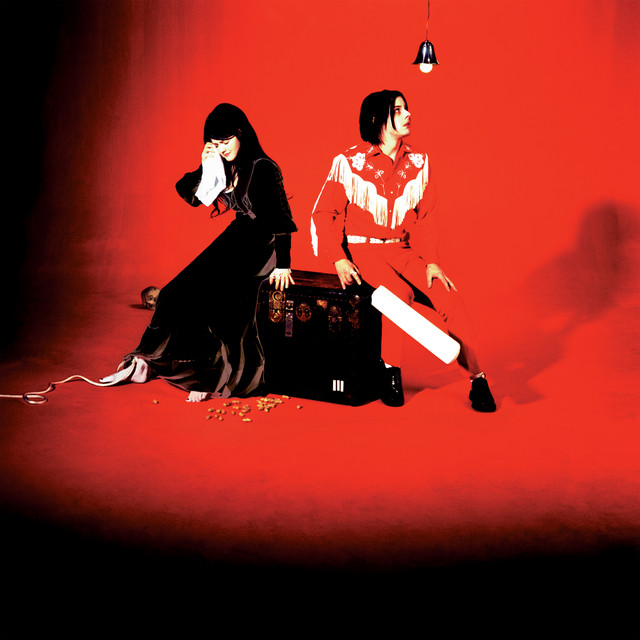
Seven Nation Army
The White Stripes
- Artist
- The White Stripes (Elephant, 2003)
- Tuning
- E standard
- Key
- E minor
- Tempo
- ≈120 BPM
- Length
- 3:51
- Tier
- D-Tier
2.3 / 10
23
69
A day for the riff; 2–4 weeks for the full song
Live data from the Riff Quest community — difficulty is the average of real player ratings.
Where it sits on the ladder
D
Seven Nation Army
C
B
A
S
Seven Nation Army sits low on the Riff Quest ladder (the badge above shows exactly where today's rating lands it), and that's exactly the point: it's built to be a guitarist's first real, recognizable song rather than a technical benchmark. Its only genuinely advanced moment, the guitar solo, previews the bending and phrasing skills that the next tier up will ask for in full.
Video lessons



The verdict: five minutes for the riff, weeks for the song
Seven Nation Army sits low on the Riff Quest difficulty scale (check the tier badge above for today's exact reading), and for once that's not a trick. The main riff really is four notes on the low E string, single-note, no chord shapes, no string skipping. Most beginners with a few months of playing can get it sounding correct within a single practice session.
The catch is what surrounds it. Locking the riff to the drums without rushing, muting the other five strings so nothing else rings, and nailing the song's dynamic drops (the verses go nearly silent before the chorus slams back in) are genuine rhythm-guitar skills, not finger-strength problems. The wah-driven guitar solo near the end is a different animal again: bends, vibrato, and phrasing that sit well above the riff's difficulty.
That gap between playing the correct notes and actually performing the song is exactly why this one is such a good teaching tool. It's usually the first real lesson in that difference.
Song map: four sections, one surprise
The riff repeats far more than it changes. Here's where the actual difficulty hides.
Main riff (intro)
Four notes, one string, repeated. Genuinely one of the easiest famous riffs in rock at slow to medium tempo.
Quiet verses
The band drops out almost entirely under the vocal. Playing convincingly restrained is harder than playing loud.
Chorus / full-band riff
The riff returns at full volume with drums and, on the record, the octave-down guitar tone. Locking in with a full band is the real test.
Guitar solo
Hardest partBendy, vocal-sounding blues-rock lead over the riff's chord changes, driven by a wah pedal. The only genuinely advanced section in the song.
The riff will never be the hard part. The solo is where the song's real difficulty lives, and it's entirely optional if all you want is the part everyone recognizes.
Anatomy of the riff
One string, one repeating shape. Break it into these three pieces and the 'hardest riff in rock' myth disappears.
1. The note pattern
A quick syncopated pickup, then a short run up and back down, all on the A string.
2. The muting
Every other string has to stay silent while the A string rings out. Rest your palm lightly across the low E, D, G, B, and high E strings and check each one by ear.
3. The illusion
On record it sounds like a bass because Jack White ran the same guitar through a DigiTech Whammy pedal set an octave down. Play it on a clean electric or acoustic and you'll hear the real, unprocessed riff.
The skills under the hood
The riff barely touches these. The full song is where they actually get used.
Single-note riff accuracy
Four notes on the low E string in a simple repeating pattern. The whole challenge is timing, not fretting.
Palm muting the idle strings
The riff lives on one string, but the other five need to stay silent. Sloppy muting is the single biggest beginner mistake on this song.
Dynamic control (quiet verses, loud chorus)
The verses drop to almost nothing before the chorus slams back in. Playing convincingly quiet is a real skill most beginners skip.
Steady rhythm without a click
The riff repeats for minutes at a steady tempo alongside the drums. Speeding up under a simple pattern is the classic trap.
Bends, vibrato & wah (guitar solo)
Stretch goal — optional at first
Jack White's solo is expressive blues-rock lead work driven by a wah pedal, a different discipline entirely from the riff.
Is this your song right now?
You're ready if
- You can fret a single note cleanly on the low E string and follow a steady beat.
- You've been playing for a few months and want a real riff, not another exercise.
- You want a song that works great with a bassist or a second guitarist for a full-band feel.
- You're ready to work on dynamics: playing quietly on purpose, not just loudly.
Maybe wait if
- You've never fretted a note before; a few open chords first will make this click faster.
- You expect the solo to be as easy as the riff; it's a separate, more advanced project.
- You don't have a pitch-shift or octave pedal and mind that your version won't sound exactly like the record.
How long will it actually take?
Real numbers for the riff versus the whole song, at 20–30 minutes a day.
Beginner (a few months in)
The notes click almost immediately. Getting the muting and timing tight with a metronome takes a few extra days.
Intermediate (1–2 years)
Riff, verses, and chorus dynamics come together fast. The solo is the only part that needs real practice time.
Advanced
The whole song is quick work; the interesting part is playing the solo with real phrasing instead of just hitting the notes.
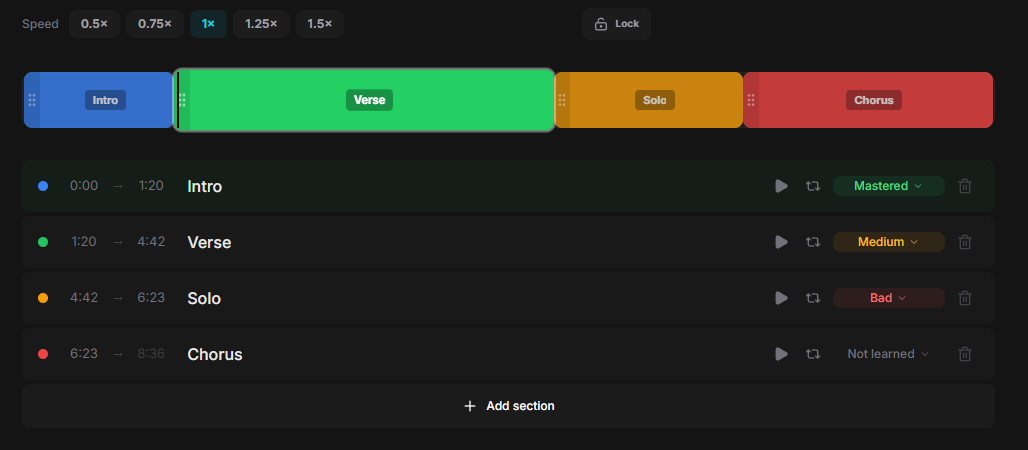
Track the riff, then the solo
Riff Quest lets you log the riff and the solo as separate goals: nail the four-note riff today, then chip away at the wah-driven solo as its own project whenever you're ready.
- Loop any sectionIsolate the intro, solo, or chorus and loop just that part until it's clean.
- Track what's leftMark each section Mastered, Medium, Bad, or Not learned, so you always know what still needs work.
- Time spent per songEvery practice minute is logged against the song itself, not just a generic timer.
- Your own song libraryBuild a library of the songs you actually know, ready to revisit any time.
- Import your own tabsUpload a Guitar Pro file and turn on real-time note recognition through your mic — the same engine behind the built-in exercises.
The practice plan
Front-load the riff (it's fast), then spend the real time on dynamics and the solo.
Before and after Seven Nation Army
This song is usually a very early win. Here's where it fits in a real progression.
Play these first — one step easier
Horse with No Name
America
If fretting a clean single note is still new, this two-chord song builds the rhythm hand first.

Come as You Are
Full guideNirvana
Another single-note riff over a steady pulse; trains the same muted, hypnotic groove.
Smoke on the Water
Full guideDeep Purple
The other classic 'first real riff' song; slightly more finger movement, similar single-line simplicity.
Where to go next — one step harder

Nothing Else Matters
Full guideMetallica
The natural next step: still beginner-friendly at the start, with a real fingerstyle and solo challenge waiting.

Sunshine of Your Love
Cream
Another iconic riff-first blues-rock song, with a similarly bendy, wah-adjacent solo to grow into.
Hotel California
Full guideEagles
Trades single-note simplicity for barre chords and a much longer lead-guitar exam.
Browse the full song library ranked by community difficulty to build your own path. Or pick from the 15 easiest songs to play on guitar, ranked by players.
Frequently asked questions
Questions about Riff Quest itself — how practice is scored, what it costs, what you need to plug in — are answered on the frequently asked questions page
How hard is Seven Nation Army on guitar?
Seven Nation Army currently rates 2.3/10 on Riff Quest's community difficulty scale (D-Tier). The main riff is genuinely one of the easiest famous riffs in rock: four notes on one string. The difficulty comes from the surrounding song: clean muting, real dynamic contrast between verse and chorus, and a guitar solo that's a clear step up from the riff.
Is Seven Nation Army a good song for beginners?
Yes, probably one of the best. The riff uses a single string and no chord shapes, so it's learnable within days by someone a few months into playing. Just don't expect the guitar solo to be as easy; that's a separate, more advanced project for later.
How is the bass sound made if there's no bass guitar?
Jack White played the riff on a semi-acoustic guitar through a DigiTech Whammy pedal, a pitch-shift effect, set to drop the signal down an octave. That's why the record sounds like a bass line even though The White Stripes had no bassist.
What tuning is Seven Nation Army in?
Standard E tuning (E A D G B E), in the key of E minor. No drop tuning or capo is needed to play the riff exactly as recorded.
What BPM is Seven Nation Army?
The recording sits at roughly 120 BPM in common time. Most players learn the riff slow and steady first, since a simple repeating pattern like this one is easy to rush without a drummer keeping time.
What should I learn after Seven Nation Army?
If the riff felt easy, Nothing Else Matters is a natural next step: still beginner-friendly at first, with a real fingerstyle and solo challenge waiting further in. If you want to stay in the same bendy, wah-driven solo territory, Sunshine of Your Love is a good next target.
About the Author

Michael Apfel
Guitarist & Creator of Riff Quest
Has been playing guitar for 14 years, including time performing live in two bands. Built Riff Quest to solve his own practice-tracking problems, and writes about practice and learning guitar drawing on hands-on experience with the instrument.
Try Riff QuestFour notes today,
a whole song this month.
Add Seven Nation Army to your list, track the riff and solo separately, and let community difficulty data show you exactly what's next.