Song guide · Metallica
How to Play Nothing Else Matters on Guitar: An Honest Breakdown
Easier than its reputation for the first sixteen bars — the real difficulty starts after the second chorus, in the interlude and solo.
Nothing Else Matters is the song that turns strummers into fingerstyle players. The intro is built on an open E minor arpeggio that sounds beautiful from the very first day, which is exactly why it has been the gateway into fingerpicking for millions of guitarists since 1991.
But the song is sneaky. The first sixteen bars are genuinely beginner-friendly, then the interlude and the solo quietly climb two difficulty tiers. This guide breaks the song into its real layers, so you know exactly which parts you can play today, which parts need work, and whether it's the right song for your level at all.
Nothing Else Matters
Metallica
- Artist
- Metallica (The Black Album, 1991)
- Tuning
- E standard
- Key
- E minor
- Feel
- Slow 6/8 ballad
- Length
- 6:28
- Tier
- C-Tier
5.4 / 10
19
56
2–4 weeks for the core song
Live data from the Riff Quest community — difficulty is the average of real player ratings.
Where it sits on the ladder
D
C
Nothing Else Matters
B
A
S
In the Riff Quest tier system, Nothing Else Matters is a classic intermediate song (the badge above shows exactly where today's rating places it) and the tier where guitarists stop playing 'exercises' and start playing music people request. It's often the first song at this level a player learns, and one of the best, because its hardest parts preview exactly the skills the next tier up will demand.
The verdict: easy to start, honest work to finish
Nothing Else Matters sits in the intermediate range on the Riff Quest ladder; check the tier badge above for today's exact reading. That grade hides a split personality. The intro and verses are genuinely beginner-friendly: open strings, slow tempo, one repeating picking pattern, and no chord shapes that hurt. If you have six months of playing behind you, you can have the intro sounding respectable in a weekend.
The number climbs because of everything after the second chorus. The interlude moves the arpeggios up the neck onto fretted shapes, the dynamics need real right-hand control, and the solo (famously played by James Hetfield instead of Kirk Hammett) is melodic but full of expressive bends and one quick pull-off run that surprises almost everyone the first time.
Call it what it is: a song with a beginner-friendly front door and an advanced back room. That structure is exactly what makes it such a good learning song; you're never stuck, and there's always a next layer.
Is this your song right now?
You're ready if
- You can fret basic open chords (Em, Am, C, D, G) cleanly.
- You've played for roughly 6–12 months and want your first fingerstyle piece.
- You're happy to learn the song in layers: intro first, solo much later.
- You want a song that impresses people without needing a band behind you.
Maybe wait if
- You've never fretted a full chord: spend a few weeks on open chords first.
- You expect to nail the solo in week one; it's a separate, later project.
- You only strum with a pick and refuse to fingerpick: this song is the argument for learning.
The fingerpicking pattern, decoded
One pattern powers most of the song. Break it into these four moves and the intro assembles itself.
1. Anchor the thumb
Thumb (p) plays the open low E on the downbeat. It's the heartbeat; everything else hangs off it. Practice just thumb-on-1 with a metronome until it's boring.
2. Roll i–m
Index picks the open G/B, middle picks the high E, in a gentle upward roll. No plucking force: think 'brushing the string out of the way'.
3. Let everything ring
The magic is sympathetic ringing: no finger should touch a string that's still sounding. If the texture sounds dry, something is muting.
4. Add the melody on top
The fretted melody notes drop into the same pattern; the pattern never changes, only which strings get fretted. Learn melody notes separately, then merge.
Video lessons
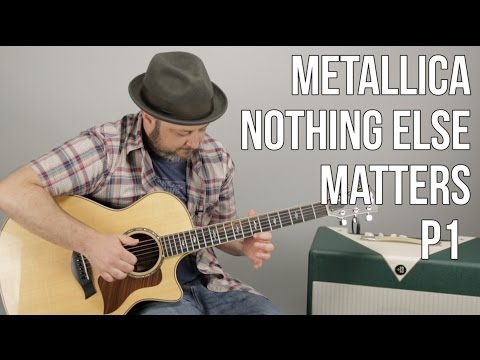


Techniques you'll actually use
Nothing Else Matters teaches fingerstyle technique while sounding like a simple ballad. Here's what the song will teach your hands, in order of importance.
Fingerpicking (p‑i‑m arpeggios)
The heart of the song. Thumb covers the low E, index and middle roll through the open B and high E strings. The pattern repeats so often it becomes automatic within days.
Chord arpeggios up the neck
The interlude fingerpicks fretted shapes around the 7th–9th frets. Same right hand, but now the left hand has to hold clean shapes while strings ring together.
Dynamics & right-hand control
The song lives and dies on the difference between the whispered verses and the big choruses. Learning to control volume with your fingers is the real skill being trained.
Strummed power-chord chorus
The chorus shifts to picked/strummed chords. The switch from fingers to a heavier attack (or hybrid picking) mid-song is a small skill of its own.
Expressive bends & vibrato (solo)
Stretch goal — optional at first
Hetfield's solo is about singing bends, not speed, until the fast pull-off run near the end. Treat it as a separate mini-course in phrasing.
The song, section by section
This is where the overall rating comes from: the song is really four difficulty plateaus stacked on top of each other.
Intro (open Em arpeggio)
All open strings at first, then simple fretted notes over the ringing pattern. Slow 6/8 feel gives you time to think. This is the part everyone learns first, and should.
Verse
The intro pattern continues under vocal phrases with small chord movements (Em, D, C, G). The challenge is keeping the pattern even while shapes change.
Chorus
Bigger dynamics, fuller chords, and the switch from delicate picking to a driving feel. Not technical, but it exposes weak rhythm instantly.
Interlude arpeggios
Fretted arpeggio shapes higher up the neck with position shifts. The left hand finally has to work. Most players plateau here for a week or two.
Solo
Hardest partMelodic and singable, so it feels learnable, but the bends must hit pitch dead-on at a slow tempo where every miss is audible, and the closing pull-off run needs genuine practice.
The hardest 20 seconds of the song is the fast descending run at the end of the solo. It's the only moment that demands speed. Everything else that's 'hard' in Nothing Else Matters is hard in the exposed-and-slow way: there's nowhere to hide a buzzing note when the whole band drops to a whisper.
How long will it take you?
Real numbers from how guitarists actually progress through this song, assuming 20–30 minutes of practice a day.
Beginner (6–12 months playing)
Intro, verse, and chorus sounding clean. The interlude will be rough; park the solo for now.
Intermediate (1–3 years)
Full song including interlude. The solo's bends and final run take a second week of focused work.
Advanced
The notes come fast; the time goes into dynamics and making the slow bends actually sing.
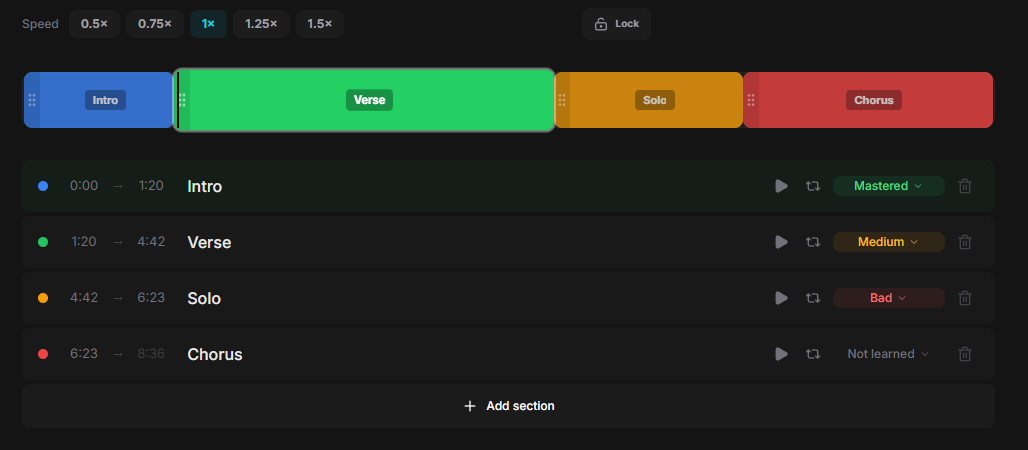
Track your layers
Riff Quest players log Nothing Else Matters section by section (intro first, solo last) and watch their fingerstyle stat climb with every session.
- Loop any sectionIsolate the intro, solo, or chorus and loop just that part until it's clean.
- Track what's leftMark each section Mastered, Medium, Bad, or Not learned, so you always know what still needs work.
- Time spent per songEvery practice minute is logged against the song itself, not just a generic timer.
- Your own song libraryBuild a library of the songs you actually know, ready to revisit any time.
- Import your own tabsUpload a Guitar Pro file and turn on real-time note recognition through your mic — the same engine behind the built-in exercises.
The smart order to learn it
The song layers naturally. Learn it in this order and you'll always have something playable while the next layer cooks.
Before and after Nothing Else Matters
The fastest way to improve is picking songs one notch above your level, not five. Here's where this song sits in a real progression.
Play these first — one step easier
Horse with No Name
America
Two chords and a simple strum: confirms your rhythm hand before fingerpicking enters.
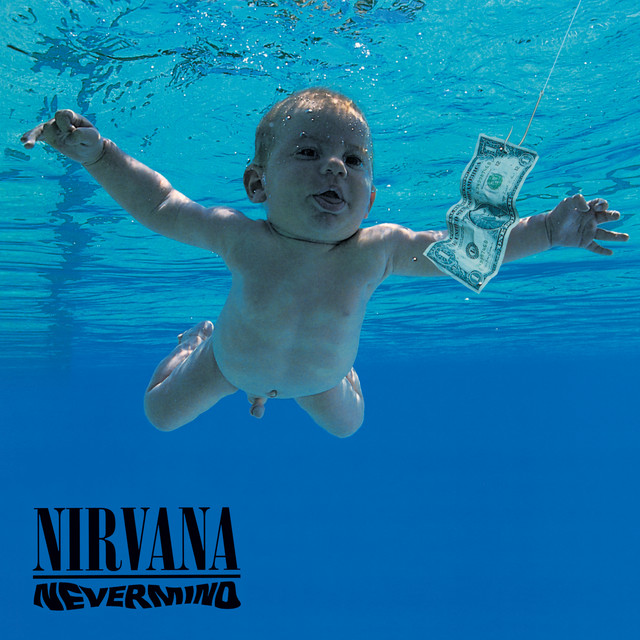
Come as You Are
Full guideNirvana
Single-note riff over a steady pulse: trains the same 'melody over drone' feel with a pick.
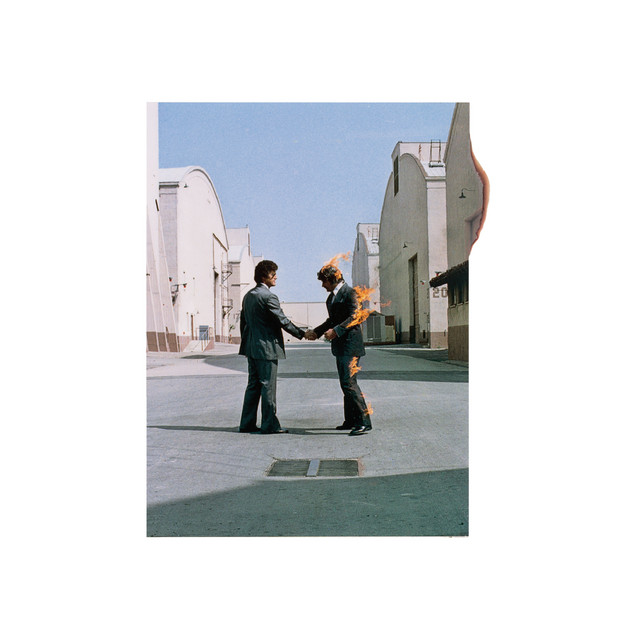
Wish You Were Here
Full guidePink Floyd
Open-position riffing mixed with strumming: the ideal warm-up act for NEM's chord-plus-melody world.
Where to go next — one step harder
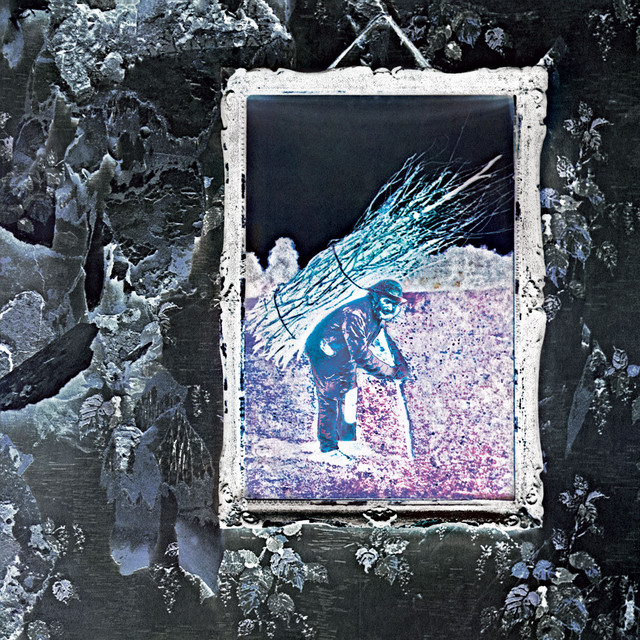
Stairway to Heaven
Full guideLed Zeppelin
The natural next summit: same fingerpicked-intro DNA, but with a far bigger journey and a real lead-guitar exam at the end.
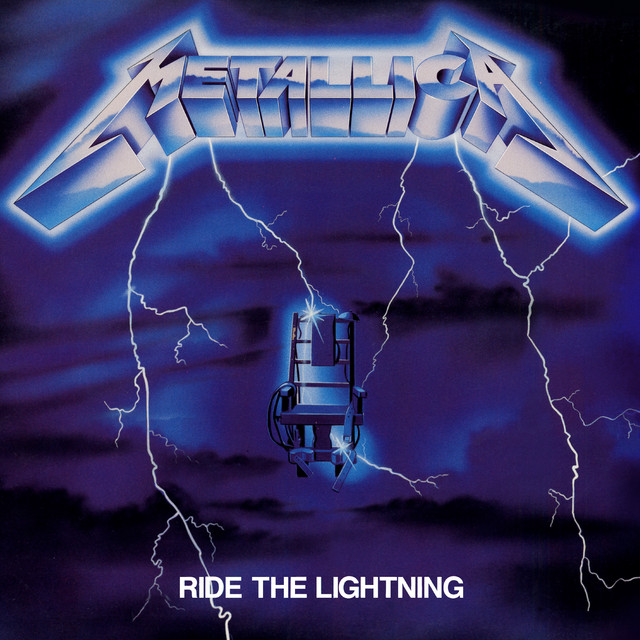
Fade to Black
Full guideMetallica
Metallica's other clean ballad: picked arpeggios that many find easier, then a heavy second half and a much faster outro solo.
Hotel California
Full guideEagles
Trades open-string comfort for barre chords and a harmonized solo: the next rung for your fretting hand.
Browse the full song library ranked by community difficulty to build your own path. Or pick from the 15 easiest metal songs to play on guitar, ranked by players.
Frequently asked questions
Questions about Riff Quest itself — how practice is scored, what it costs, what you need to plug in — are answered on the frequently asked questions page
Is Nothing Else Matters a good first song for beginners?
The intro is one of the best first fingerpicking pieces on guitar: it uses open strings, a slow tempo, and one repeating pattern. The full song is not a first song: the interlude and solo are solidly intermediate. Learn the intro early, and treat the rest as a goal for your first year.
Do I need to fingerpick, or can I use a pick?
You can play it with a pick, but you shouldn't. The song was written around fingerpicked arpeggios (James Hetfield plays it with his fingers) and the warm, ringing texture is the entire point. It's also the single best excuse you'll ever get to learn fingerstyle.
How long does it take to learn Nothing Else Matters?
A beginner with six months of playing typically gets the intro, verse, and chorus clean in two to four weeks. The interlude adds another week or two. The solo is a separate project: expect a few more weeks of focused work on bends and the final fast run.
What tuning is Nothing Else Matters in?
Standard E tuning (E A D G B E). No capo, no drop tuning: one of the few Metallica songs you can play without touching your tuners.
Is the Nothing Else Matters solo hard?
It's the hardest part of the song: a solid intermediate solo. Not because of speed (only the final descending run is fast), but because the slow tempo exposes every bend that doesn't hit pitch. It's an excellent first 'real' solo precisely because it forces accuracy over flash.
What should I learn after Nothing Else Matters?
If the fingerpicking hooked you, Stairway to Heaven is the natural next climb, one tier up: a real step, not a leap. If you want to stay with Metallica, Fade to Black uses the same clean-arpeggio DNA with a pick, and its outro solo is a bigger project than anything in Nothing Else Matters.
About the Author

Michael Apfel
Guitarist & Creator of Riff Quest
Has been playing guitar for 14 years, including time performing live in two bands. Built Riff Quest to solve his own practice-tracking problems, and writes about practice and learning guitar drawing on hands-on experience with the instrument.
Try Riff QuestLearn it layer
by layer.
Add Nothing Else Matters to your Want to Learn list, log your practice, and let the community's difficulty data pick your next song at exactly the right level.