Song guide · Deep Purple
How to Play Smoke on the Water on Guitar: Easy Riff, Wrong Riff
The riff is one of the easiest in rock to play, and the single-note version almost everyone learns is not the one on the record.
Smoke on the Water is the first riff most guitarists ever learn, usually within a week of picking the instrument up. Four positions, no chord shapes, no speed: on the Riff Quest community scale it sits near the bottom, and that reputation is fair. What is not fair is the version being taught. The riff on Machine Head is a blues melody in G minor harmonised in parallel fourths, plucked with the thumb and index finger, and it starts on the open D and G strings, not the single-note line on the D string, and not power chords from the 5th fret of the A string.
That gap between the famous version and the recorded one is what makes this song worth a guide rather than a tab. The correct shape is no harder than the wrong one: the same fret numbers, one string apart, played with fingers instead of a pick. Learning it right the first time costs nothing and gives you the dark, hollow sound the riff is famous for. Below: how hard the whole song really is, the fourths shape in full, and where it fits in a real progression.
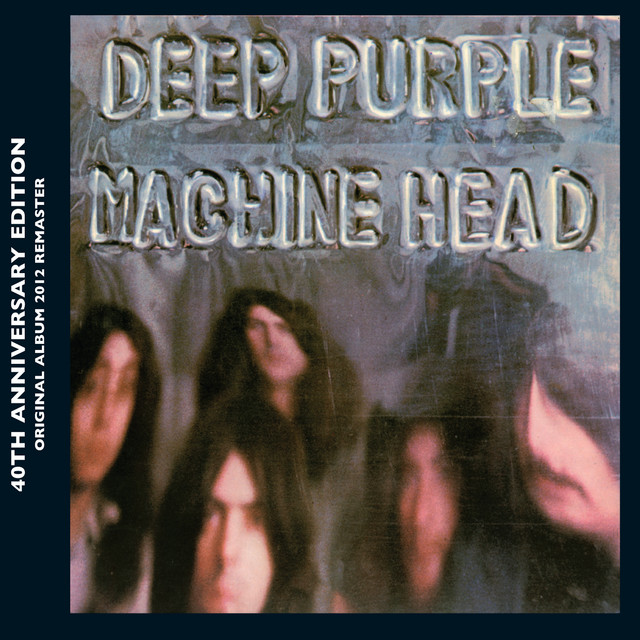
Smoke on the Water
Deep Purple
- Artist
- Deep Purple (Machine Head, 1972)
- Tuning
- E standard
- Key
- G minor
- Tempo
- ≈114 BPM
- Length
- 5:40
- Tier
- D-Tier
3.9 / 10
22
166
An afternoon for the riff; 2-3 weeks for the full song
Live data from the Riff Quest community — difficulty is the average of real player ratings.
Where it sits on the ladder
D
Smoke on the Water
C
B
A
S
Smoke on the Water sits at the very bottom of the Riff Quest ladder (the badge above shows exactly where today's community rating lands it), which is exactly what a first song should do. Its value is not the challenge but the habit: two strings landing together, four strings staying silent, and a slow tempo held honestly. Every riff above it on the ladder assumes those three things already work.
The verdict: easy to play, easy to play wrong
Smoke on the Water sits at the bottom of the Riff Quest ladder (the badge above shows exactly where today's community rating lands it), and it deserves to. The main riff has four positions, no stretches, no speed requirement, and repeats for most of the song. A player two weeks into the instrument can make it recognisable.
The catch is accuracy, not difficulty. Ritchie Blackmore plays the riff as parallel fourths: two strings at once, same fret on both, plucked with thumb and index finger rather than struck with a pick. Wikipedia describes the part as a four-note blues scale melody in G minor harmonised in parallel fourths, and Blackmore has demonstrated the difference himself more than once. Played as single notes, the riff is thinner and brighter; the fourths are what make it sound medieval and foreboding instead of cheerful.
So the honest rating is low, with an asterisk. The notes are beginner material; the technique is a genuine early lesson in fingerstyle and in letting two strings speak as one. The solo, which almost nobody bothers with, is the only part of the song that belongs in a higher tier.
The version you learned vs the version on the record
Four differences separate the playground version of this riff from Deep Purple's. None of them is harder than what you already play.
1. Two strings, not one
The riff is a melody with a fourth stacked underneath it. Every position is the same fret on the D and G strings played together, so the fretting hand does no extra work.
2. It starts open
The first shape is the open D and G strings, not a fretted note. Versions that start at the 5th fret of the A string are in the wrong place on the neck.
3. Fingers, not a pick
Thumb on the D string, index finger on the G string, pulled at the same instant. A pick hits the two strings a fraction apart and catches the neighbours on the way through.
4. Fourths, not thirds
The interval is the whole point. Fourths were a medieval harmony device and they sound hollow and dark, which is why this riff never turns sweet the way a harmony in thirds would.
The four shapes
The entire riff is these four positions on the D and G strings, in the order 0-3-5, 0-3-6-5, 0-3-5, 3-0.
D and G strings, open
The home shape. Let both strings ring fully, so it sounds as intentional as the fretted positions rather than like a warm-up.
3rd fret, D and G strings
One finger flat across both strings works fine here. Check that the G string is not being choked by the finger's angle.
5th fret, D and G strings
The peak of the phrase and the shape held longest, so this is where uneven plucking is most audible.
6th fret, D and G strings
The passing shape that appears only in the second phrase. It is the blue note that makes the riff sound like a blues instead of a scale.
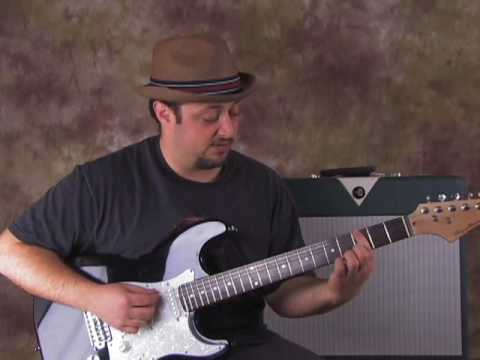
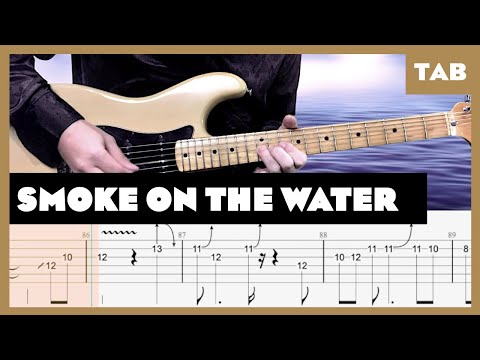
Video lessons

The skills under the hood
Almost none of these are about the fretting hand. This riff is a picking-hand lesson wearing a beginner costume.
Parallel fourth dyads
Two strings, same fret, moving as one shape. The interval is what gives the riff its hollow, medieval character; thirds or single notes do not sound like this.
Finger plucking (thumb + index)
Blackmore pulls both notes with thumb and first finger at the same instant. A pick sweeps across the strings and adds a tiny delay between them, which is exactly what makes most covers sound wrong.
Two notes, one attack
Both strings have to be equally loud and perfectly simultaneous. Uneven volume between thumb and finger is the most common flaw in beginner versions.
Muting the other four strings
The riff lives on the D and G strings only. Everything else needs to stay silent, especially through a distorted amp.
Holding a slow tempo
At roughly 114 BPM there is nothing to rush toward, which is precisely why beginners rush. The riff exposes shaky time better than most metronome exercises.
Blues-rock lead (guitar solo)
Stretch goal — optional at first
Blackmore's solo is fast G minor pentatonic phrasing with bends, repeated licks and real attitude. It is a separate project from the riff and belongs several tiers higher.
Song map: one riff, one surprise
The riff carries most of the five and a half minutes. Here is where the difficulty actually changes.
Intro riff
The famous four shapes, alone at first, then doubled by Jon Lord's organ and the drums. Learnable in one sitting.
Verse
The same riff underneath the vocal, quieter and tighter. Restraint and clean muting matter more than accuracy here.
Chorus
Bigger chord stabs behind the title line, and the first point in the song where you leave the two-string shape.
Guitar solo
Hardest partFast pentatonic runs, wide bends and repeated licks over the riff's changes. The only genuinely advanced part of the song, and the reason the full-song rating sits above the riff's.
Outro
Back to the riff, repeating out. If you can play the intro, you can play this.
Everything except the solo lives in beginner territory. Treat the solo as a separate goal you come back to a year later; the riff is a complete, performable version on its own.
Is this your song right now?
You're ready if
- You are in your first months of playing and want a riff that sounds like a record, not an exercise.
- You can fret two adjacent strings at the same fret and get both to ring.
- You want an early introduction to plucking with your fingers instead of a pick.
- You already play the single-note version and want the one that actually sounds like Deep Purple.
Maybe wait if
- You have never fretted a note; spend a session on single notes first, then come back for the pairs.
- You are only after the solo; that part is a different, much later project.
- You want a song that grows with you; this one stops teaching quickly once the riff is clean.
How long will it actually take?
Realistic numbers at 20-30 minutes a day, split between the riff and the rest of the song.
Complete beginner (first weeks)
The shapes land immediately. Getting both strings to sound at exactly the same moment takes a few more sessions.
Beginner (a few months in)
Riff, verse dynamics and chorus stabs come together quickly. The solo is the only thing left after that.
Intermediate and up
The rhythm part is immediate. Blackmore's solo, played with his phrasing rather than just his notes, is the real work.
The practice plan
Spend day one unlearning the single-note version, then put the time into how the two strings sound together.
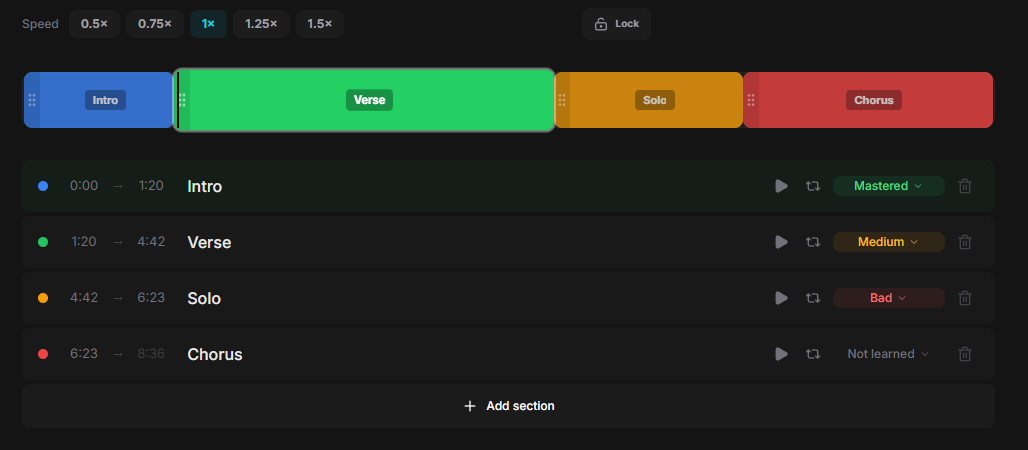
Log the riff, then the sound
Riff Quest scores what your guitar actually plays, so the fourths version is measurably different from the single-note one. Track the riff daily and watch the accuracy climb before you move up a tier.
- Loop any sectionIsolate the intro, solo, or chorus and loop just that part until it's clean.
- Track what's leftMark each section Mastered, Medium, Bad, or Not learned, so you always know what still needs work.
- Time spent per songEvery practice minute is logged against the song itself, not just a generic timer.
- Your own song libraryBuild a library of the songs you actually know, ready to revisit any time.
- Import your own tabsUpload a Guitar Pro file and turn on real-time note recognition through your mic — the same engine behind the built-in exercises.
Before and after Smoke on the Water
This is a starting line, not a milestone. Here is what sits either side of it.
Play these first — one step easier
Horse with No Name
America
Two chords and a steady strum: the gentlest possible way to play a whole song end to end.
Come as You Are
Full guideNirvana
A single-note riff at a similar tempo, useful if plucking two strings together is still fighting you.
Where to go next — one step harder
Seven Nation Army
Full guideThe White Stripes
The other classic first riff, with real dynamics and a wah-driven solo waiting behind it.
Sunshine of Your Love
Cream
Stays in the same blues-rock riff world but asks for bends and a proper lead break.
Thunderstruck
Full guideAC/DC
Where riff discipline goes next: the same steadiness, at a tempo that punishes tension.
Browse the full song library ranked by community difficulty to build your own path. Or pick from the 15 easiest songs to play on guitar, ranked by players.
Sources
Frequently asked questions
Questions about Riff Quest itself — how practice is scored, what it costs, what you need to plug in — are answered on the frequently asked questions page
How hard is Smoke on the Water on guitar?
Smoke on the Water currently rates 3.9/10 on Riff Quest's community difficulty scale (D-Tier), which makes it one of the easiest songs in the library. The riff uses four positions on two adjacent strings with no speed requirement. Only the guitar solo, which most players skip, sits in a higher tier.
Am I playing the Smoke on the Water riff wrong?
Probably, if you learned it as single notes on the D string or as power chords from the 5th fret of the A string. The recorded riff is parallel fourths: the same fret on the D and G strings together, starting on the open pair, then 3, 5 and 6.
Is Smoke on the Water played with a pick?
No. Blackmore plucks both notes at once with his thumb and first finger. A pick drags across the two strings and adds a small delay between them, which is why picked covers sound brighter and less solid than the record.
What tuning and key is Smoke on the Water in?
Standard E tuning (E A D G B E), in the key of G minor. No capo and no drop tuning: the riff sits on the open D and G strings and the first six frets.
What BPM is Smoke on the Water?
The studio recording runs at roughly 114 BPM in 4/4. That is slow enough that most beginners rush it, so a metronome is worth using even though the riff feels easy.
What should I learn after Smoke on the Water?
Seven Nation Army is the natural next step: another famous riff, with real quiet-loud dynamics and an optional solo to grow into. If you want to stay in blues-rock, Sunshine of Your Love adds bends and a proper lead break.
About the Author

Michael Apfel
Guitarist & Creator of Riff Quest
Has been playing guitar for 14 years, including time performing live in two bands. Built Riff Quest to solve his own practice-tracking problems, and writes about practice and learning guitar drawing on hands-on experience with the instrument.
Try Riff QuestThe first riff you learned,
played the way it was written.
Add Smoke on the Water to your list, practise the fourths shape against the record, and let community difficulty data pick your next song.