Song guide · Arctic Monkeys
How to Play Do I Wanna Know? on Guitar: The Slow Riff Everyone Rushes
The notes take an afternoon; playing them as slowly and heavily as the record, at about 85 BPM, is the actual skill.
Do I Wanna Know? is the opening track on Arctic Monkeys' AM (2013) and one of the most-streamed rock songs of its decade. Guitar World ranked its riff third among the best guitar riffs of the 2010s. In the Riff Quest library it is the fourth most-added song overall, and unlike most of the songs around it on that list, it is barely a decade old. It is also one of the most misplayed riffs on the list, for a reason that has nothing to do with the fretting hand.
The riff is short, sits on the lowest strings in G minor, and uses nothing more advanced than a slide and a hammer-on. A beginner can learn the shape in one sitting. What almost nobody gets right at first is the feel: the record crawls along at around 85 BPM with the riff sitting on top of a heavy stomp-and-clap beat, and every note is held for its full length. Played a little too fast, or with the notes clipped short, it sounds like a practice exercise instead of the song. This guide is mostly about that gap.
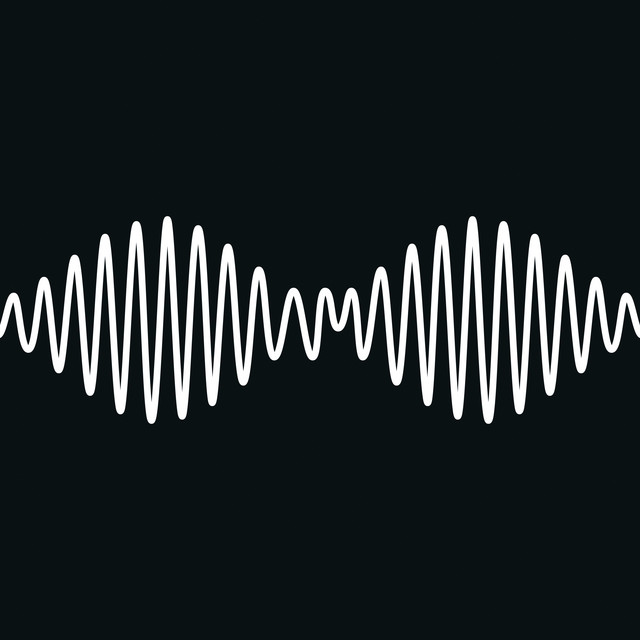
Do I Wanna Know?
Arctic Monkeys
- Artist
- Arctic Monkeys (AM, 2013)
- Tuning
- E standard
- Key
- G minor
- Tempo
- ≈85 BPM
- Length
- 4:33
- Tier
- C-Tier
4.7 / 10
18
98
An afternoon for the riff; 2-4 weeks for the groove
Live data from the Riff Quest community — difficulty is the average of real player ratings.
Where it sits on the ladder
D
C
Do I Wanna Know?
B
A
S
Do I Wanna Know? sits in the lower-middle of the Riff Quest ladder (the badge above shows where today's community rating lands it). It is not a step up in finger difficulty from the first-riff songs below it; it is a step up in time feel. Players who get it right come away with a habit that every slow, heavy riff above it will ask for.
The verdict: learn it in a day, own it in a month
The community rating puts Do I Wanna Know? in the lower-middle of the Riff Quest ladder, a notch above pure first-riff songs like Seven Nation Army. That fits. The riff lives on two strings, it repeats, and there is no fast passage or solo anywhere in the song.
What pushes it up is time. At around 85 BPM there are long gaps between the notes, and a nervous player fills them by speeding up. The riff also depends on held notes: each note should ring until the next one starts, and the slides need to arrive exactly on the beat rather than sliding into it late. These are rhythm skills, not finger skills, which is why the song feels easy until you record yourself playing along with it.
Put simply: this is a groove lesson disguised as a riff. If you can play it at the record's tempo with the drums and not drift ahead, you have learned something most technically stronger players never practise.
Four things that make it sound like the record
None of these change a single fret number. All of them change whether the riff sounds heavy or thin.
1. Lock to the stomp, not your own count
The beat underneath is a heavy stomp and clap with lots of space. Put the first note of the riff exactly on the stomp and let the drums tell you when the next bar starts.
2. Let every note ring its full length
Do not lift the fretting finger between notes. The riff sounds heavy because each note keeps sounding until the next one replaces it.
3. Slides arrive, they do not wander
Start each slide early enough that the target note lands on the beat. Practise the slides alone at 60 BPM until the arrival point is exact.
4. The end of the phrase is not a sprint
The quicker notes that close the riff tempt people to rush into the next bar. Finish them, wait, then start the riff again on the beat.
Video lessons


Song map: one riff, a lot of space
The riff returns throughout the song. Difficulty changes little from section to section; what changes is how much room there is to rush.
Intro
The stomp-and-clap beat, then the riff. This is the moment to lock in with the drums; everything after follows from it.
Verse
The riff continues under the vocal. With the voice in the way, keeping track of the beat is harder than in the intro.
Chorus
A lift into chords behind the vocal and backing harmonies. The change from riff to chords and back is the main thing to practise.
Bridge
Hardest partThe song's texture changes and the familiar riff pattern breaks up. It is the section where people most often lose their place in the form.
Outro
Back to the riff and out. If the intro was locked, this is the reward.
No section is technically hard. The hardest thing in the song is keeping the same slow feel from the first bar to the last without speeding up in the verses.
The skills under the hood
Most of these are about when notes start and stop, not which frets they are on.
Holding a slow tempo
About 85 BPM with long gaps between notes. The song teaches you to wait, which is the hardest thing to practise without a metronome or drum loop.
Timed slides
The riff moves between positions with slides that have to land on the beat. A slide started late sounds sloppy; one started early sounds rushed.
Hammer-on ornaments
Small hammer-ons decorate the phrase. They need to be as loud as the picked notes, or the riff sounds weak compared to the record.
Full note lengths
Every note rings until the next one. Lifting the fretting finger too early cuts the heaviness the riff depends on.
Low-string muting
Only one string should sound at a time. Rest the side of the picking hand on the strings you are not playing, especially with gain.
Chorus chords
Stretch goal — optional at first
The chorus moves to chords behind the vocal. Simple shapes, but switching from a single-note riff to chords and back without losing the groove is its own small skill.
A tempo ladder that stops at 85
This ladder climbs only to the record's tempo. Each step is about control at that speed, not about getting faster.
Rung 1.Riff with slides and hammer-ons, every note held full length, no drift for two minutes.
Rung 2.The same, counting out loud. The quick notes at the end of the phrase must not push the next bar early.
Rung 3.Switch from a click to a stomp-clap drum loop. Play the riff and the change into the chorus chords.
Rung 4.The whole song along with the record. Record yourself; if you finish a verse ahead of the track, drop a step.
Is this your song right now?
You're ready if
- You can play a single-note riff on the low strings and want one that sounds modern.
- You have met slides and hammer-ons, even if they are not clean yet.
- You are willing to practise with a metronome or a drum loop, not just along with your own counting.
- You like heavy, slow rock more than fast riffs.
Maybe wait if
- You have never played a single-note line; start with Seven Nation Army, which uses the same low-string idea with fewer ornaments.
- You struggle to keep time at all; clap along to the record first until the stomp-clap pattern feels natural.
- You want a song that teaches chords; the chorus chords here are simple and brief.
How long will it actually take?
At 20-30 minutes a day. The notes arrive fast; the groove takes weeks.
Beginner (a few months in)
The riff shape takes a day or two. The rest is playing it along with the record without drifting ahead.
Early intermediate
The notes are immediate. Matching the record's weight and timing is what takes the time.
Intermediate and up
Anyone who already plays to a click will have it the same day. Record yourself anyway; this riff reveals rushing.
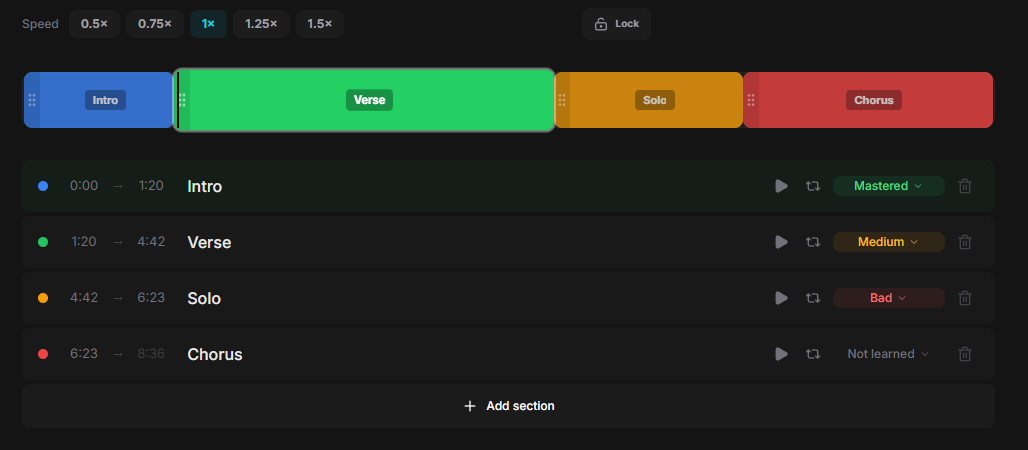
Slow is a number too
Riff Quest tracks timing, not just whether you played the notes. Log the riff at 85 BPM against the metronome and watch your timing accuracy, which is the only score that matters for this song.
- Loop any sectionIsolate the intro, solo, or chorus and loop just that part until it's clean.
- Track what's leftMark each section Mastered, Medium, Bad, or Not learned, so you always know what still needs work.
- Time spent per songEvery practice minute is logged against the song itself, not just a generic timer.
- Your own song libraryBuild a library of the songs you actually know, ready to revisit any time.
- Import your own tabsUpload a Guitar Pro file and turn on real-time note recognition through your mic — the same engine behind the built-in exercises.
The practice plan
Most of this plan is spent at or below the song's tempo. Speed is not the goal; staying still is.
Before and after Do I Wanna Know?
What sits either side of it if you are building riff feel rather than speed.
Play these first — one step easier

Seven Nation Army
Full guideThe White Stripes
The simplest low-string riff in rock. Learn the stillness there, then add ornaments here.
505
Arctic Monkeys
The same band, a slower build and simple repeating parts: a gentle warm-up for Alex Turner's style.
Where to go next — one step harder

Come As You Are
Full guideNirvana
Another low, hypnotic riff, this time with a tuning change and a chorus-pedal texture to match.
Back in Black
Full guideAC/DC
The next groove lesson: a riff built on silence and precise stops, at a similarly unhurried tempo.
Seek & Destroy
Full guideMetallica
Where low-string riffing goes when it gets faster: the same discipline, twice the tempo.
Browse the full song library ranked by community difficulty to build your own path.
Frequently asked questions
Questions about Riff Quest itself — how practice is scored, what it costs, what you need to plug in — are answered on the frequently asked questions page
How hard is Do I Wanna Know? on guitar?
Do I Wanna Know? currently rates 4.7/10 on Riff Quest's community difficulty scale (C-Tier). The riff uses one or two strings with slides and hammer-ons and has no fast passages; the challenge is keeping its slow, heavy feel at around 85 BPM without rushing.
What tuning is Do I Wanna Know? in?
Standard tuning (E A D G B E). The song is in G minor, and the riff sits on the low strings, so no drop tuning or capo is needed.
What BPM is Do I Wanna Know?
About 85 BPM. Most players unconsciously play it faster, so practising at 70 BPM with a metronome and then moving up to 85 is the quickest way to match the record.
Why does my version sound weaker than the record?
Usually because notes are cut short or the riff is rushed. Hold every note until the next one starts, make the hammer-ons as loud as the picked notes, and lock the slides to the beat. Tone matters less than timing here.
Can I play Do I Wanna Know? on acoustic guitar?
Yes. The riff and the chorus chords both work on acoustic, and several popular lessons teach an acoustic arrangement. The low notes lose some weight, so hold them even longer.
What should I learn after Do I Wanna Know?
Come As You Are is a natural next riff with a similar hypnotic feel. For another lesson in groove and space, Back in Black builds its famous riff out of silence between chord hits.
About the Author

Michael Apfel
Guitarist & Creator of Riff Quest
Has been playing guitar for 14 years, including time performing live in two bands. Built Riff Quest to solve his own practice-tracking problems, and writes about practice and learning guitar drawing on hands-on experience with the instrument.
Try Riff QuestThe riff is easy.
Staying slow is the skill.
Add Do I Wanna Know? to your list, lock it to a drum loop at 85 BPM, and let community difficulty data choose your next groove song.