Song guide · AC/DC
How to Play Back in Black on Guitar: A Riff Made of Silence
The chords are three open shapes, but the riff lives in the gaps between them; clean stops and muting, not fretting, are what make it hard.
Back in Black opens with one of the most recognised riffs in hard rock, which Metal Hammer called a no-nonsense, three-chord monster. It is also a riff that sounds wrong in a very specific way when a beginner plays it: every note is correct, and it still sounds messy. The reason is that most of the riff is silence. An E chord hits and stops dead, two short chord stabs follow, and a quick single-note run fills the space before the next bar. The notes are easy. The silence between them is not.
On the record, Angus and Malcolm Young split the job, with a rhythm guitar holding the riff tight and a lead guitar supplying fills and the solo. That split is useful for learning too: the rhythm part is where most players should spend their first month, and the solo is a separate project. This guide covers both, starting with the muting technique that decides whether your version sounds like AC/DC or like a rehearsal room.
Back in Black
AC/DC
- Artist
- AC/DC (Back in Black, 1980)
- Tuning
- E standard
- Tempo
- ≈94 BPM
- Recorded
- Compass Point Studios, Nassau, 1980
- Length
- 4:15
- Tier
- C-Tier
5.2 / 10
15
46
1-2 weeks for the riff; 1-3 months with the solo
Live data from the Riff Quest community — difficulty is the average of real player ratings.
Where it sits on the ladder
D
C
Back in Black
B
A
S
Back in Black sits in the middle of the Riff Quest ladder (the badge above shows the current community rating). It marks the point where a player's rhythm guitar stops being about playing the right chords and starts being about controlling sound: stops, muting and space. Every tight hard-rock and metal riff above it relies on those skills.
The verdict: easy shapes, strict rhythm
Back in Black sits in the middle of the Riff Quest ladder, and that placement surprises people who expect a three-chord riff to be beginner material. The chord shapes are simple, but the riff asks for things beginners usually have not practised yet: stopping a chord at a precise moment, keeping unplayed strings silent through a distorted amp, and playing a quick single-note fill without rushing the next downbeat.
The tempo, around 94 BPM, is relaxed. That helps, but it also exposes every sloppy stop. At this speed, a chord that rings a little too long or a stray open string is clearly audible between the hits.
The solo is the part that pushes the full-song rating upward. It is classic blues-rock pentatonic playing with bends, vibrato and fast repeated licks. Treat it as its own goal: the riff and rhythm parts are complete and satisfying on their own.
The riff in four moves
Break the riff into these four events and practise each until the one after it sounds effortless.
1. The hit
A full E chord struck hard on the downbeat. Distortion makes it sound huge; restraint is what keeps it clean.
2. The stop
The chord is cut off almost immediately. Relax the fretting hand and touch the strings with the picking hand. This silence is as much a part of the riff as the chord.
3. The stabs
Short D and A chord hits, stopped just as quickly. Practise the change slowly; speed comes after the stops are exact.
4. The fill
A quick single-note run on the low strings closes the phrase. Finish it early rather than late, so the next E hit lands exactly on the beat.
Video lessons

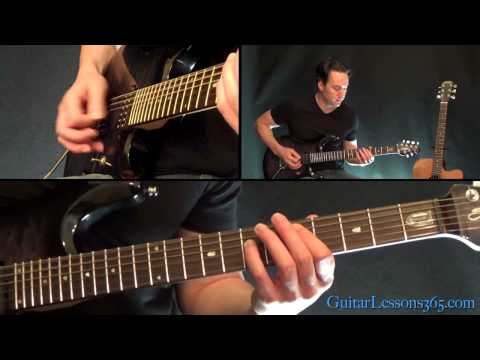

Two guitar jobs, two learning plans
The song is built from two different guitar roles. Learning them separately makes both easier.
| Rhythm guitar | Lead guitar | |
|---|---|---|
| What it plays | The riff, chorus chords and stops | Fills, the solo and the extra licks |
| Main skill | Muting and timing | Bends, vibrato and pentatonic phrasing |
| Tone | Crunchy but tight: less gain than you think | More sustain for bends and vibrato |
| When to learn it | First | After the rhythm part feels automatic |
The difficulty wording here is editorial. The community rating at the top of the page covers the whole song.
The skills under the hood
Most of these are about control of sound that is already there, not about producing more of it.
Chord stops
Ending a chord exactly on time by relaxing the fretting hand or touching the strings with the picking hand. The riff is built around these stops.
Muting unplayed strings
With a crunchy amp, every unused string will ring unless it is muted. Both hands share the job.
Quick open-chord changes
E to D to A in the space of a beat or two. Small, fast movements are more important than perfect shapes.
Single-note fills
Short pentatonic runs between chord hits. The challenge is finishing the fill and landing the next chord exactly on the beat.
Pentatonic lead with bends
Stretch goal — optional at first
The solo: bends in tune, wide vibrato and fast repeated blues licks in Angus Young's style.
Song map: where the difficulty jumps
Almost the whole song is rhythm guitar. The difficulty barely moves until the solo.
Intro and main riff
The famous E-D-A riff with its single-note fill. Everything later depends on getting this clean.
Verse
The riff under Brian Johnson's vocal. The main challenge is staying tight when there is a voice to listen to.
Chorus
Bigger, more sustained chord hits behind the title line. A break from the stop-start of the riff.
Guitar solo
Hardest partAngus Young's blues-rock solo: bends, vibrato and repeated fast licks. The only part of the song that is well above the riff.
Outro
Back to the riff and chorus. If the intro was tight, this is just stamina.
The solo is a separate skill from the rest. A clean riff and tight chorus are a complete performance on their own.
How long will it actually take?
At 20-30 minutes a day, splitting time between riff and solo.
Beginner (open chords are solid)
The shapes come quickly. Clean stops and muting take most of the time.
Early intermediate
The riff is quick. The solo, with bends in tune and Angus's phrasing, is the long part.
Intermediate and up
Anyone with solid pentatonic vocabulary will have the song quickly; matching the feel is the rest.
Is this your song right now?
You're ready if
- You can change between open E, D and A quickly and cleanly.
- You have started using palm or fretting-hand muting, even if it is not reliable yet.
- You want a rock rhythm part that sounds great with a band or backing track.
- You are planning to learn your first classic rock solo in the next few months.
Maybe wait if
- Open chords are still slow for you; practise E-D-A changes first, the riff only makes gaps more obvious.
- You have never muted strings deliberately; spend a week on muting exercises first, or the riff will sound messy regardless of accuracy.
- You want a quick first riff; Smoke on the Water or Seven Nation Army will reward you faster.
The practice plan
Start with silence. The notes will follow.
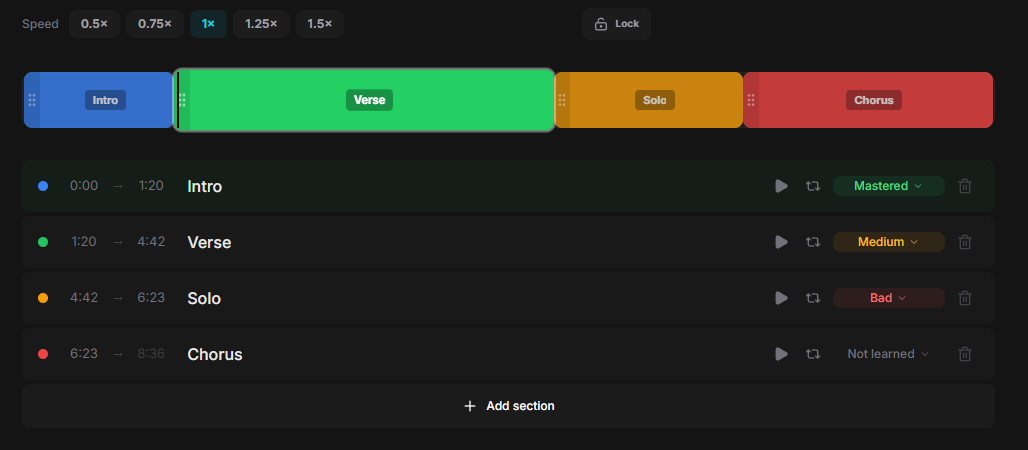
Silence is measurable too
Riff Quest hears ringing strings and late chords as much as wrong notes. Log the riff daily and watch your accuracy climb as the gaps between chords get cleaner.
- Loop any sectionIsolate the intro, solo, or chorus and loop just that part until it's clean.
- Track what's leftMark each section Mastered, Medium, Bad, or Not learned, so you always know what still needs work.
- Time spent per songEvery practice minute is logged against the song itself, not just a generic timer.
- Your own song libraryBuild a library of the songs you actually know, ready to revisit any time.
- Import your own tabsUpload a Guitar Pro file and turn on real-time note recognition through your mic — the same engine behind the built-in exercises.
Before and after Back in Black
Songs either side of it, grouped around rhythm discipline.
Play these first — one step easier
Highway to Hell
AC/DC
Also AC/DC and also about open chord hits, but slower and less dependent on muting.
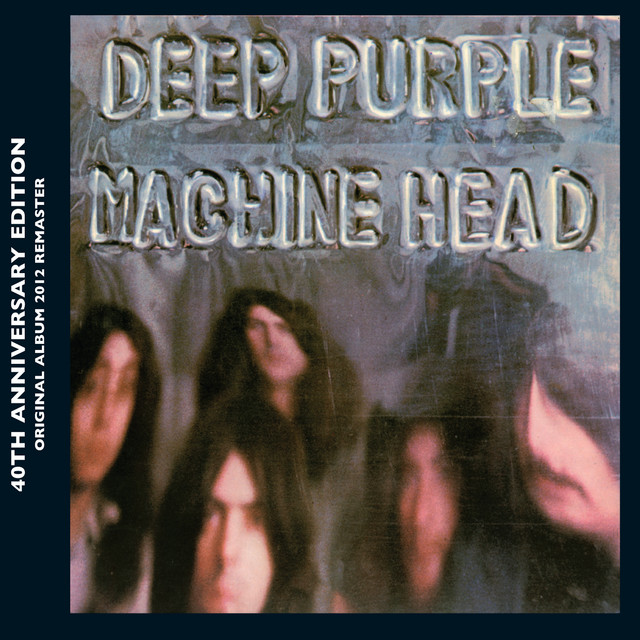
Smoke on the Water
Full guideDeep Purple
An easier riff for getting used to muting the strings you are not playing.
Where to go next — one step harder
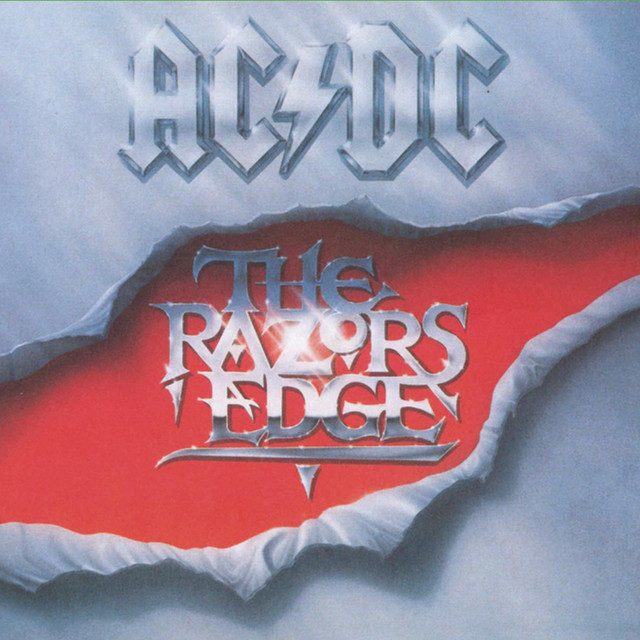
Thunderstruck
Full guideAC/DC
The same band's other famous riff, testing stamina and left-hand speed instead of silence.

Enter Sandman
Full guideMetallica
Heavier and faster palm-muted riffing, built on the same discipline of stopping notes on time.
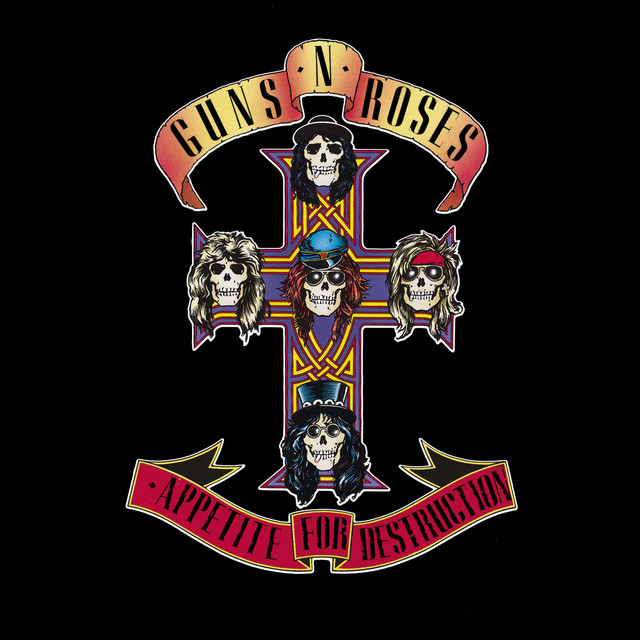
Sweet Child O' Mine
Full guideGuns N' Roses
The next step in blues-rock lead: longer solos with the same bends and vibrato.
Browse the full song library ranked by community difficulty to build your own path.
Frequently asked questions
Questions about Riff Quest itself — how practice is scored, what it costs, what you need to plug in — are answered on the frequently asked questions page
How hard is Back in Black on guitar?
Back in Black currently rates 5.2/10 on Riff Quest's community difficulty scale (C-Tier). The riff uses simple open chords, but clean stops, muting and fills make it harder than it looks. The solo is the most difficult part.
What chords are in the Back in Black riff?
The main riff is built on E, D and A, played as short chord hits, with a single-note fill between them. The chord shapes are simple; the timing and muting are what make the riff sound right.
What BPM is Back in Black?
About 94 BPM in 4/4. It is a moderate tempo, which gives you time for clean stops but also makes any ringing string between hits easy to hear.
Why does my Back in Black riff sound messy?
Usually because strings keep ringing between the chord hits. Stop each chord by relaxing the fretting hand, rest the side of the picking hand on the low strings, and use less distortion than you think.
Is the Back in Black solo hard?
It is intermediate. It uses the pentatonic scale with bends, vibrato and fast repeated licks. Learn it phrase by phrase after the riff is solid; the riff alone is already a complete version of the song.
Who played what on Back in Black?
The song is credited to Angus Young, Malcolm Young and Brian Johnson. On AC/DC records, Malcolm typically held down the rhythm guitar while Angus played lead and the solos, and Rolling Stone called the song the Young brothers' dual-guitar masterpiece.
About the Author

Michael Apfel
Guitarist & Creator of Riff Quest
Has been playing guitar for 14 years, including time performing live in two bands. Built Riff Quest to solve his own practice-tracking problems, and writes about practice and learning guitar drawing on hands-on experience with the instrument.
Try Riff QuestThree chords, a lot of space,
and the tightest riff you have played yet.
Add Back in Black to your list, practise the stops before the notes, and let community difficulty data choose the next song on your rock ladder.