Song guide · Red Hot Chili Peppers
How to Play Under the Bridge on Guitar: The Intro Is the Whole Exam
The verses are ordinary chords, but the intro asks for Hendrix-style embellishments (hammer-ons and melodic fills inside chord shapes), which puts it firmly in intermediate territory.
Under the Bridge is the song most guitarists hear once and immediately want to play: a soft, bright intro that seems to float between chords and melody at the same time. John Frusciante said he drew on Jimi Hendrix's Little Wing when writing it, and that he deliberately chose happier-sounding chords to sit against Anthony Kiedis's sad lyrics. The intro moves between D and F sharp major, and the verse then settles into E major.
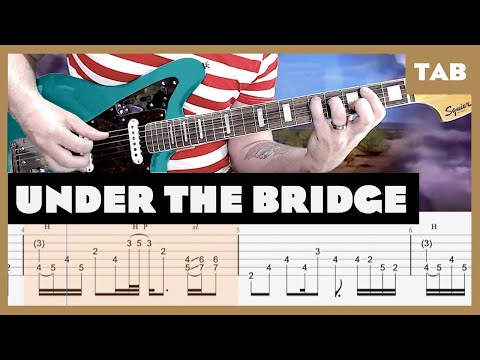
What makes the intro difficult is not the chords but what happens inside them. Instead of strumming, Frusciante keeps the chord shape held and adds hammer-ons, pull-offs and small melodic fills with the free fingers, the same approach Hendrix used on Little Wing and Castles Made of Sand. That technique is what sets this song apart from other popular chord songs, and it is why the intro takes much longer to learn than the rest of the song. This guide breaks the technique down, then maps the rest of the song, which is far more forgiving.
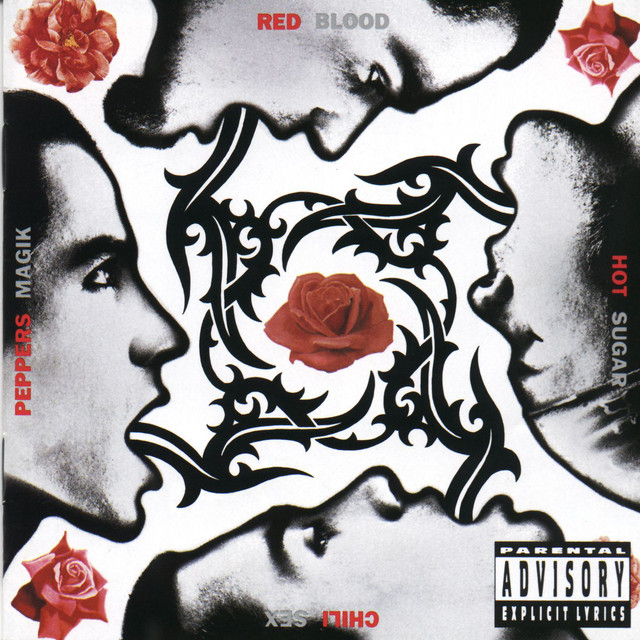
Under the Bridge
Red Hot Chili Peppers
- Artist
- Red Hot Chili Peppers (Blood Sugar Sex Magik, 1991)
- Key
- E major
- Tempo
- ≈84 BPM
- Tuning
- Standard shapes (some transcriptions tune down a half step to match the record)
- Length
- 4:24
- Tier
- B-Tier
6.1 / 10
10
30
1-2 weeks for the verses; 1-3 months for the intro
Live data from the Riff Quest community — difficulty is the average of real player ratings.
Where it sits on the ladder
D
C
B
Under the Bridge
A
S
Under the Bridge sits in the upper-middle of the Riff Quest ladder (the badge above shows the current community rating). It marks the move from playing chords to decorating them, which is the foundation of a whole style of guitar playing, from Hendrix to John Mayer. Songs above it on the ladder often assume you can do this.
The verdict: an easy song with a hard front door
Under the Bridge sits in the upper-middle of the Riff Quest ladder, and almost all of that rating comes from the first half minute. The verses and choruses use chords most intermediate players already know, played with light strumming and arpeggios at a relaxed tempo.
The intro is a different skill. Frusciante holds chord shapes and decorates them with hammer-ons, pull-offs and short melodic runs, so the part sounds like chords and melody at once. It requires independent fingers within a held shape, a light touch, and a thumb that can fret bass notes over the top of the neck. None of this is fast, but all of it is precise.
If the intro feels out of reach, play the rest first. The verses and chorus sound good on their own, and you can return to the intro once your fingers are ready.
Song map: hard start, gentle middle
The difficulty curve here is unusual: the hardest section comes first.
Intro
Hardest partEmbellished chords moving between D and F sharp major. Hammer-ons, fills and thumb bass notes. The hardest part of the song by far.
Verse
The song moves to E major. Gentle arpeggios and light strumming under the vocal.
Chorus
A few more chords and a little more volume. Still comfortably within reach.
Build and Emaj7 stop
The guitar becomes more rapid until an E major seventh chord halts the song, a trick Frusciante took from Marc Bolan.
Outro
The full band and choir enter. Heavier and repetitive; the challenge is stamina and staying in the groove.
The intro is intermediate to advanced; the rest is comfortably intermediate. Learning the verses first is a perfectly reasonable order.
The embellishment toolkit
The intro is built from a small set of techniques applied to held chord shapes. Learn each separately before combining them.
1. Hold the frame
Fret the chord shape and keep it held. The fills happen inside it, so the frame must stay solid while other fingers move.
2. Hammer into the chord
Pick a note, then hammer a free finger onto a neighbouring fret on the same string. This is the most common decoration in the intro.
3. Pull off to open or held notes
The reverse movement: pull a finger off to let a lower note ring. Combined with hammer-ons, it creates small melodic turns.
4. Thumb on the bass
Fret the bass note with the thumb over the top of the neck. It frees the other fingers for the fills, the way Hendrix did.
5. Short melodic runs
Small scale fragments connecting one chord to the next. Play them lightly so they sound like part of the chord, not a separate solo.
Video lessons


The skills under the hood
The song's difficulty sits almost entirely in the first two items on this list.
Chord embellishments
Hammer-ons, pull-offs and small melodic fills played by the free fingers while the rest of the chord stays held. The core technique of the intro.
Thumb-over bass notes
Fretting the low string with the thumb over the top of the neck, which frees the other fingers for melody. Common in Hendrix-style playing.
Light, even touch
The intro is soft and clean. Every note has to sound, but nothing should be hit hard.
Arpeggiated verse chords
The verse picks and strums through chords in E major at a gentle tempo. Much easier than the intro.
Dynamics toward the outro
Stretch goal — optional at first
The song builds from a quiet intro to a full band outro with a choir. Controlling that build is the performance skill.
Happy chords, sad lyrics
The emotional trick of the intro is a deliberate contrast, and it affects how you should play it.
Frusciante said that because the lyrics were so sad, he wanted the chords to sound happier. The intro's bright major chords and floating embellishments sit against a vocal about loneliness and addiction, and that tension is a large part of why the song feels the way it does.
For a guitarist, the lesson is about touch. The intro should sound light and almost carefree, not heavy or dramatic. Players often dig in too hard because the song is emotional, and the result sounds forced. Keep the attack soft, let the notes ring, and let the contrast with the vocal do the emotional work.
The same restraint pays off later. The song builds slowly toward a big outro with the full band and a choir. If the intro is already loud, there is nowhere left to go.
Is this your song right now?
You're ready if
- You know your major and minor chords well, including a few barre shapes.
- You can do clean hammer-ons and pull-offs.
- You want to move from strumming chords to decorating them, in the style of Hendrix.
- You have patience for a short passage that takes weeks to get right.
Maybe wait if
- You are still learning basic chords; the intro will feel impossible. Try Creep or House of the Rising Sun first.
- Your hammer-ons are not clean yet; spend a few weeks on them before starting the intro.
- You want a fast riff or a big solo; this song is about touch, not speed.
How long will it actually take?
At 20-30 minutes a day. Most of the time goes into the intro.
Late beginner
The verses come in a couple of weeks. The intro's embellishments take much longer to sound natural.
Intermediate
If you already know some Hendrix-style playing, the intro comes together within weeks.
Advanced
The notes are quick. The feel and touch of the intro take longer than the notes.
The practice plan
Learn the easy part first so you can play the song, then spend your energy on the intro.
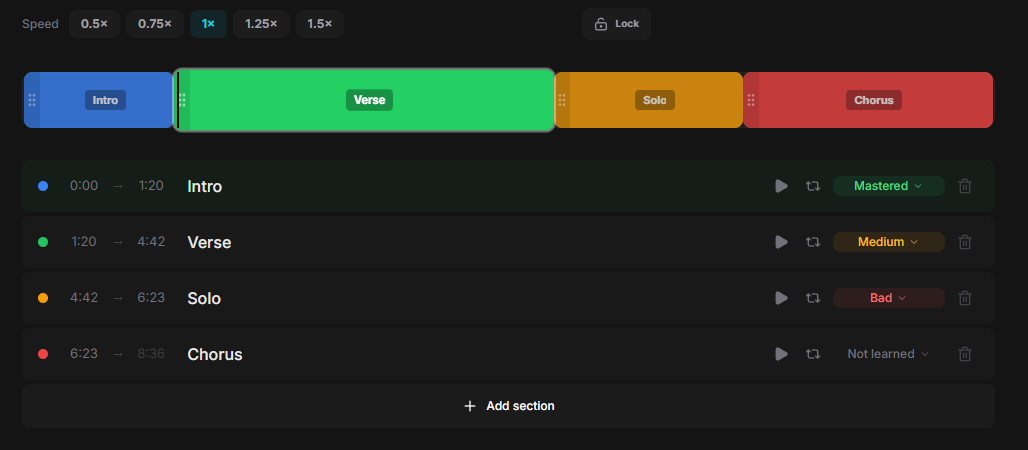
Log the intro separately
Riff Quest tracks each session's accuracy. Log the intro on its own and watch the embellishments get cleaner week by week while the rest of the song stays solid.
- Loop any sectionIsolate the intro, solo, or chorus and loop just that part until it's clean.
- Track what's leftMark each section Mastered, Medium, Bad, or Not learned, so you always know what still needs work.
- Time spent per songEvery practice minute is logged against the song itself, not just a generic timer.
- Your own song libraryBuild a library of the songs you actually know, ready to revisit any time.
- Import your own tabsUpload a Guitar Pro file and turn on real-time note recognition through your mic — the same engine behind the built-in exercises.
Before and after Under the Bridge
Songs that build toward chord embellishment and songs that extend it.
Play these first — one step easier
Creep
Full guideRadiohead
Barre chords and arpeggiated verses: the chord vocabulary you need before adding embellishments.
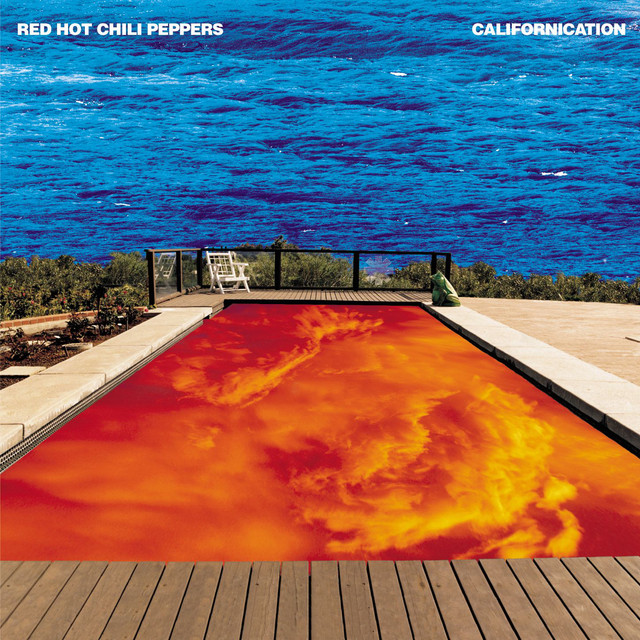
Californication
Red Hot Chili Peppers
Frusciante's style in a simpler form: a melodic riff and clean chords.
Where to go next — one step harder
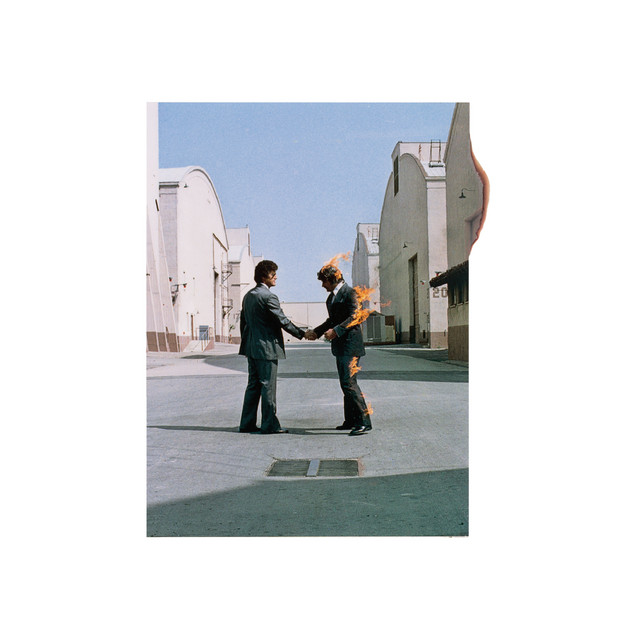
Wish You Were Here
Full guidePink Floyd
More melodic fills around chords, this time on acoustic guitar.
Gravity
John Mayer
Soulful chord work and bluesy fills in the same tradition.
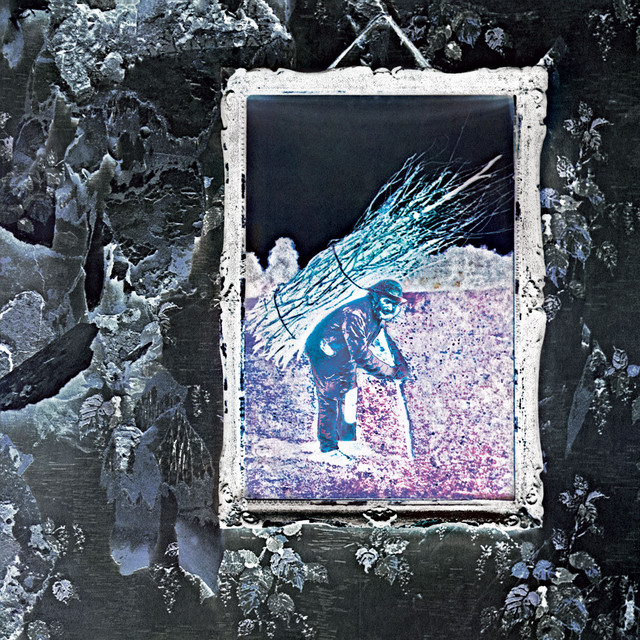
Stairway to Heaven
Full guideLed Zeppelin
A long-form goal combining fingerpicked chord work with a famous solo.
Browse the full song library ranked by community difficulty to build your own path.
Sources
Frequently asked questions
Questions about Riff Quest itself — how practice is scored, what it costs, what you need to plug in — are answered on the frequently asked questions page
How hard is Under the Bridge on guitar?
Under the Bridge currently rates 6.1/10 on Riff Quest's community difficulty scale (B-Tier). The verses and chorus are intermediate chord playing; the intro, with Hendrix-style embellishments, is the hardest part.
What key is Under the Bridge in?
E major, in 4/4. The intro alternates between D and F sharp major chords before the first verse moves into E.
What tuning is Under the Bridge in?
The chord shapes are standard. Many transcriptions tune down a half step to match the pitch of the recording; others use standard tuning. Pick one and stay with it while learning.
Why is the Under the Bridge intro so hard?
Because it is not strumming. Frusciante holds chord shapes and adds hammer-ons, pull-offs and melodic fills with the free fingers, often with the thumb fretting bass notes. That takes finger independence and a light touch.
What inspired the Under the Bridge intro?
Frusciante said he drew on Jimi Hendrix's Little Wing. He also said that since the lyrics were so sad, he wanted to write chords that sounded happier.
Who sings in the choir at the end of Under the Bridge?
Frusciante invited his mother, Gail, and a friend of hers, both choir singers, to sing the outro line.
About the Author

Michael Apfel
Guitarist & Creator of Riff Quest
Has been playing guitar for 14 years, including time performing live in two bands. Built Riff Quest to solve his own practice-tracking problems, and writes about practice and learning guitar drawing on hands-on experience with the instrument.
Try Riff QuestHappy chords, sad lyrics,
and your first Hendrix-style intro.
Add Under the Bridge to your list, learn the verses first, and let community difficulty data guide your path into chord embellishment.