Song guide · Radiohead
How to Play Creep on Guitar: Four Chords, Two Barres, Three Blasts of Noise
Creep is a four-chord song, but two of those chords are barres (B major and C minor), so it is usually the song where beginners finally have to learn them.
Creep runs the same four chords from the first bar to the last: G, B, C and C minor. That repetition makes it look like a beginner song, and in structure it is. The catch is in which four chords. G and C can be open shapes, but B major and C minor almost always mean barre chords, and the change from C to C minor (one finger of difference, one enormous change in mood) is the whole emotional trick of the song. Music theorists call it modal mixture; listeners just call it sad.
The other thing everyone remembers about Creep is not a chord at all. Before each chorus, Jonny Greenwood hits the guitar with three violent blasts of dead notes, which he later said came from finding the song too wimpy and wanting to make it the opposite. Ed O'Brien put it more bluntly: that was Jonny trying to wreck the song, and it made the song. This guide covers the barres, the arpeggiated verses, and how to make those blasts sound right.
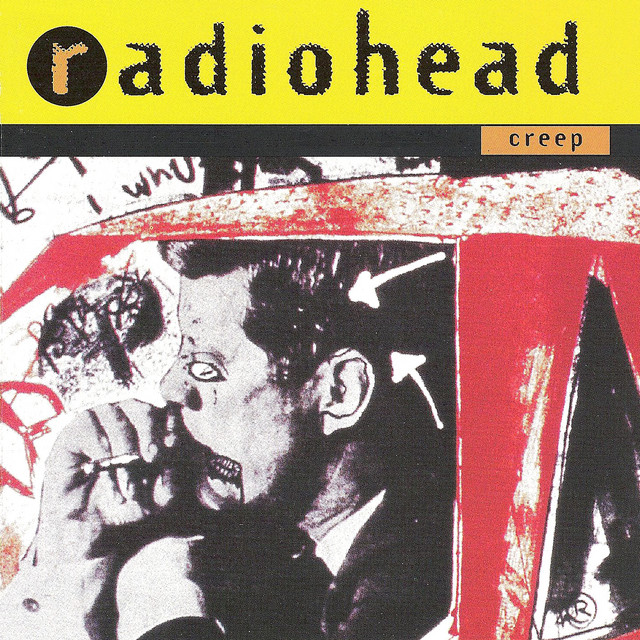
Creep
Radiohead
- Artist
- Radiohead (single 1992, Pablo Honey)
- Tuning
- E standard
- Key
- G major
- Tempo
- ≈92 BPM
- Length
- 3:57
- Tier
- C-Tier
4.3 / 10
12
28
2-6 weeks, depending on your barre chords
Live data from the Riff Quest community — difficulty is the average of real player ratings.
Where it sits on the ladder
D
C
Creep
B
A
S
Creep sits in the lower-middle of the Riff Quest ladder (the badge above shows the current community rating). It marks the move from open chords to barre chords, which is one of the biggest steps a guitarist makes. Once B major and C minor ring cleanly, a huge part of the song library above it becomes playable.
The four chords, and why the last one matters most
The whole song is this loop. The tips focus on the changes, because that is where the song breaks.
Open, or E-shape barre at the 3rd fret
Home. The open shape is fine, but a 3rd-fret barre makes the jump to B shorter.
A-shape barre at the 2nd fret
The hardest chord for most beginners. Check the high E string; it is the one that usually buzzes.
Open, or A-shape barre at the 3rd fret
With the barre version, the move from B is just one fret up. The open shape sounds brighter but makes the next change harder.
Am-shape barre at the 3rd fret
One note different from the barred C. That single change, borrowed from a minor key, is what makes the song sound sad.
The verdict: a barre chord test in a beginner song's clothing
Creep sits in the lower-middle of the Riff Quest ladder. Its structure is as simple as it gets: one progression, repeated through verse and chorus, at a relaxed tempo of about 92 BPM. There is no solo to learn and no riff to speed up.
The difficulty is almost entirely about barre chords. B major and C minor are the two shapes most beginners avoid, and this song does not let you avoid them. Changing from G to B, and from C to C minor, cleanly and in time is the entire technical content of the song, and it is a very useful thing to have learned.
Beyond that, the song is about dynamics: gently arpeggiated verses, a loud strummed chorus, and those three muted blasts before it. None of this is technically hard, but it is what separates playing the chords from playing the song.
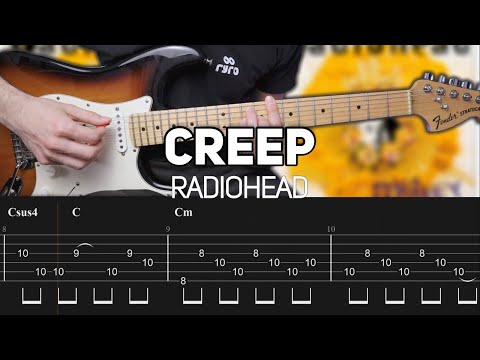
Video lessons


Is this your song right now?
You're ready if
- You can play open G and C and change between them comfortably.
- You have started practising barre chords, even if they still buzz.
- You want one song that makes you practise barres every day without it feeling like an exercise.
- You like slow, emotional songs with a loud chorus.
Maybe wait if
- Open chords are still slow; the barre changes will feel impossible. Build speed on open-chord songs first.
- You want a riff or a solo; Creep is pure chord playing.
- You are not ready for barres at all; a capo version exists, but it skips the main lesson of the song.
The skills under the hood
Four chords, two playing styles, and one sound effect. Here is what each asks of you.
B major barre (A shape)
Barre at the 2nd fret with the A-string root. The hardest chord in the song for most beginners.
C minor barre (Am shape)
Barre at the 3rd fret with the A-string root. Changing to it from C is the emotional centre of the song.
Arpeggiated verse chords
The verses pick out the chords one string at a time. Every note of a barre chord has to ring cleanly, which exposes any buzzing string.
Loud chorus strumming
Full distorted strumming in the chorus. The challenge is the dynamic contrast with the verse.
Dead-note blasts
Three hard, muted strums before the chorus, made by releasing fretting pressure while picking. Loud and percussive, with no pitch.
The three blasts: how to make noise on purpose
The most famous guitar moment in Creep has no pitch at all.
Just before each chorus, Jonny Greenwood hits three violent, muted strums. These are dead notes: the fretting hand rests on the strings without pressing them down, so the pick produces a percussive crack instead of a chord. Greenwood said he did it because he found the song too gentle. Ed O'Brien said it was the sound of Jonny trying to wreck the song, and it made the song.
To get the sound, lay your fretting hand flat across the strings, press just enough to stop them ringing, and strum hard with plenty of distortion. The attack should be sharp and loud, with no notes. Timing matters: the blasts lead directly into the chorus, so the last one has to land exactly before the downbeat.
The effect works because of contrast. After a quiet, arpeggiated verse, three bursts of noise make the chorus feel explosive. Playing the verse too loudly takes that away.
Dead-note check
- 1.Fretting hand flat, touching all six strings, no pressure.
- 2.Distortion on, strum hard.
- 3.You should hear a crack, not a chord.
How long will it actually take?
At 20-30 minutes a day. The time depends almost entirely on your barre chords.
Beginner, no barre chords yet
Most of the time goes into getting B and C minor to ring. The song itself is quick once they do.
Beginner with basic barres
The chord changes and dynamics come together quickly.
Intermediate
The work is in the feel: gentle verses, loud chorus, and well-timed blasts.
The practice plan
Isolate the two barre chords, then drill the changes, then add the dynamics.
Barres get better every day you log them
Riff Quest hears which strings actually ring. Log the progression daily and watch accuracy rise as the B and C minor barres clean up.
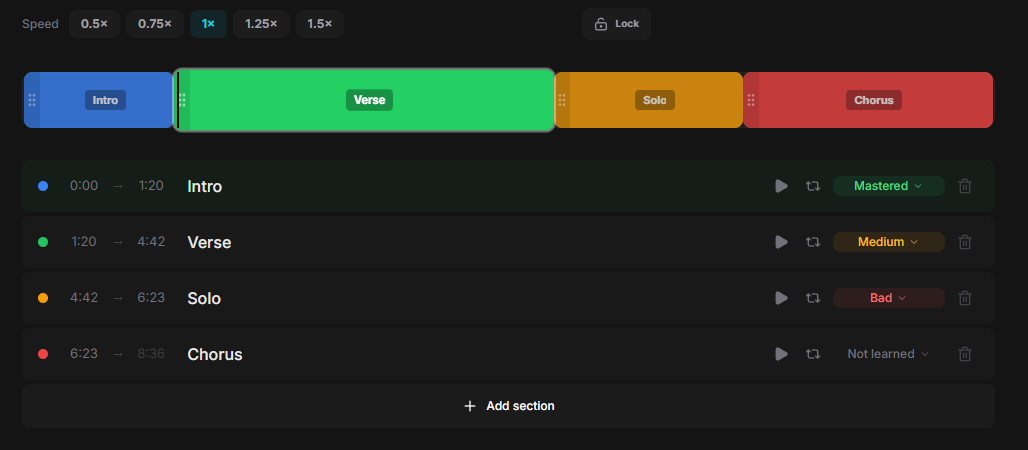
- Loop any sectionIsolate the intro, solo, or chorus and loop just that part until it's clean.
- Track what's leftMark each section Mastered, Medium, Bad, or Not learned, so you always know what still needs work.
- Time spent per songEvery practice minute is logged against the song itself, not just a generic timer.
- Your own song libraryBuild a library of the songs you actually know, ready to revisit any time.
- Import your own tabsUpload a Guitar Pro file and turn on real-time note recognition through your mic — the same engine behind the built-in exercises.
Before and after Creep
Songs either side of it, grouped around barre chords and dynamics.
Play these first — one step easier

House of the Rising Sun
Full guideThe Animals
An arpeggiated chord song with only one barre (F). A gentle warm-up for Creep's verses.
Boulevard of Broken Dreams
Green Day
Power chords and a simple progression: good preparation for moving shapes up the neck.
Where to go next — one step harder

Smells Like Teen Spirit
Full guideNirvana
Another quiet-loud song, with a much more demanding strumming hand.
Hotel California
Full guideEagles
More barre chords, a longer progression and famous guitar parts to grow into.
Under the Bridge
Full guideRed Hot Chili Peppers
Where chord playing goes next: embellished chords and melodic fills in the Hendrix tradition.
Browse the full song library ranked by community difficulty to build your own path.
Frequently asked questions
Questions about Riff Quest itself — how practice is scored, what it costs, what you need to plug in — are answered on the frequently asked questions page
How hard is Creep on guitar?
Creep currently rates 4.3/10 on Riff Quest's community difficulty scale (C-Tier). It is a four-chord song at a relaxed tempo; the main challenge is the B major and C minor barre chords.
What are the chords to Creep?
G, B, C and C minor, repeated throughout the song. In standard tuning, B major and C minor are usually played as barre chords.
Can I play Creep without barre chords?
Simplified versions using a capo or partial chords exist and are fine for singing along. The full chords are worth learning, though; they are the main thing this song teaches.
What is the sound before the chorus in Creep?
Jonny Greenwood plays three blasts of dead notes: hard strums with the fretting hand resting on the strings without pressing. He said he wanted to make the song less wimpy.
What BPM and key is Creep?
About 92 BPM, in G major, in standard tuning. The C minor chord borrowed from G minor gives the progression its bittersweet feel.
Why is The Air That I Breathe credited on Creep?
Creep shares its chord progression and part of its melody with The Air That I Breathe, a 1972 song best known in The Hollies' recording. After legal action, its writers Albert Hammond and Mike Hazlewood received songwriting credits.
About the Author

Michael Apfel
Guitarist & Creator of Riff Quest
Has been playing guitar for 14 years, including time performing live in two bands. Built Riff Quest to solve his own practice-tracking problems, and writes about practice and learning guitar drawing on hands-on experience with the instrument.
Try Riff QuestFour chords, two barres,
and the song that finally makes you learn them.
Add Creep to your list, drill the barre changes, and let community difficulty data choose your next chord song.