Chord Tone Improvisation
Target chord tones systematically over shifting backing tracks to build melodic intent.
Why This Exercise Matters
Improvising by targeting chord tones (root, third, fifth, seventh) anchors your solos directly to the underlying harmony. This technique prevents random note selection, producing structured, harmonically rich solos that sound musical and professional.
How to Practice
- 1Choose a simple looping chord progression (2–4 chords) or any backing track with clear chord changes.
- 2Improvise using only the chord tones of the currently sounding chord — no non-chord tones are allowed.
- 3Change chords every bar or every two bars to increase difficulty.
- 4Do not start phrases on the root unless it is the only available option in the position you chose.
- 5Avoid repeating the same chord tone twice in a row within the same chord.
- 6At each chord change, aim for the smallest possible movement to a chord tone of the next chord.
- 7Perform the exercise from memory — actively track chord changes and their tones without visual aids.
Tips & Techniques
- •Mentally name the chord tones ahead of the chord change to avoid hesitation.
- •If the tempo feels overwhelming, slow down but keep the chord-change frequency the same.
- •Listen for smooth voice leading rather than vertical arpeggio motion.
- •Resist falling back into scale patterns — every note must be justified by the chord.
- •Focus on clarity and timing; even single notes should strongly imply the harmony.
Skills You'll Develop
Ready to Practice?
Upgrade to Premium to unlock this exercise and master it with our guided practice tools.
Sound Recognition
Real-time audio recognition
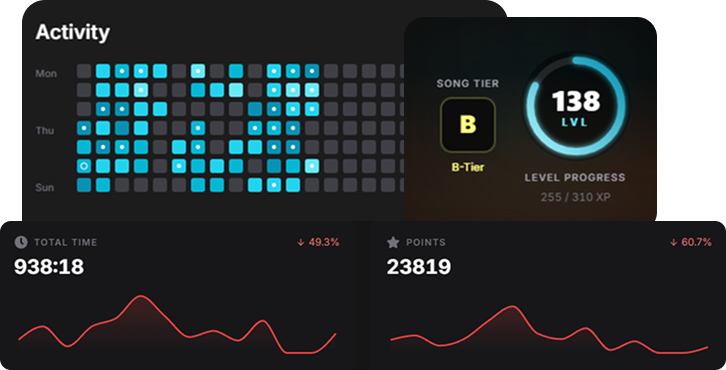
Analytics
Track your progress
Activity Heatmap
Visualize your streak
Real-time Feedback
Instant corrections
Related Exercises
Smooth Chord Transitions
Minimize finger movement and eliminate pauses during common chord changes.
Guide Tone Voice-Leading Drill
Connect chord progressions smoothly by resolving third and seventh intervals.
Minimal-Motion Voice Leading
Arrange chord voicings to minimize finger movement between transitions.
Triad Improvisation
Improvise solos purely using three-note triad shapes over a backing track.