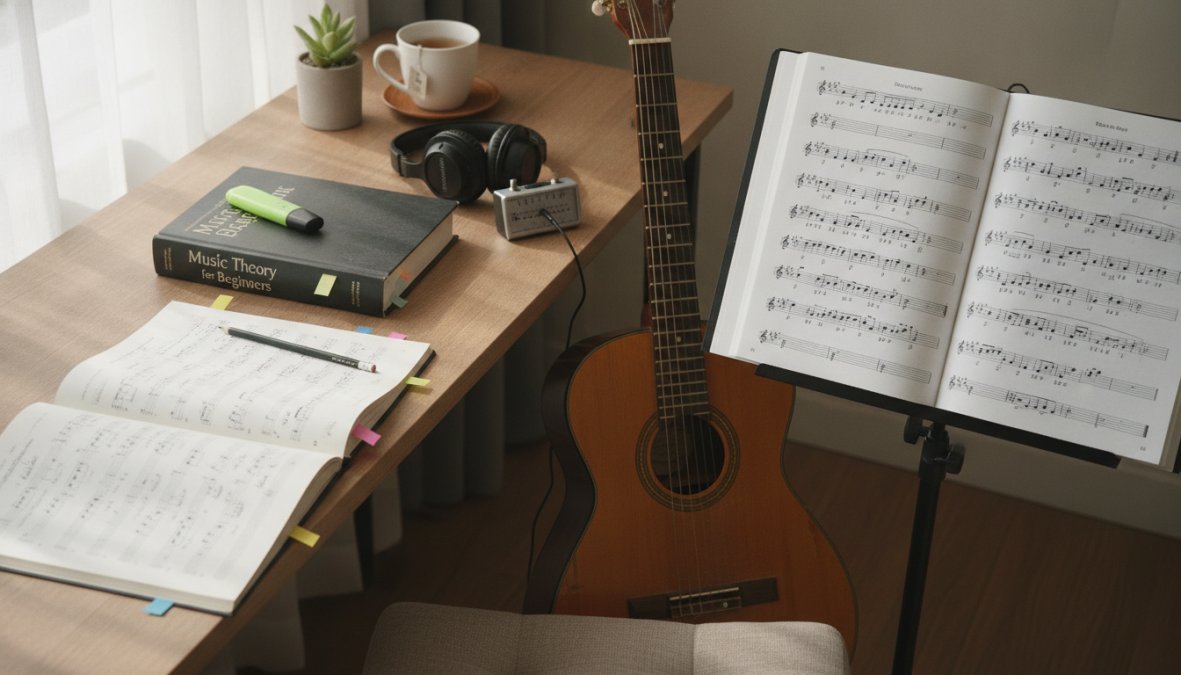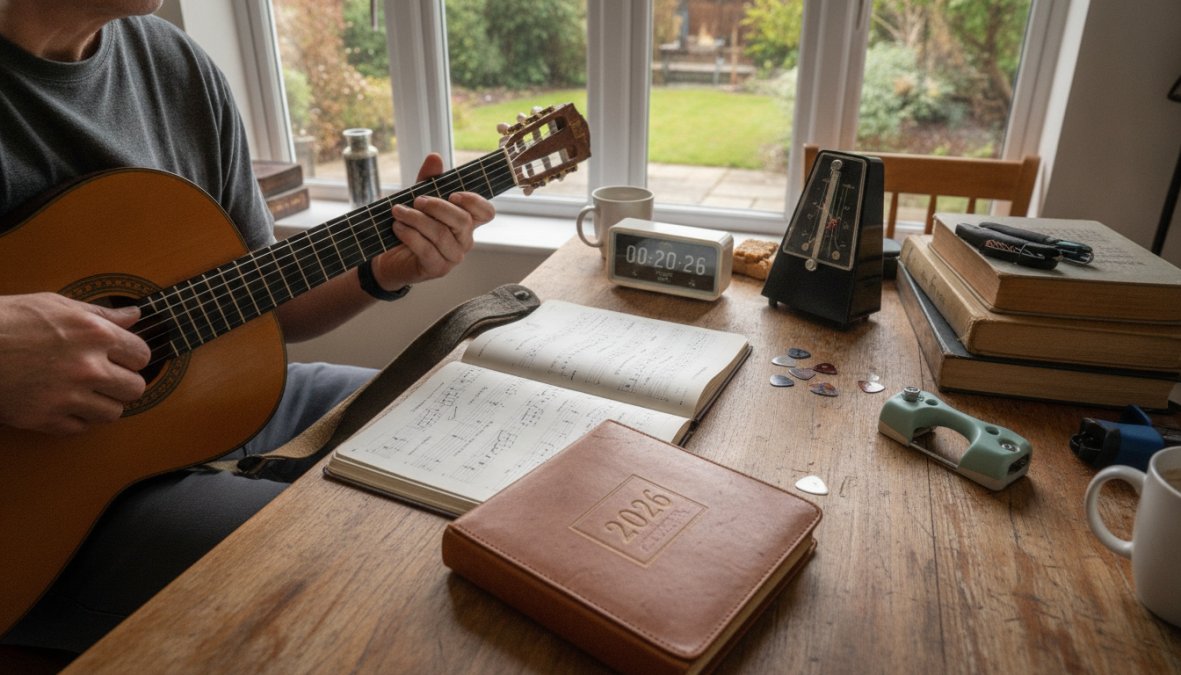
Table of Contents
- Why the Right Music Practice Routine Tools Change Everything
- Best Music Practice Apps: A Curated Comparison
- 1. Riff Quest, Best for Guitarists Who Want Visible Progress
- 2. Modacity, Best All-in-One Deliberate Practice Workspace
- 3. TonalEnergy Tuner & Metronome, Best Professional-Grade Utility
- 4. Andante, Best Digital Practice Journal for Apple Users
- 5. Instrumentive, Best Simple Practice Log for Students
- 6. Soundbrenner, Best for Rhythm and Timing Training
- 7. iReal Pro, Best for Repertoire and Improvisation Practice
- 8. Pract.is, Best for Data-Driven Practice Analysis
- 9. Practice Note, Best Physical Practice Journal
- Quick Comparison: Features, Pricing, and Best-Fit Scenarios
- How to Structure a Music Practice Session That Actually Works
- How Long Should a Music Practice Session Be?
- Music Practice Log Template: What to Track Every Session
- The Psychology of Habit Formation and Practice Discipline
- Instrument-Specific Tool Recommendations and Data Privacy Tips
Last Updated: June 17, 2026
Choosing the right music practice routine tools is the difference between spinning your wheels for months and making visible, measurable progress every week. This guide from Riff Quest covers every category of practice tool available in 2026, from dedicated apps and metronomes to physical journals and habit-tracking systems. Whether you are a guitarist tracking technique or a jazz musician building a repertoire, the tools you use shape the quality of your practice discipline more than raw hours ever will.
Most musicians assume more time equals more progress. It does not. Deliberate practice with the right feedback loop beats unfocused noodling every time. Below, we break down the nine best tools on the market, a framework for structuring your sessions, and two angles most guides skip: the psychology of habit formation and how to protect your data when using cloud-based apps.
Why the Right Music Practice Routine Tools Change Everything
The core problem most musicians face is not a lack of motivation. It is a lack of structure. Without a practice log, a timer, or a clear goal-setting system, a 45-minute session can drift into repetitive noodling on comfortable passages. Real skill development happens in the uncomfortable zones: slow technique work, deliberate repetition with a metronome, recording yourself for honest self-assessment.
A good set of music practice routine tools does three things: it creates accountability by making your session history visible; it introduces real-time feedback through tuners, drones, and recording functions; and it builds practice habits through streaks, reminders, and progress charts that reward consistency over intensity.
According to research on deliberate practice and skill acquisition, the quality of focused, goal-directed practice predicts skill development far more reliably than total hours logged. Tools that force you to define what you are practicing, set a duration, and review the result are the mechanism that turns time into progress.
Best Music Practice Apps: A Curated Comparison
The best options now go far beyond simple timers, combining session logging, metronome and drone functions, recording, goal setting, and progress analysis in one place.
[IMAGE: A guitarist sitting at a wooden desk in a warmly lit home studio, smartphone propped on a stand displaying a practice app dashboard, a physical notebook open beside the guitar with handwritten session notes | section:Best Music Practice Apps: A Curated Comparison]
| Tool | Price | Best For | Free Tier |
|---|---|---|---|
| Riff Quest | Free | Guitarists tracking technique and songs | Yes |
| Modacity | Freemium | All-in-one deliberate practice workspace | Yes |
| TonalEnergy | $4.99 one-time | Professional tuner and metronome | No |
| Andante | Freemium | Apple users wanting a clean practice journal | Yes |
| Instrumentive | Freemium | Students needing a simple practice log | Yes |
| Soundbrenner | Free app / hardware extra | Rhythm and timing training | Yes |
| iReal Pro | $14.99 one-time | Repertoire and improvisation practice | No |
| Pract.is | Freemium | Data-driven practice analysis | Yes |
| Practice Note | Varies (physical) | Musicians who prefer pen and paper | No |
1. Riff Quest, Best for Guitarists Who Want Visible Progress
Riff Quest is a free e-learning platform built specifically for guitarists frustrated with inconsistent practice and unclear progress. Its standout feature is a library of 144 built-in technical exercises with animated Guitar Pro tabs, each tied to a progression system so you can see which techniques are improving. The platform also supports importing Guitar Pro files with color-coded tabs synced to audio. A gamification layer rewards consistent daily practice through a points and ranking system modeled on the Guitar Hero format.
Pros:
- Completely free for progress tracking
- 144 technical exercises with animated tab
- Guitar Pro file import with audio sync
- Points and ranking system that rewards daily habits
- Community-rated song library
Cons:
- Focused on guitar; not suited for other instruments
Guitarists at any level who want a structured daily practice routine with visible progress, technique tracking, and a built-in motivation system, all at no cost.
2. Modacity, Best All-in-One Deliberate Practice Workspace
[SCREENSHOT: https://www.modacity.co]
Modacity is built around deliberate practice. Each session starts with a practice list where you define specific items, set timers per item, and attach notes and recordings. The integrated metronome, tone generator, and recording function mean you never need to switch apps mid-session. Guided practice strategies are particularly useful for classical and conservatory musicians working systematically through repertoire.
Pros:
- Encourages goal-directed practice over passive time-logging
- Comprehensive feature set: metronome, recorder, tone generator, notes
Cons:
- Feature density can overwhelm beginners who just want to track practice time
Use Modacity's "practice strategies" prompts when you feel stuck on a passage. The guided prompts force you to isolate the problem rather than replaying the section from the top, which is the most common inefficiency in practice sessions.
3. TonalEnergy Tuner & Metronome, Best Professional-Grade Utility
[SCREENSHOT: https://tonalenergy.com]
TonalEnergy is widely considered the gold standard for practice utilities. At a one-time cost of $4.99, it delivers a pitch analysis engine accurate enough for professional intonation work, a metronome with complex subdivision support, a drone function for ear training, and an integrated recorder. The intonation history feature logs your pitch accuracy over time so you can see whether your intonation is genuinely improving.
Pros:
- Extremely precise pitch analysis with historical tracking
- Drone function for ear training and scale work
- One-time purchase, no subscription
Cons:
- No free version; no practice session logging or goal-setting features
4. Andante, Best Digital Practice Journal for Apple Users
[SCREENSHOT: https://apps.apple.com/us/app/andante-music-practice-journal/id1530262372]
Andante is a dedicated practice journal with a built-in timer, metronome, and audio recorder. Its mood and focus tracking fields are a genuine differentiator, most apps track duration and tempo, but Andante also captures practice quality, revealing patterns about when and how you practice best. iCloud sync keeps data consistent across iPhone and iPad.
Pros:
- Minimalist interface with excellent balance of tracking and reflection
- Mood and focus tracking adds a qualitative layer most apps skip
Cons:
- Limited to the Apple ecosystem; no Android version
5. Instrumentive, Best Simple Practice Log for Students
[SCREENSHOT: https://instrumentive.com]
Instrumentive is the right tool when simplicity matters more than depth. Students and teachers who need to log practice time by piece, set repertoire deadlines, and export data to share with an instructor will find everything they need here. Multiple-profile support makes it practical for parents managing logs for more than one child.
Pros:
- Very easy to set up and use
- Data export for teacher review
Cons:
- Less analytical depth than Pract.is or Modacity for serious practitioners
6. Soundbrenner, Best for Rhythm and Timing Training
The Soundbrenner app is free, ad-free, and handles complex time signatures and custom rhythm patterns without the clunky interface that plagues most free metronome apps. The real differentiator is the optional wearable device, which vibrates on your wrist in time with the beat, a genuine game-changer for drummers or anyone who struggles to internalize rhythm.
Pros:
- High-quality free metronome app with no ads
- Unique tactile feedback via wearable hardware
- Multi-device sync for ensemble practice
Cons:
- The wearable hardware is a separate purchase
7. iReal Pro, Best for Repertoire and Improvisation Practice
[SCREENSHOT: https://www.irealpro.com]
iReal Pro is a virtual backing band. For jazz musicians, it is practically essential. The community-contributed chord chart library covers thousands of standards, and you can adjust tempo, key, and style to match where you are in the learning process. The looping function for specific sections is the most undervalued feature: looping a tricky chord progression at 60 bpm while working through voicings is far more efficient than playing through the whole chart repeatedly.
Pros:
- Massive community-driven chart library
- Flexible tempo, key, and style adjustments
- Essential for improvisation and repertoire building
Cons:
- Steeper learning curve for creating or editing charts
8. Pract.is, Best for Data-Driven Practice Analysis
Pract.is targets musicians who want to understand their practice habits at a macro level. Mood and focus trend analysis combined with detailed session reporting reveals patterns like always skipping the same technique exercises or logging shorter sessions on certain days.
Pros:
- Strong long-term progress analysis
- Highly detailed session and mood reporting
Cons:
- The depth of data is only useful if you actually review it
Avoid using Pract.is as your only practice tool if you tend to obsess over metrics. Tracking data without acting on it creates a false sense of productivity. Set a weekly review ritual, look at the trends, and adjust your practice planner accordingly.
9. Practice Note, Best Physical Practice Journal
[SCREENSHOT: http://www.thepracticenote.com]
Practice Note is a physical notebook designed specifically for musicians, with fifty-two weeks of structured practice pages, goal-setting sections, and accomplishment trackers. Writing by hand forces slower, more deliberate reflection. There are no notifications, no sync errors, and no subscription to cancel, and the practice chart you fill in by hand often sticks in memory better than a tap in an app.
Pros:
- No digital distractions during practice
- Creates a permanent, tangible record of your musical development
Cons:
- Not searchable, not syncable, and not recoverable if lost
Quick Comparison: Features, Pricing, and Best-Fit Scenarios
| Tool | Key Feature | Price | Platform |
|---|---|---|---|
| Riff Quest | 144 exercises, GP import, ranking system | Free | Web |
| Modacity | Deliberate practice workflows + recorder | Freemium | iOS/Android |
| TonalEnergy | Intonation history, drone, advanced metronome | $4.99 one-time | iOS/Android |
| Andante | Mood/focus tracking, iCloud sync | Freemium | iOS only |
| Instrumentive | Multi-profile, data export | Freemium | iOS/Android |
| Soundbrenner | Tactile metronome wearable | Free app + hardware | iOS/Android |
| iReal Pro | Virtual backing tracks, chord charts | $14.99 one-time | iOS/Android |
| Pract.is | Long-term trend analysis | Freemium | iOS/Android |
| Practice Note | Physical journal, 52-week format | Varies | Physical |
How to Structure a Music Practice Session That Actually Works
Structure is the single most underrated element of effective practice. Most musicians sit down, play what they enjoy, and call it a session. That builds comfort, not skill.
[IMAGE: Close-up of a guitarist's left hand pressing chord shapes on a fretboard, a mechanical metronome and open spiral-bound notebook visible on a wooden music stand in soft background focus | section:How to Structure a Music Practice Session That Actually Works]
A well-structured practice session has three distinct zones, each serving a different developmental purpose.
The Three-Zone Framework: Warm-Up, Technique, Repertoire
Zone 1: Warm-Up (10-15% of total session time) Physical warm-up prevents injury and primes motor patterns. Scales, arpeggios, or simple exercises at a comfortable tempo. This is not the time to push tempo or difficulty.
Zone 2: Technique Focus (40-50% of total session time) Isolate one specific weakness: a particular fingering pattern, a tricky rhythm, an intonation issue. Use a metronome. Start slow. Increase tempo only when the passage is clean.
Zone 3: Repertoire (35-45% of total session time) Apply what you worked on in Zone 2 to actual pieces. Record yourself at least once per week for honest self-assessment.
A simple practice session template:
- Set total session duration before you start
- Log warm-up pieces and duration
- Define one specific technique goal for Zone 2
- Set metronome starting tempo and target tempo
- Log repertoire pieces worked on
- Record at least one run-through per week
- Rate focus and energy (1-5) for practice analysis
Using a Metronome and Drone for Focused Technique Work
The most productive use of a metronome is diagnostic: if you cannot play a passage cleanly at 60% of target tempo, you do not know the passage yet. The drone function in tools like TonalEnergy adds another layer, a sustained pitch reference trains your ear to hear intonation deviations in real time, producing faster improvement than tuner checks alone.
According to music education research on deliberate practice methods, isolating specific technical problems and practicing them with immediate feedback produces faster skill gains than whole-piece repetition.
How Long Should a Music Practice Session Be?
A focused 30-minute session produces better results than an unfocused 90-minute one. For most adult learners, 45 to 60 minutes is the practical optimal range. Beginners often get more from two focused 20-minute sessions per day than one long one. The key variable is not duration but density: how much session time is spent in deliberate, goal-directed work versus passive repetition. A practice log that tracks both duration and focus rating will reveal your actual productive practice time, which is often much shorter than total session time.
Aim for consistent daily practice sessions over marathon weekend sessions. Habit frequency matters more than session length for long-term skill development. Even 20 minutes of focused daily practice outperforms two hours on Saturday.
Music Practice Log Template: What to Track Every Session
A music practice log records what you practiced, for how long, at what tempo, and how it felt. The goal is pattern recognition over time.
Minimum viable practice log entry:
| Field | Example |
|---|---|
| Date | June 17, 2026 |
| Total Duration | 45 minutes |
| Warm-Up | C major scale, 3 positions, 10 min |
| Technique Focus | Hammer-ons, 60-90 bpm, 15 min |
| Repertoire | "Autumn Leaves" chord melody, 20 min |
| Metronome Tempos | Start: 60 bpm, End: 80 bpm |
| Focus Rating | 4/5 |
| Notes | Right hand tension in measures 7-8 |
Tracking this consistently for four to six weeks reveals which technique areas you keep avoiding, which days your focus drops, and whether your tempo targets are actually advancing.
Digital Logs vs. Physical Practice Journals: Which Is Better?
Digital logs win on searchability, trend analysis, and portability. Apps like Pract.is and Andante can surface patterns across months of data in seconds. Physical journals win on reflection quality and distraction resistance, writing by hand slows you down usefully, with no push notifications or battery to run out mid-session. The honest answer: the best practice journal is the one you actually use consistently. As documented in habit formation research from behavioral science, the friction of a system is the primary predictor of whether you will stick with it. Many serious musicians use both, keeping a physical Practice Note journal for in-session notes and a digital app for long-term analysis.
The Psychology of Habit Formation and Practice Discipline
Most guides on music practice routine tools focus entirely on features and ignore the single biggest variable: whether you will actually practice tomorrow.
A habit consists of a cue, a routine, and a reward. For practice discipline: a consistent cue (same time, same place, instrument already out), a defined routine (your three-zone session structure), and a visible reward (a streak counter, a progress chart, a points total in Riff Quest). The streak mechanic is more powerful than most musicians admit, seeing a 14-day practice streak creates genuine loss aversion that motivates practice on low-energy days far more effectively than abstract goals.
The other insight most practice guides miss: the first five minutes are the hardest. Reducing the activation energy of starting is more effective than increasing motivation. Keep your instrument out of its case. Have your practice app open before you sit down. The tools that reduce setup friction produce better practice discipline outcomes than tools with more features but higher friction.
Instrument-Specific Tool Recommendations and Data Privacy Tips
Not every tool suits every instrument. Here is a practical breakdown.
Guitarists: Riff Quest for technique tracking and song learning, TonalEnergy for tuning and intonation work, iReal Pro for chord melody and improvisation practice.
Pianists and classical musicians: Modacity for deliberate practice session management, Andante for journal-style reflection, Practice Note for a physical record.
Jazz musicians: iReal Pro is non-negotiable for repertoire and improvisation. Pair it with Pract.is for long-term practice analysis.
Drummers and percussionists: Soundbrenner's wearable metronome is the standout recommendation for internalizing rhythm while playing.
Students (any instrument): Instrumentive for its simplicity and teacher data-export feature.
On data privacy and offline functionality: Many practice apps store session data on cloud servers. TonalEnergy and Soundbrenner's core metronome functions work fully offline. Andante uses iCloud, keeping data within Apple's ecosystem. Modacity and Pract.is require connectivity for full functionality. The Electronic Frontier Foundation's guide to digital privacy for app users is a useful reference for evaluating what any app collects and how it is stored. The practical rule: if an app is free with no clear business model, your practice data is likely the product. Physical tools like Practice Note and a standalone hardware metronome have zero data privacy concerns by definition.
Frequently Asked Questions
What tools do I need for a productive music practice routine?
At a minimum, effective music practice routine tools include a reliable metronome, a tuner, and some form of practice log, digital or physical. A metronome like Soundbrenner or TonalEnergy handles rhythm and pitch, while apps like Modacity or Instrumentive handle session planning and tracking. For guitarists specifically, a platform like Riff Quest combines technique exercises, song tracking, and progress stats in one free tool, removing the need to juggle multiple apps.
Are there apps that help with music practice and session structure?
Yes, several music practice apps are designed specifically for session structure. Modacity guides you through deliberate practice workflows with timers and note-taking. Andante offers a clean practice journal with mood tracking and calendar views. Instrumentive is ideal for students who need a simple practice log with goal-setting and data export for teachers. Each app approaches practice planning differently, so the best choice depends on whether you prioritize reflection, data analysis, or simplicity.
How long should a music practice session be for real improvement?
Quality consistently beats duration. Shorter daily practice sessions of 20-45 minutes with focused intent tend to produce better skill development than occasional marathon sessions. The key is consistency, daily practice builds habit and muscle memory more effectively than sporadic long sessions. Use a timer within your practice tools to enforce session boundaries. Beginners may start with 15-20 minutes, while more advanced players can work up to 60-90 minutes split across technique, repertoire, and sight-reading.
What is the best way to track music practice progress?
The most effective music practice log combines time tracking, goal setting, and qualitative notes. Digitally, apps like Pract.is and Andante offer detailed session histories and visual progress charts. Physically, a dedicated notebook like Practice Note provides 52 weeks of structured pages. For guitarists, Riff Quest's stats dashboard shows exactly where time is invested across songs and techniques. The best system is the one you'll actually use consistently, even a simple practice chart beats an abandoned premium app.
Do I need a metronome for every practice session?
Not necessarily for every moment, but a metronome should feature in most practice sessions, especially during technique and repertoire work. Practicing without one can entrench rhythmic inaccuracies that are hard to fix later. TonalEnergy and Soundbrenner both offer advanced metronomes with subdivision support. The drone function in TonalEnergy is also valuable for intonation training. Reserve free-time playing for creative exploration, but use a metronome whenever you're drilling specific passages or building speed.
How can I make my music practice more efficient using these tools?
Efficiency comes from intentionality. Start each session with a clear practice plan, define what pieces or techniques you'll work on and set a timer. Use a practice log to record what you covered and rate your focus. Apps like Modacity enforce deliberate practice by prompting you to set specific goals per item. Riff Quest's built-in exercises and progress tracking help guitarists avoid aimless noodling. Review your practice journal weekly to spot patterns and adjust your practice schedule accordingly.
Inconsistent practice and unclear progress are the two frustrations that hold most musicians back for years. Riff Quest was built specifically to solve both, with a completely free progress tracking system, 144 technical exercises with animated tab, Guitar Pro file import, and a stats dashboard that shows exactly where your practice time is going. Start your guitar progress with Riff Quest and turn your next practice session into something you can actually measure.