Yes, analytics can improve guitar practice by turning vague efforts into measurable progress. Here's how:
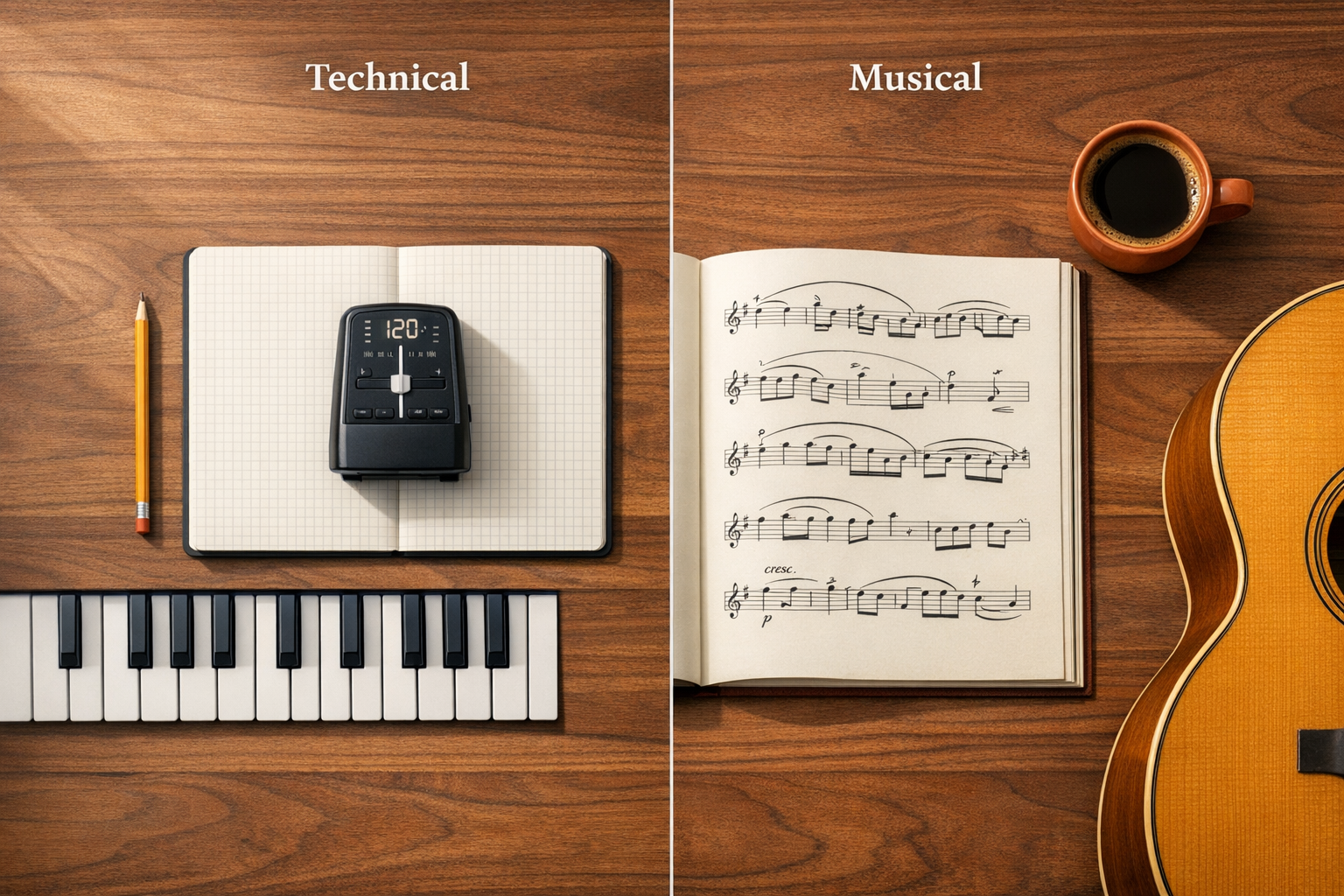
- Track Key Metrics: Tools measure accuracy, timing, rhythm, and musical expression, helping pinpoint strengths and weaknesses.
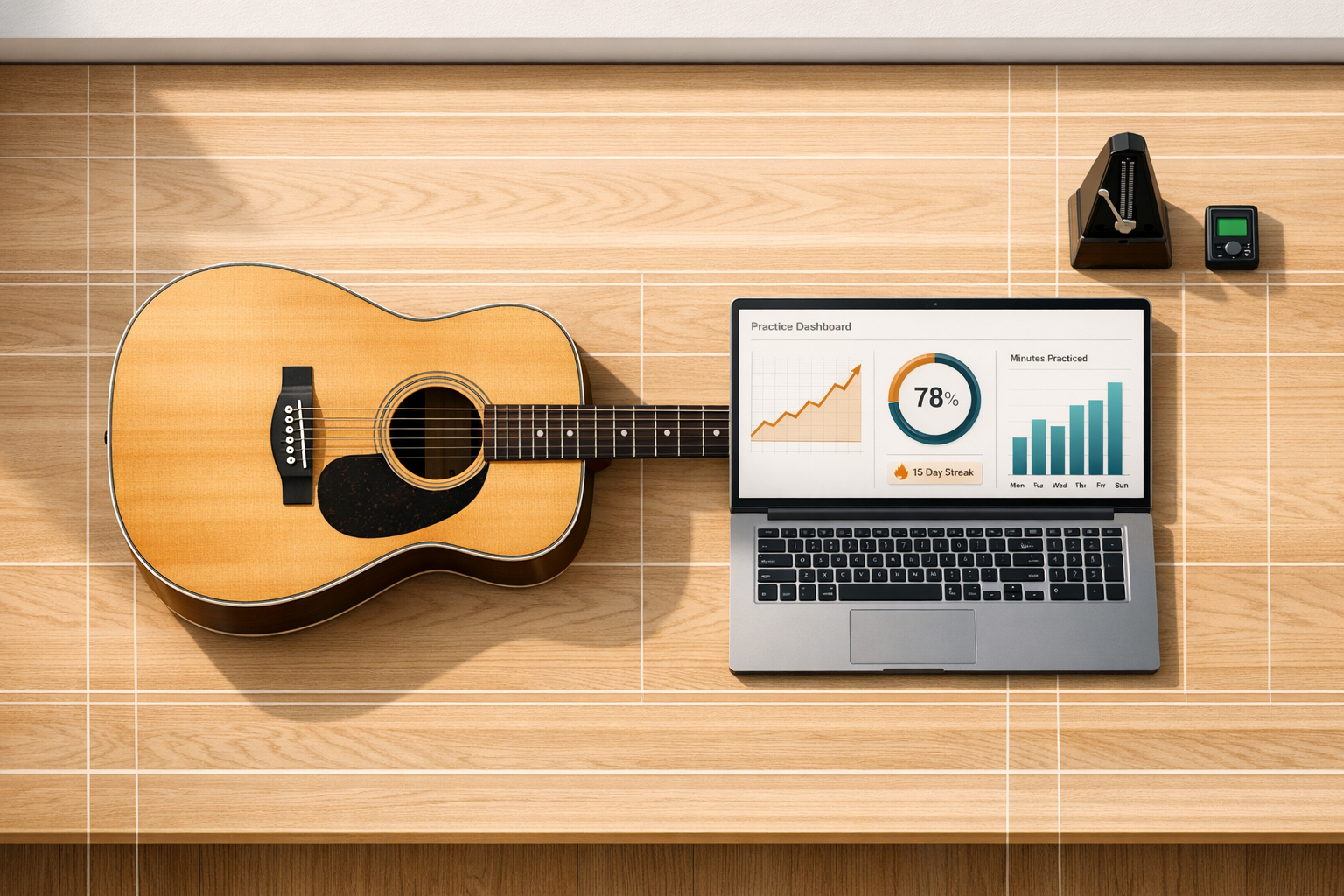
- Visual Feedback: Graphs and color-coded maps make subtle errors easy to spot, like timing shifts or missed notes.
- Structured Practice: Analytics guide focused sessions with repeatable patterns like "Drill-Correct" (fix errors) and "Drill-Smooth" (improve flow).
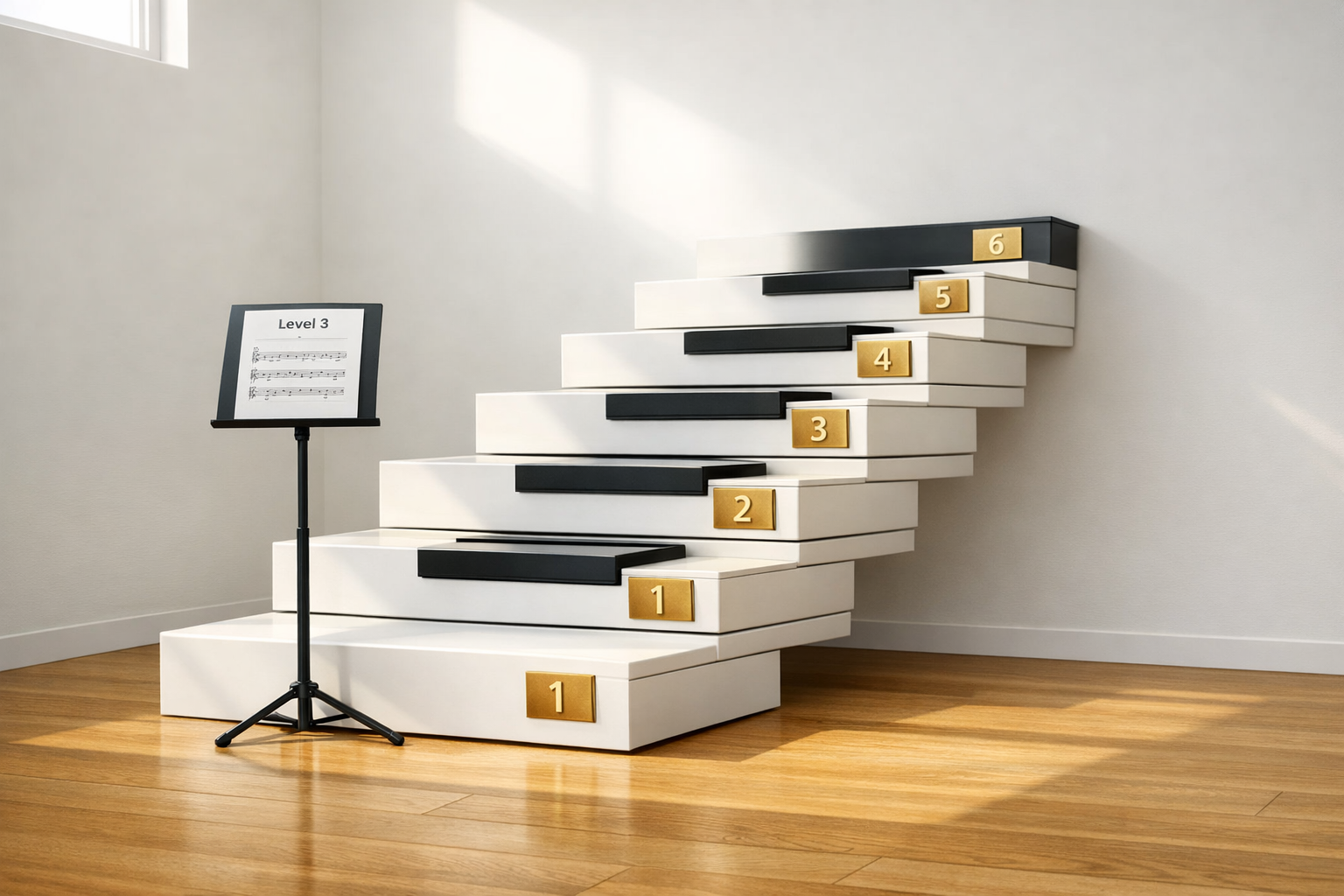
- Motivation Through Gamification: Features like XP, levels, and streaks keep practice engaging and consistent.
Studies show deliberate practice, aided by analytics, accounts for 21% of performance improvement. Tools like Riff Quest and Violy make this approach accessible, offering free or AI-driven progress tracking. While challenges like hardware limitations and cost remain, emerging technologies promise more precise, personalized feedback.
If you're serious about improving your guitar skills, analytics can help you practice smarter, not harder.
How Analytics Measure Guitar Practice
Key Metrics for Guitar Practice
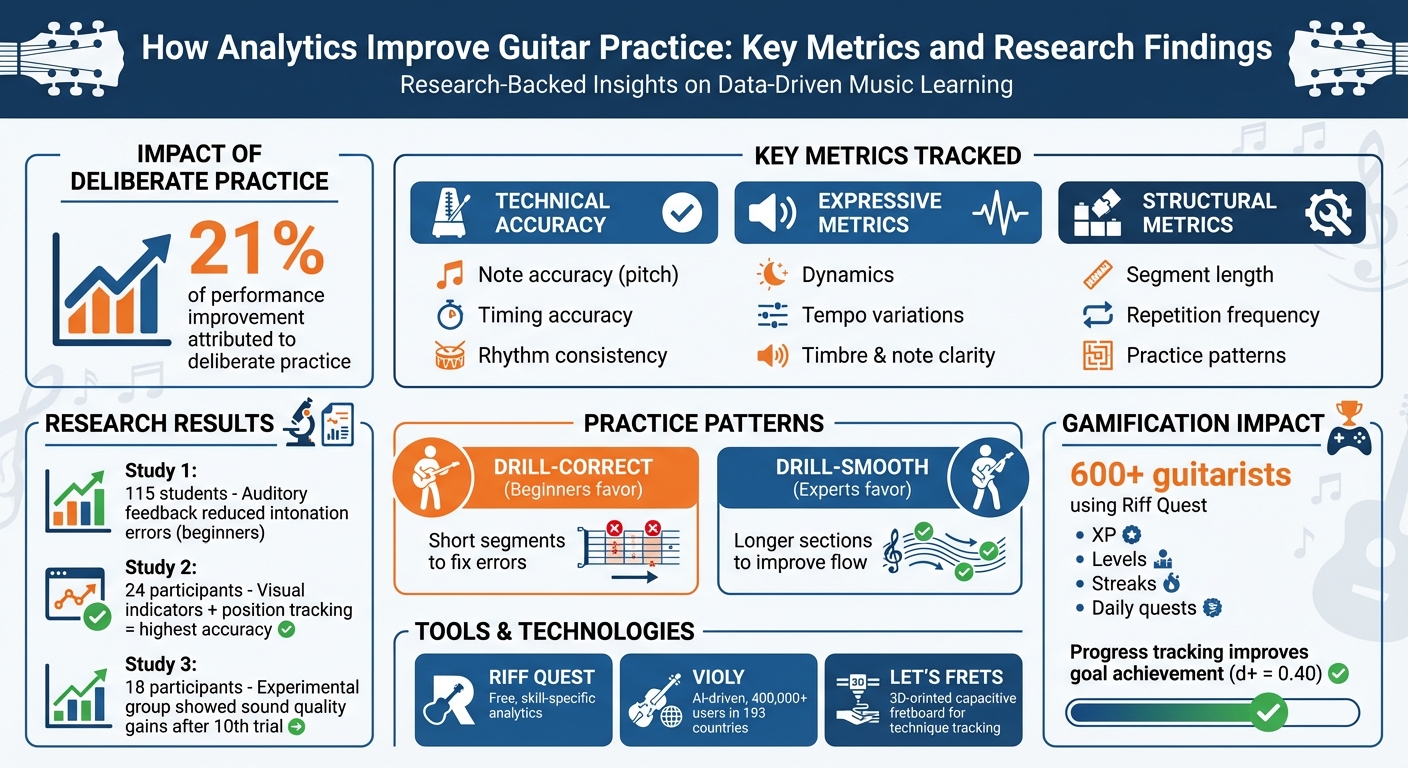
Analytics break down guitar practice into measurable components, offering insights into both strengths and areas for improvement. At the core are technical accuracy metrics: note accuracy (pitch), timing accuracy (onset times), and rhythm consistency. These are the building blocks of solid guitar playing [6][7].
Moving beyond the basics, expressive metrics assess the subtleties that distinguish mechanical playing from a truly musical performance. Advanced tools evaluate dynamics, tempo variations, timbre, and the clarity of note attacks. These metrics guide players in developing not just technical skill but also musicality [7][2][8].
Experts tend to favor Drill-Smooth patterns (longer sections aimed at improving flow), while beginners often lean toward Drill-Correct (short segments aimed at fixing errors).
Structural metrics focus on practice habits that directly influence learning. For instance, segment length measures how much of a piece is played before pausing, while repetition frequency highlights trouble spots that require extra attention. Research categorizes practice behaviors into "Drill-Correct" and "Drill-Smooth".
The Note-Time Playing Path (NTPP) method maps actual versus expected note onsets, revealing tempo fluctuations and repeated patterns [6]. Analytics can also track "no-play" time - pauses in practice sessions that might indicate technical challenges or high cognitive demands [6].
Research highlights the role of feedback in improving practice. For example, a study of 115 students found that auditory feedback was especially helpful for beginners in reducing intonation errors [7]. Another study using the "Let's Frets" system with 24 participants showed that combining visual indicators with finger position tracking led to the most accurate playing.
Visual indicators require the least time to realize new finger positions while a combination of visual indicators and position capturing yielded the highest playing accuracy [3].
Research on Data-Driven Progress Tracking
Studies confirm that these metrics are not just theoretical - they have a tangible impact on practice outcomes. In one study conducted in November 2018, researchers Janis Sokolovskis, Dorien Herremans, and Elaine Chew tested the "Music Practice Browser" on eight participants. The findings showed that experts leaned more heavily on Drill-Smooth patterns, while beginners relied more on Drill-Correct patterns [2].
Visual feedback has also proven to be a game-changer. Musicians who received video feedback practiced slower and worked on longer segments earlier in the learning process compared to those without it. This shift in practice behavior aligns with research showing that deliberate practice accounts for 21% of the variance in musical performance [1][10].
Another study involving 18 participants involved a Sound Quality Visual Feedback System (SQVFS). The experimental group achieved noticeable sound quality gains after the tenth trial - a pattern not seen in the control group [9].
Platforms like Riff Quest put this research into action by offering skill-specific analytics and visual progress tracking.
The Role of Visualization in Skill Development
Benefits of Progress Visualization
Visualization has a unique way of exposing practice errors that might otherwise go unnoticed. For instance, the human ear often struggles to detect micro-timing mistakes or subtle tempo shifts. As Frank Heyen from the Visualization Research Center puts it:
Visualization can potentially make these difficult-to-hear things easy to see [11].
This visual perspective works hand-in-hand with data analytics, bringing to light nuances that raw numbers alone might miss. Seeing your progress can fast-track your learning process. Studies show that recording progress significantly improves goal achievement [13].
By focusing on self-assessment - comparing your current performance with past sessions - you can develop a more effective practice routine.
Tools for Visualizing Progress
Visualization transforms data into actionable insights through various techniques:
- Practice Segment Arcs: These show repeated sections of music, highlighting areas needing extra attention [2].
- Precision Maps: Color-codes mark correct notes in green and mistakes in red [2].
- Tempo-Loudness Graphs: Track changes in expressiveness and consistency over time [2].
Platforms like Riff Quest bring these principles to life, combining skill-specific analytics with visual progress tracking.
How Analytics Improve Practice Routines
Structured Practice Through Data
Analytics can turn a chaotic practice session into a focused, four-step training loop: choose a mode, focus on a specific goal, log your results, and adjust your next session based on the data[16].
Instead of guessing, you can focus your energy where it matters most. Research shows that musicians using video feedback tend to practice at slower tempos and tackle longer sections earlier in the process [1].
Gamification and Motivation
Turning practice into a game can make it more engaging. Platforms like Riff Quest use features like XP (Experience Points), levels, and daily quests to create a rewarding system [15]. Gamification taps into your brain’s reward system, making progress visible and motivating.
The key is consistency. Setting a low daily minimum - just 5–10 minutes - can help you maintain the habit. Combine this with the "Never Miss Twice" rule: if you skip a day, the next session becomes non-negotiable[16].
Limitations and Future Potential of Practice Analytics
Challenges in Analytics for Guitar Practice
While analytics can enhance your guitar practice, current tools still have shortcomings. Assessing musical expression remains a challenge, as tools struggle to interpret expressive choices. Hardware limitations like built-in microphones also lack the precision to capture subtle details.
Emerging Trends and Technologies
AI and machine learning are starting to transform practice tools, moving beyond simple right-or-wrong feedback to evaluate note quality. For example, Violy has gained more than 400,000 users. Advances in tracking physical technique, like capacitive fretboards, are also showing promise [3].
Conclusion
Using analytics in guitar practice shifts the experience from random trial and error to focused, measurable improvement. Progress tracking also taps into your brain’s reward system, offering a tangible sense of achievement that keeps motivation alive throughout the journey to mastery.
Modern tools take the guesswork out of practice by providing structured, data-driven feedback. Starting simple is key: commit to at least 15 minutes of focused practice each day, track your sessions to close the feedback loop, and use visualizations to pinpoint specific technical challenges.
Practice Smarter with Data
Stop guessing your progress. Use Riff Quest's automated tracking and skill-specific analytics to master the guitar faster through deliberate, data-driven practice.
Start Tracking for FreeFAQs
What should I track first as a guitarist?
Tracking how much time you spend practicing is a great starting point. Logging your minutes gives you a clear picture of your consistency and effort over time. From there, keep tabs on specific technical goals like alternate picking or rhythm.
How do I use analytics without overthinking?
Concentrate on just a few important metrics: practice time, consistency, effort, and skill improvement. Tools like Riff Quest make it easier by offering structured routines and visual progress tracking.
Do I need extra gear for accurate feedback?
No, you don’t need any extra gear. Tools like Riff Quest offer structured practice routines, track your progress, and provide skill-specific analytics without requiring any additional equipment.
.jpg)