Neoclassical Sweep Master
Execute multi-octave sweep arpeggios with perfect synchronization.
Tablature
Preview only. Log in to access the fully interactive version with playback, tempo control, and real-time feedback. Sign in →
Why It Matters
Sweeping is the ultimate high-speed arpeggio technique. This neoclassical drill focuses on the sync between the picking hand 'sweep' and fretting hand 'rolls', ensuring every note is perfectly separated and articulate.
How to Practice
- 1Drag the pick across the strings in a single, continuous, sweeping motion.
- 2Roll your fretting fingers to isolate each note and prevent chord bleeding.
Tips & Techniques
- •Use your picking-hand palm to follow the pick, muting lower strings instantly.
- •Coordinate the sweep speed perfectly with your fretting finger movements.
Skills You'll Develop
Ready to Practice?
Upgrade to Premium to unlock this exercise and master it with our guided practice tools.
Sound Recognition
Real-time audio recognition
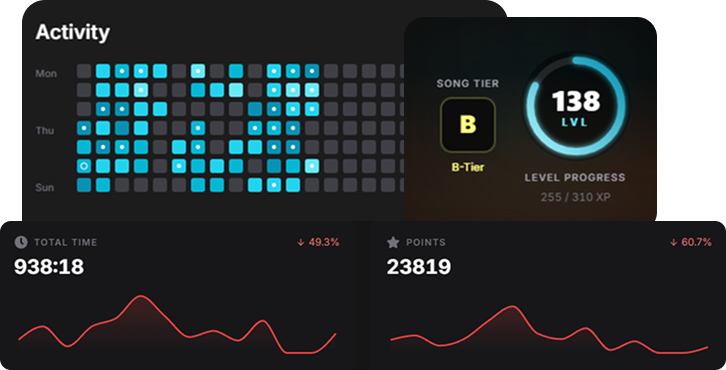
Analytics
Track your progress
Activity Heatmap
Visualize your streak
Real-time Feedback
Instant corrections
Related Exercises
3-String Sweep Synchronization
Practice clean 3-string sweep picking arpeggios to coordinate your pick stroke with sequential finger lifts.
5-String Sweep Cascades
Execute extended 5-string sweep arpeggios to build deep fretting hand muting control and fluid sweep motion.
Sweep Picking Motion Drill – 3 Strings
Develop basic sweeping mechanics using simple three-string triad shapes.
Sweep Picking Motion Drill – 6 Strings
Master full-span, six-string sweep arpeggios with intense focus on fretting rolls.