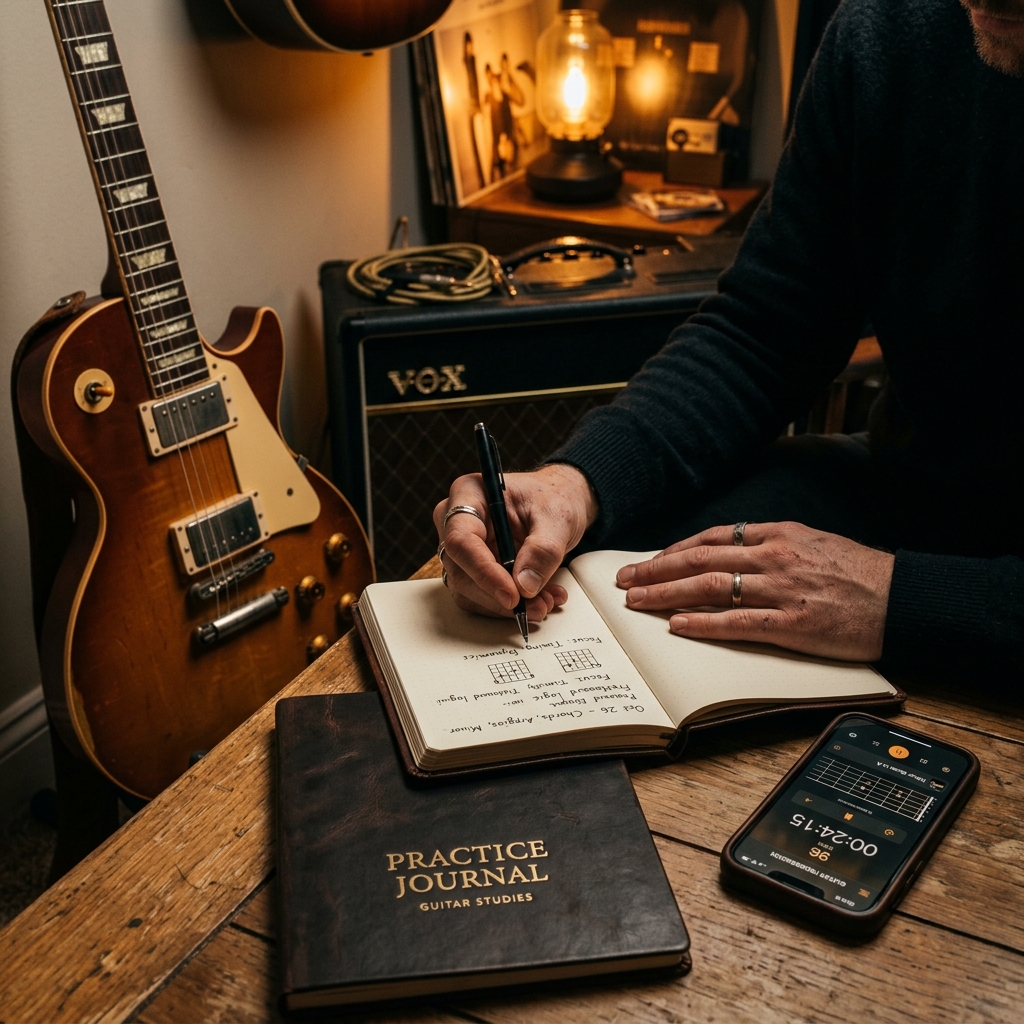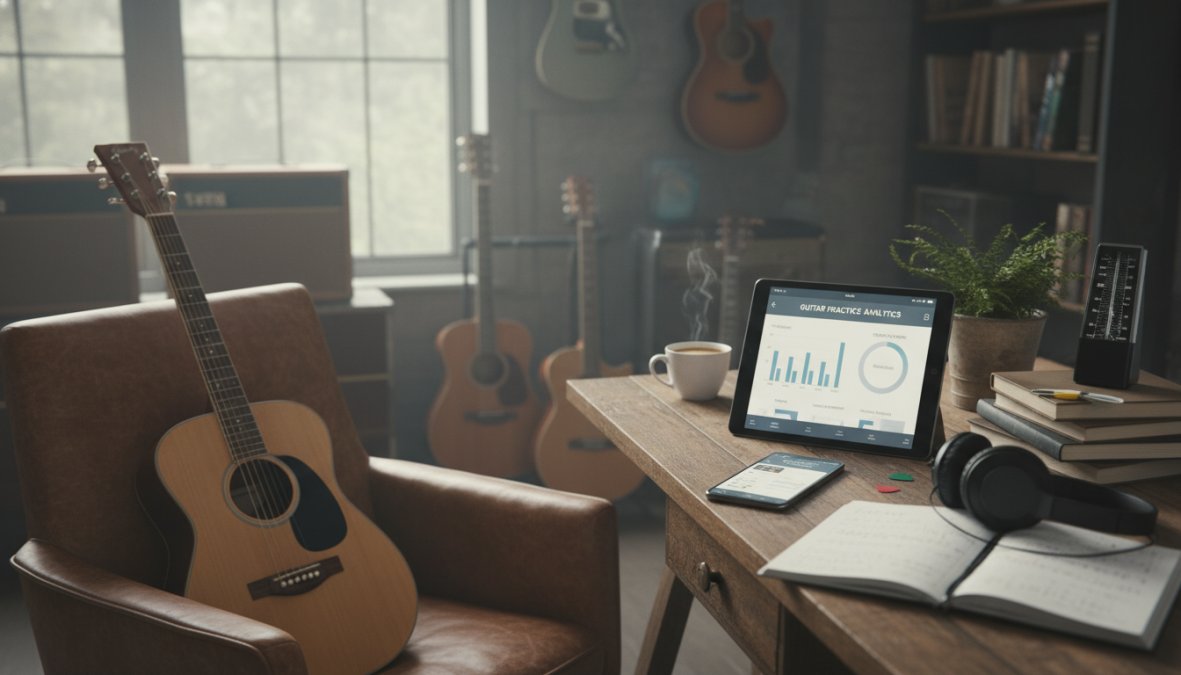
Tracking your guitar practice can make a big difference. Practice logs help you see progress, stay focused, and plan better sessions. Without tracking, it’s easy to feel stuck or miss areas needing improvement. A simple log - whether on paper or an app - lets you record what you practiced, how long, and what worked or didn’t.
Key Benefits of Practice Logs:
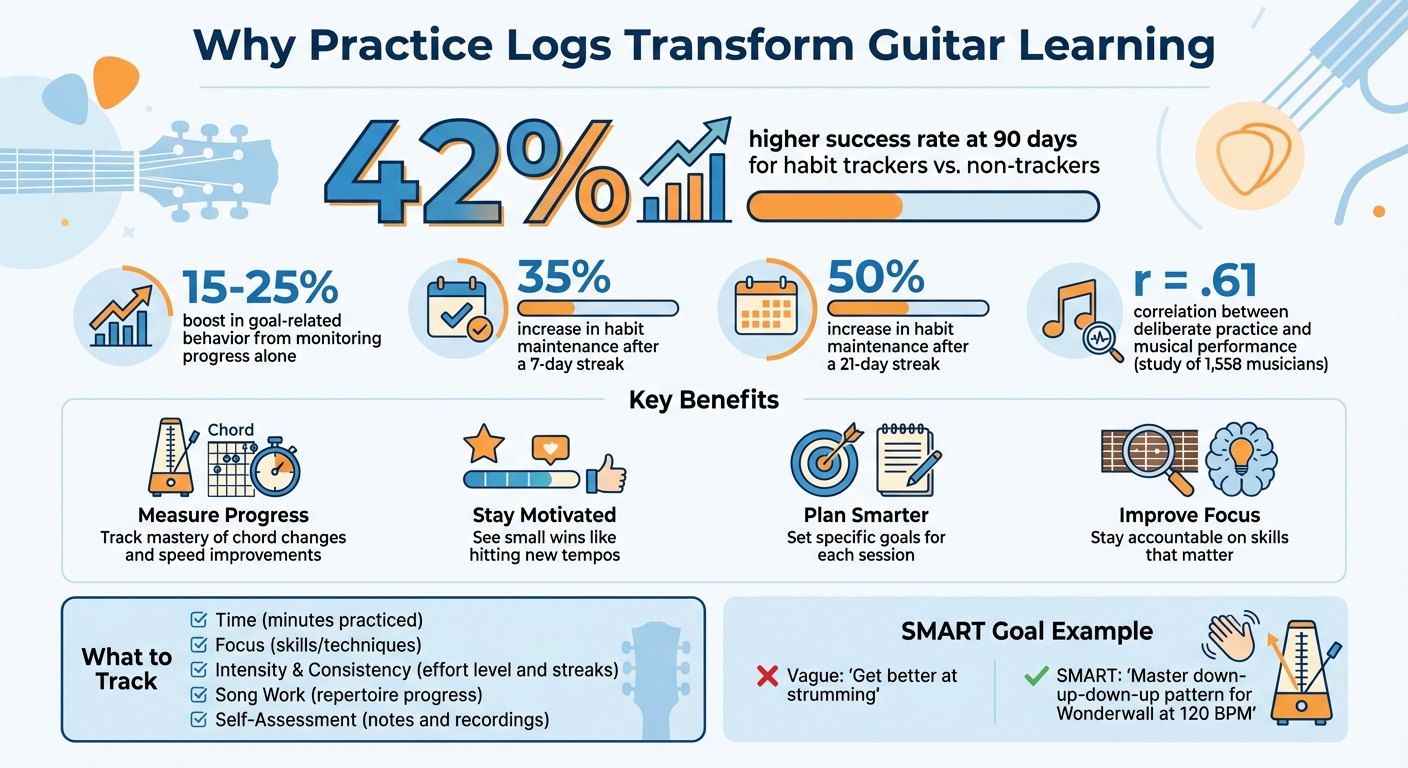
- Measure Progress: Logs show how far you’ve come, like mastering a tricky chord change or increasing speed on a riff.
- Stay Motivated: Seeing small wins, such as hitting a new tempo, keeps you inspired to keep practicing.
- Plan Smarter: Avoid aimless playing by using logs to plan specific goals for each session.
- Improve Focus: Tracking helps you stay accountable and work on skills that matter most.
Research Highlights:
- Tracking habits boosts success rates by 42% over 90 days.
- Guitarists who practice deliberately, with clear goals, improve faster than those who don’t.
- Tools like Riff Quest simplify tracking with features like progress charts and AI feedback.
Using practice logs isn’t just about logging time - it’s about learning smarter, staying motivated, and achieving your guitar goals faster.
Keeping a Guitar Practice Diary
Mental Benefits of Keeping Practice Logs
Practice logs do more than just track your time - they can also improve your mental approach to learning. By measuring your practice, you naturally sharpen your focus, set clear intentions, and hold yourself accountable[3]. In fact, research shows that simply monitoring your progress - without any other changes - can boost goal-related behavior by 15% to 25%[3]. Even more impressive, people who track their habits have a 42% higher success rate at 90 days compared to those who don't[3].
How Tracking Progress Increases Motivation
Logging your practice sessions consistently creates a clear picture of your progress. Charts and data showing your frequency and improvements act as a motivational boost. This "scoreboard effect" highlights both your effort (like maintaining a practice streak) and your achievements (like hitting a new metronome speed or mastering a challenging song). Even small victories - such as finally perfecting that tricky chord change from G to B minor - can give you the confidence to tackle more advanced challenges.
Once you hit a 7-day streak, your chances of maintaining that habit jump by 35%, and by 21 days, they increase by 50%[3]. Over time, you start to see yourself as "someone who practices daily", and skipping a session feels out of character. Each time you log your practice, you reinforce this identity and strengthen your motivation to keep going.
Tracking your progress doesn’t just inspire you - it also helps you approach each session with more clarity and purpose.
How Practice Logs Simplify Practice Planning
One of the hardest parts of practicing is figuring out where to start. A practice log takes away the guesswork by letting you plan ahead. Instead of picking up your guitar and feeling unsure, you’ll already have a plan in place. Maybe today is all about technique drills, tomorrow focuses on learning a new song, and Friday is dedicated to ear training. This structure eliminates the aimless "noodling" that can derail your progress and replaces it with focused, intentional practice.
Research on Focused Practice and Skill Growth
What separates guitarists who improve steadily from those who hit a wall? It’s not just the hours of practice but how those hours are spent. A study of 1,558 musicians, from casual players to professional soloists, highlighted the importance of deliberate practice. Using the Deliberate Practice in Music Inventory (DPMI), researchers found that effective practice revolves around problem-solving and refining routines. The results showed a strong correlation (r = .61 after adjusting for errors) between deliberate practice habits and musical performance[5]. In short, the quality of your practice sessions matters just as much as the time you invest. That’s where tools like practice logs come into play.
How Logging Supports Focused Practice
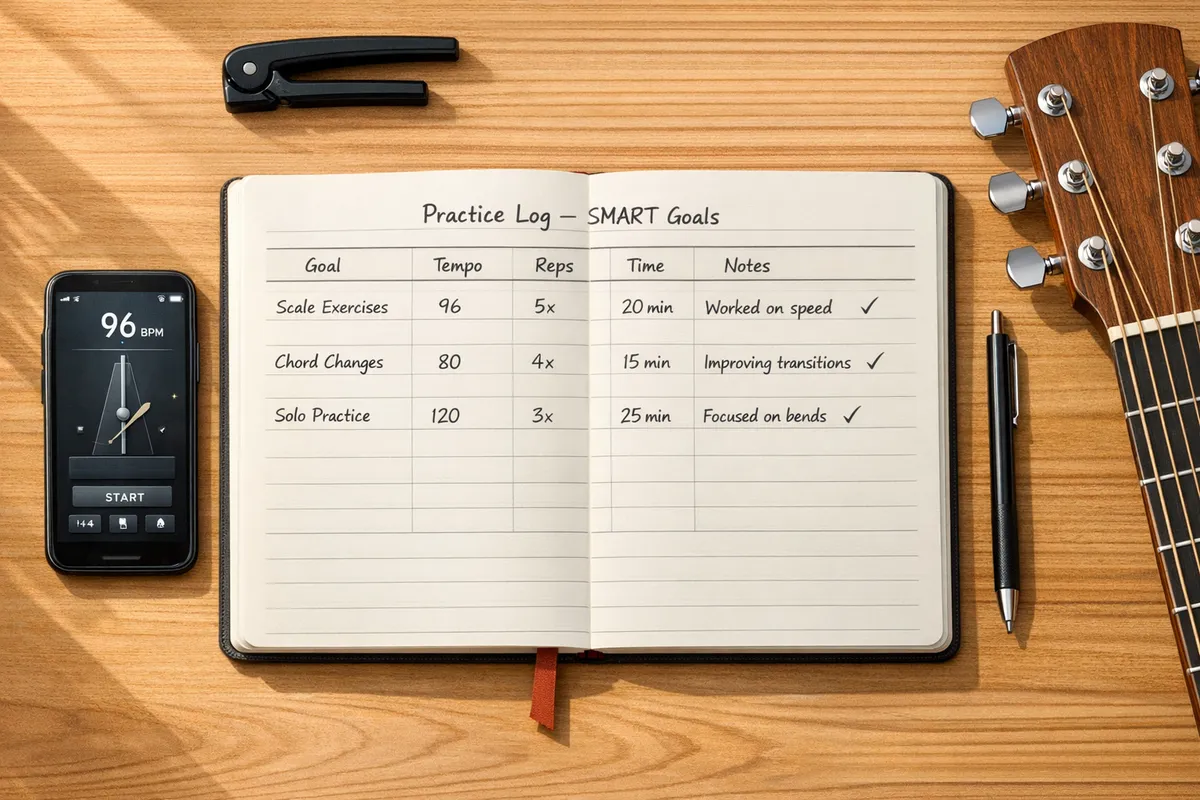
Practice logs transform vague goals into actionable steps like fretboard mastery, using the SMART goal framework (Specific, Measurable, Achievable, Relevant, and Time-bound). For example, instead of aiming to "get better at strumming", a logged goal might be: "Master the down-up-down-up strumming pattern for 'Wonderwall' at 120 BPM"[4]. This level of precision gives your brain a clear target to work toward.
"Deliberate Practice can be defined as goal-directed practice aimed at improving performance. It requires effort, determination and concentration."
- Bonneville-Roussy and Bouffard[5]
Logs also help you break down complex tasks into manageable pieces. Instead of tackling an entire solo in one go, you might focus on perfecting a 4-bar section before moving on[1][5]. This targeted approach allows musicians to address specific challenges directly, rather than relying on endless repetition to iron out issues[5].
Take the 3-Time Rule, for instance: only increase the metronome speed by 5 BPM after playing a phrase perfectly three times in a row[4]. Tracking these small milestones in your log provides concrete evidence of your progress - far more reliable than relying on memory alone. These deliberate techniques not only make practice more efficient but also lead to noticeable improvements over time.
Long-Term Results of Regular Logging
Musicians often overestimate or underestimate how much time they’ve actually practiced. A 30-year follow-up study revealed that adults misremembered their past practice times when compared to the daily records they had kept years earlier[6]. This is why maintaining a practice log is so powerful - it offers an objective record of your effort and progress.
"Students are not accurate in assessing past amounts of applied music practice when comparing records of actual practice time to later perceptions of this practice time."
- Clifford K. Madsen, Professor of Music, Florida State University[6]
Consistent logging also enhances metacognitive skills, helping musicians assess which practice strategies work best[5]. For example, you might find that slowing down tricky sections yields better results than rushing through them or that recording short segments (a technique called the "Magnifying Glass" Method) uncovers flaws, like uneven vibrato, or poor dynamic control, that might otherwise go unnoticed[1].
The evidence is clear: deliberate practice isn’t just about hard work; it’s about working smart. Setting clear goals, breaking tasks into smaller steps, and using practice logs to track progress all contribute to better long-term results. Interestingly, experts show greater neural efficiency and use less physical force during performances compared to amateurs[5], proving that focused practice beats brute effort every time.
Using Metrics and Data in Practice Logs
Tracking total practice time is helpful, but it doesn’t give you the full picture. To truly understand your progress and pinpoint areas for improvement, you need to track specific metrics. By recording measurable data - like tempos achieved, exercises completed, or sections mastered - you create a detailed snapshot of your practice. This record helps you identify patterns that memory alone might miss and highlights exactly what needs your attention.
What to Track in Your Practice Log
There are five key categories of metrics to consider:
- Time: How many minutes you practiced.
- Focus: The skills or techniques you worked on.
- Intensity and Consistency: How hard you pushed yourself and your streak of regular practice.
- Song Work: Progress on your repertoire.
Recording audio is another powerful tool. It gives you an objective way to catch details like timing issues, pitch problems, or uneven tone that might go unnoticed while practicing. Using methods like the "Magnifying Glass" approach can help you zero in on challenging sections[1].
Self-assessment is just as important. After each session, jot down what felt smooth and what didn’t. Pairing these notes with audio recordings makes it easier to analyze specific issues, like uneven vibrato or clumsy chord transitions[1]. Over time, these data points reveal trends - whether you need longer sessions, more rest days, or extra focus on a particular skill.
How Riff Quest Improves Practice Tracking

Modern tools like Riff Quest take the hassle out of tracking metrics. This platform automates much of the process with features like a session timer and skill-specific analytics. It categorizes your practice hours into areas such as Technique, Theory, Creativity, and Ear Training, helping you see which skills are thriving and which need more attention[2][8].
Riff Quest also provides visual tools like progress charts, radar graphs, and heatmaps to make sense of your data[7][8]. After each session, its AI assessment grades your performance (A–F) and offers personalized feedback, making it easy to plan your next steps without guesswork[8].
Another standout feature is its use of community-rated song difficulty levels, which match pieces to your actual skill level. This prevents the frustration of tackling music that’s either too easy or too challenging[2][8]. The platform also includes 144 technical exercises with animated tablature and audio, along with gamified elements like XP, skill points, and achievement maps[8]. These features turn metrics into motivation, encouraging consistent, deliberate practice while helping you track long-term progress and celebrate milestones.
Conclusion: Why Guitar Players Should Use Practice Logs
Using practice logs delivers three key benefits: they help you focus by identifying past challenges, track progress with measurable results (like faster tempos or less finger strain), and encourage skill growth through consistent, accountable practice sessions.
But the impact isn’t just practical - it’s also motivational. Looking back at earlier entries, such as struggling with F to C major transitions, and comparing them to your current abilities can reignite your drive. It shifts vague goals into clear, actionable steps, making every practice session more purposeful.
A few minutes of daily logging can uncover patterns you might miss otherwise, like scales you’re skipping or recurring weak spots. Guitar instructor Scott Kritzer suggests the "80% Grand Slam" strategy: aim to practice 80% of your logged items (or hit 100% on 80% of your practice days). This method keeps your routine manageable while reinforcing deliberate practice principles.
To make logging even easier, modern tools like Riff Quest take the hassle out of tracking. It automates the process with features like session timers, skill-specific analytics, and visual tools like radar charts. These turn raw data into useful insights without requiring manual input. Plus, gamified achievements and AI-graded feedback make the experience fun - transforming logging into a celebration of your progress. Best of all, Riff Quest is free, with no subscriptions or hidden fees, so there’s nothing stopping you from giving it a try.
Track Your Progress with Riff Quest
Stop guessing and start growing. Use Riff Quest to log your practice automatically, track your skill radar, and stay motivated with AI feedback.
Start Tracking FreeFAQs
What should I include in a guitar practice log?
Keeping a guitar practice log is a great way to measure your progress and stay motivated. To make the most of it, here’s what you should include:
- Time Practiced: Note how long each session lasts, whether it’s 15 minutes, 30 minutes, or longer.
- Focus Area: Highlight what you worked on - this could be scales, chord transitions, fingerpicking, or any other technique.
- Practice Content: List the specific exercises, songs, or methods you practiced. For example, did you work on a particular song or follow a lesson plan?
- Goals and Results: Write down what you aimed to achieve during the session and what you actually accomplished. This could be anything from mastering a tricky riff to improving speed.
- Consistency: Track your daily practice streaks. Building a habit of consistent practice is key to long-term improvement.
By recording these details, you’ll have a clear picture of your progress and areas that need more attention.
How often should I update my practice log to see results?
To make steady progress, keep your practice log updated daily or, at the very least, a few times a week. Consistently tracking details like volume, focus, effort, and consistency allows you to monitor your growth and pinpoint areas for improvement.
Which practice metrics matter most beyond minutes practiced?
To truly measure the quality of your practice, it's not just about the minutes you put in. Key metrics like focus (paying attention to technique), intensity (the level of effort you bring), and consistency (maintaining a regular streak) play a crucial role. These factors help ensure that your practice is deliberate, targeted, and steady - key ingredients for making meaningful progress.