Song difficulty ratings help you practice smarter by matching songs to your skill level. They prevent frustration, keep you engaged, and ensure steady progress by guiding you to songs that are challenging but manageable.
Key Takeaways:
- Avoid Frustration or Boredom: Ratings help you pick songs that aren't too easy or too hard.
- Gradual Skill Building: Start with basics and move up step-by-step to advanced techniques.
- Target Techniques: Focus on songs that improve specific skills like fingerpicking or barre chords.
- Track Progress: Use tools like Riff Quest's difficulty tiers and analytics to measure growth.
Platforms like Riff Quest use community-driven ratings (0–10 scale) to reflect actual playing challenges, offering tools to integrate these into practice routines. This system helps you stay motivated, track progress, and build skills efficiently.
The goal is to become comfortable and consistent with songs in one tier before moving to the next, ensuring you’re fully prepared for more challenging material.
How Song Difficulty Ratings Improve Practice Efficiency
Preventing Overwhelm and Frustration
Picking songs that align with your current skill level keeps practice sessions effective and enjoyable. Trying to tackle songs that are too advanced can lead to frustration, drain your motivation, and waste valuable practice time. Difficulty ratings act as a helpful guide, steering you away from techniques you're not ready for yet.
By sticking to songs that match your abilities, you can focus on making steady progress, which boosts your confidence and helps maintain a consistent practice routine. This approach not only keeps you motivated but also lays the groundwork for steady skill improvement.
Building Skills Gradually
When you choose songs that fit your skill level, you set yourself up for systematic growth. Progressing through difficulty levels step by step - starting with basics like open chords, moving on to barre chords, and eventually tackling advanced techniques like sweep picking - ensures you build a strong foundation.
Skipping ahead can lead to plateaus, but mastering each level before advancing keeps your progress smooth.
Targeting Specific Techniques
Difficulty ratings also help you zero in on particular skills you want to improve. For example, if you’re working on alternate picking, you can choose songs that challenge this technique while staying within your ability range. This approach connects technical drills to real music - rather than just practicing scales at a set tempo, you can apply your developing skills to actual song sections.
Community-validated difficulty ratings are especially useful because they reflect the real-world challenges players face, making them a trustworthy resource for honing specific techniques.
How to Use Riff Quest Song Difficulty Ratings
Finding Song Difficulty Ratings in Riff Quest
Riff Quest offers a searchable library packed with songs from various genres, each assigned a difficulty score from 0 to 10. These scores are based on feedback from guitarists who’ve practiced them, ensuring they reflect actual playing experiences. To make things even easier, songs are grouped into five skill tiers - from Tier 1 (beginner-friendly) to Tier 5 (advanced) - so you can quickly find tracks that suit your current skill level.
You can browse the library through the main dashboard or search bar. Each song's difficulty rating is clearly displayed, and you can use Intelligence Filters to narrow your search by tier, genre, artist, or specific techniques (like open chords or barre chords). For instance, Pink Floyd’s "Wish You Were Here" has a rating of 3.5, while Metallica’s "Master of Puppets" is rated 8.9.
Adding Difficulty Ratings to Practice Routines
Once you’ve found songs that fit your skill level, you can incorporate them into your practice routines. The Practice Builder tool allows you to create custom sessions by combining songs with warm-ups, technique drills, and cool-downs. Each song includes its difficulty rating, estimated practice time, and a progress tracker to help you stay organized.
For a quicker option, use the "Generate Session" feature to automatically create a balanced 15-minute routine tailored to your skill level. A typical session might include:
- 2–3 minutes of warm-ups
- 5 minutes of technique work
- 5–6 minutes of song practice
- 1–2 minutes for review
Ranking Guitar Skills From Easiest To Hardest
Step-by-Step Guide to Selecting and Practicing Songs
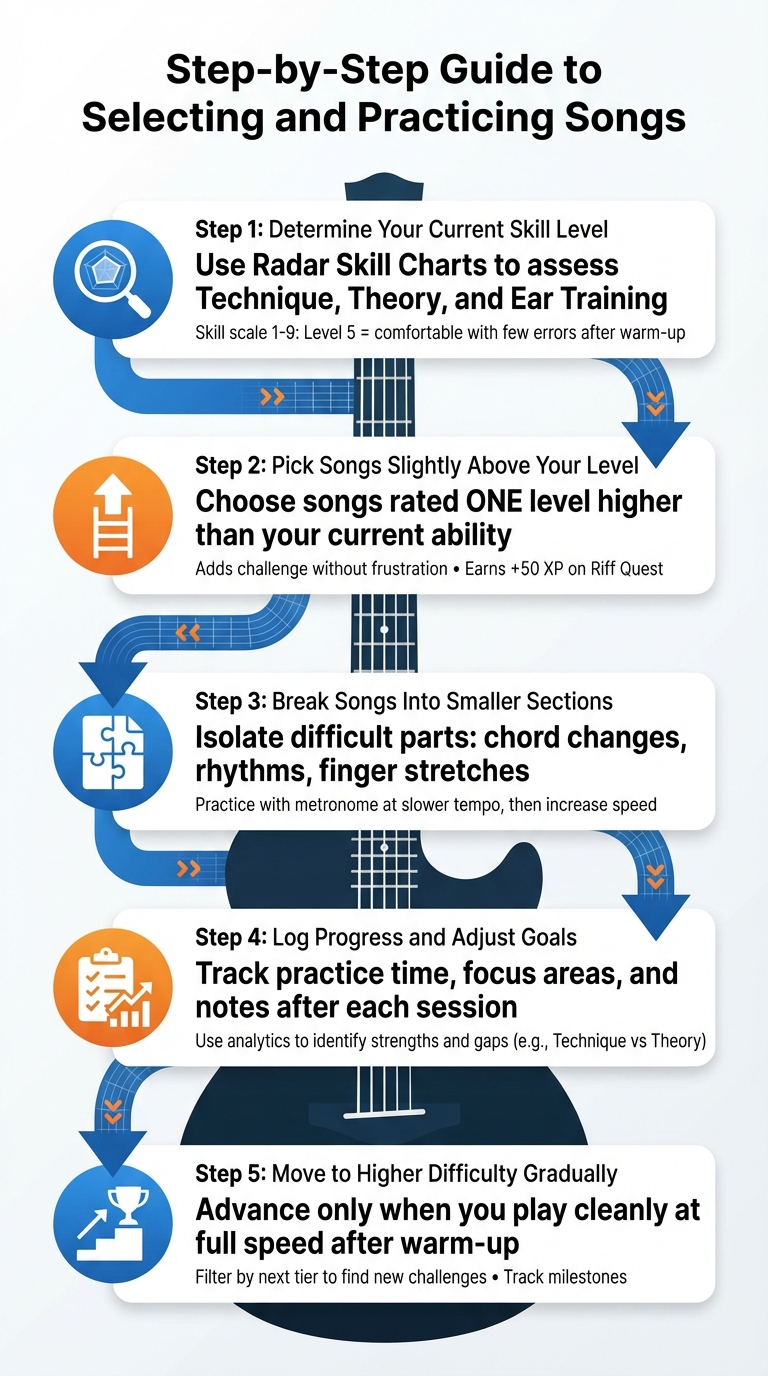
1. Determine Your Current Skill Level
Start by assessing where you currently stand. Riff Quest's Radar Skill Charts are a great tool for this, offering a clear visual breakdown of your abilities in areas like Technique, Theory, and Ear Training. You can also take advantage of the platform's Intelligence Filters to narrow down songs that match your verified skill data.
"A '5' would be something right at your level. You've got to warm up a bit, but you can play this no problem, with few if any noticeable errors." — HubGuitar
2. Pick Songs Slightly Above Your Level
To grow as a musician, select songs that are just a notch above your current skill level. Tackling slightly harder material helps you improve, even if you make a few mistakes along the way. Be mindful not to leap too far ahead; choosing songs that are significantly more difficult can lead to frustration and slow your progress.
3. Break Songs Into Smaller Sections
Instead of trying to master an entire song all at once, break it into manageable pieces. Focus on the tricky parts - like challenging chord changes, syncopated rhythms, or wide finger stretches. Isolate these sections and practice them individually, using a metronome to gradually improve speed and precision.
4. Log Progress and Adjust Goals
After each practice session, log the details using Riff Quest's tracking tools. Keeping tabs on your progress helps you identify trends and refine your goals. The platform’s analytics give you a clear view of your development. For example, if your Technique score is improving but your Theory is lagging, you’ll know where to focus next.
5. Move to Higher Difficulty Levels Gradually
Only move on to harder songs when you can play your current piece cleanly at full speed after a brief warm-up. When a song feels secure and natural, it’s a sign you’re ready for the next challenge. Riff Quest’s tiered system makes it easy to find songs that match your evolving skills.
Measuring Practice Progress with Difficulty Ratings
Tracking Completed Songs and Skill Development
Riff Quest transforms your practice data into easy-to-read visual progress charts. It logs every song you learn along with its difficulty level, giving you a clear picture of your growth. One standout feature is the Radar Skill Charts, which break down your progress into four key areas: Technique, Theory, Creativity, and Ear Training.
Setting Goals and Using Achievements
Riff Quest doesn’t just measure progress - it motivates you to keep improving. Through its gamified system, you earn Experience Points (XP) for every minute of practice, with your rank displayed on community leaderboards. You’ll also collect skill points and badges, turning each practice session into a tangible accomplishment.
To push yourself further, you can set goals by queuing up 10–20 songs with increasing difficulty. As you advance from Tier 1 to Tier 3, you’ll unlock rare badges like Fire Practice and Elite Master.
Measure Your Musical Growth
Stop guessing your skill level. Use Riff Quest's community-driven difficulty ratings to find the perfect songs and track your progress scientifically.
Start Your JourneyConclusion
Song difficulty ratings take the guesswork out of practice by aligning your goals with your current skill level. Instead of struggling with material that's too advanced, you can focus on songs that challenge you just enough to keep improving. Tracking your progress through defined difficulty levels also gives you tangible proof of your growth.
Consistency is key to long-term improvement. Start with songs just above your comfort zone, break them into smaller, manageable parts, and track your progress regularly. With difficulty ratings guiding your journey, steady improvement becomes part of the process.
FAQs
How do I know my current skill level?
To figure out where you stand skill-wise, try using self-assessment tools or answering guided questions that define what it means to be a beginner, intermediate, or advanced player. Platforms offering structured assessments can be particularly helpful in this process.
What difficulty rating should I choose to improve fastest?
To see progress more quickly, choose a difficulty level that aligns with your current abilities. On Riff Quest, Tier 3 or 4 often works well for intermediate growth. These levels strike a good balance between being challenging enough to push you and achievable enough to keep you motivated.
When should I move up to the next tier?
When your skills and performance consistently align with the expectations of your current level, it's time to step up to the next tier. This shows you're prepared to tackle more demanding material.