Quarter Notes Drill
Develop strict timing and pick attack consistency using quarter-note pulses.
Tablature
Preview only. Log in to access the fully interactive version with playback, tempo control, and real-time feedback. Sign in →
Why It Matters
Perfect rhythmic timing is the separation between amateur and professional guitarists. This drill builds a solid internal clock, ensuring you land exactly on the beat without rushing or lagging behind.
How to Practice
- 1Strike exactly on the metronome click with zero rushed or lagged notes.
- 2Maintain identical pick velocity and attack angle on every beat.
Tips & Techniques
- •Tap your foot or nod your head to internalize the pulse of the metronome.
- •Keep your picking movement small and highly controlled to ensure timing accuracy.
Skills You'll Develop
Ready to Practice?
Start practicing this exercise right now with our interactive tablature and real-time feedback.
Sound Recognition
Real-time audio recognition
Analytics
Track your progress
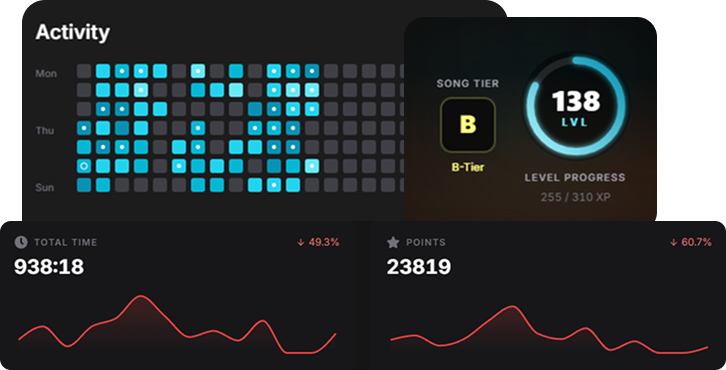
Activity Heatmap
Visualize your streak
Real-time Feedback
Instant corrections
Related Exercises
Open G String Repetition
Basic exercise focusing on rhythmic consistency by repeating the open G string.
All Strings Open Repetition
Rhythm exercise moving across all strings using open notes.
Basic Down Strumming
Strum steady downward strokes on every beat over an Em chord to build basic rhythm and timing.
Down-Up Strumming
Develop a fluid, continuous down-up strumming motion with strict rhythm control.