Melodic Tapping Compositions
Incorporate two-handed tapping to play expressive, melodic phrases.
Tablature
Preview only. Log in to access the fully interactive version with playback, tempo control, and real-time feedback. Sign in →
Why It Matters
Two-handed tapping turns the guitar into a piano-like instrument. Learning to tap melodic lines rather than just fast arpeggios adds a highly lyrical, unique texture to your solos.
How to Practice
- 1Tap melodic lines cleanly, balancing the volume of both hands.
- 2Sync string changes smoothly between tapped and fretted notes.
Tips & Techniques
- •Keep your tapping hand relaxed to sustain long melodic phrases.
- •Use a light fretting hand touch to avoid unwanted fret noise.
Skills You'll Develop
Ready to Practice?
Upgrade to Premium to unlock this exercise and master it with our guided practice tools.
Sound Recognition
Real-time audio recognition
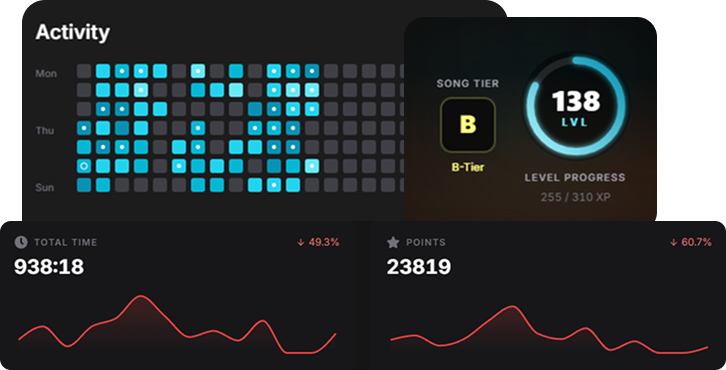
Analytics
Track your progress
Activity Heatmap
Visualize your streak
Real-time Feedback
Instant corrections
Related Exercises
Tapping Triadic Cascades
Execute fast, flowing tapped arpeggios that cascade diagonally.
Tapping – Simple Melody
Learn basic tapping mechanics by playing a simple melody along a single string.
Tapping – Two-Voice Phrase
Develop counterpoint and independent phrasing by playing a two-voice tapped melody.
Tapping – Descending Target Drill
Practice precise, descending tapped arpeggios with clean pull-offs.