Spider Exercise - 4-2-3-1 Permutation
Fret notes on a single string using finger permutation 4-2-3-1 to isolate specific finger movements and develop deep coordination control.
Tablature
Preview only. Log in to access the fully interactive version with playback, tempo control, and real-time feedback. Sign in →
Why It Matters
This permutation isolates the muscle movements of fingers in the specific 4-2-3-1 sequence. It trains your brain to control finger movements in unconventional sequences, breaking down common mechanical bottlenecks and building finger coordination.
How to Practice
- 1Coordinate each pick stroke with precise finger placement to ensure clean articulation.
- 2Maintain a steady alternate picking pattern, keeping pick depth minimal and consistent.
- 3Practice at a slow tempo first, focusing on rhythmic precision and fluid position shifts.
Tips & Techniques
- •Keep your fretting hand fingers hovered close to the fretboard to minimize unnecessary movement.
- •Position your thumb behind the middle of the neck to support a curved, relaxed hand arch.
- •Avoid excess tension in your shoulder and wrist; efficiency of movement builds speed naturally.
Skills You'll Develop
Ready to Practice?
Upgrade to Premium to unlock this exercise and master it with our guided practice tools.
Sound Recognition
Real-time audio recognition
Analytics
Track your progress
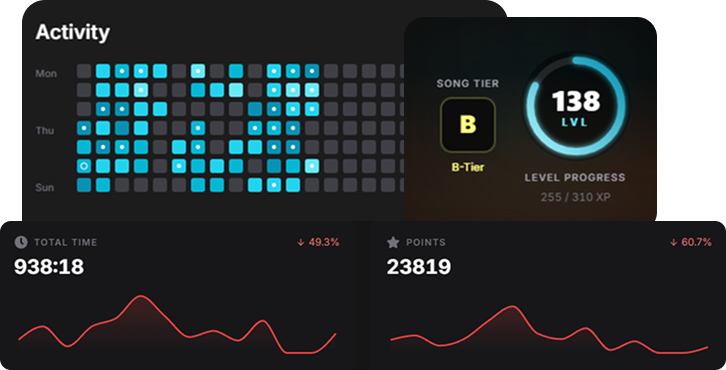
Activity Heatmap
Visualize your streak
Real-time Feedback
Instant corrections
Related Exercises
String Skipping Spider Exercise
Integrate wide string jumps into the spider walk pattern.
Spider X Pattern Exercise
Play a diagonal, cross-string spider pattern that forms an 'X' shape.
Extended Spider X Exercise
Challenge coordination with a wider, multi-position version of the diagonal Spider X.
Horizontal Spider Exercise
Master left-hand finger independence and sync it perfectly with your picking hand using this foundational horizontal shifting pattern.